
Where are our flying cars? They’re on the way. While technologies such as eVTOLs (electric vertical takeoff and landing vehicles) continue to advance, their rollout has been more measured than science fiction promised.
The same is true in the maritime industry. Innovations including nuclear, solar, LNG, biofuels, and hydrogen-powered vessels regularly make headlines, but adoption remains gradual. Instead, practical technologies such as Starlink satellite internet, smart onboard controls, and AI-assisted navigation, security, propulsion, vessel handling, and connectivity are becoming standard.
Capt. Ted Morley is watching those changes as yachts grow larger and increasingly resemble commercial vessels. As chief executive officer and president of Maritime Professional Training (MPT) in Fort Lauderdale, Florida, he has also seen regulatory requirements expand.
“As the yachts get bigger, they become highly sophisticated and highly specialized commercial ships,” Morley said.
As a result, MPT has developed vessel- and system-specific training that extends beyond regulatory requirements and integrates into yacht operating procedures, he said. The training facility uses predictive AI and ML (Machine Learning) to create more realistic, dynamic simulation scenarios.
Morley expects yacht crew to continue operating and performing routine maintenance on emerging technologies, but he believes manufacturers will increasingly require their own technicians on board for more comprehensive repairs. A trend likely to accelerate as onboard systems become more complex and automated, he said.
Andrew High, founder of High Law in Florida and Washington, D.C., specializes in maritime law and is also tracking AI’s expanding role in yachting. One advantage of AI, High said, is that crew have access to more knowledge than ever before.
“That’s good; there is less time teaching baseline information, but it can be hard to explain to them how the computer missed something.”
At the same time, High warns that AI without proper oversight presents significant risks. A yacht could be operating unsafely or outside flag-state regulations, potentially voiding its insurance policy, he said. If AI is controlling a vessel’s positioning and the crew lacks situational awareness, systems could be compromised or make navigation errors.
“To a certain extent, this has to be people-centered, experience-centric. I don’t know how to eradicate people from yachting,” High said. “AI is an excellent tool, but it is not yet reliable enough to use it on its own and without the aid of professionals.”
Companies developing marine AI agree that human oversight remains essential.
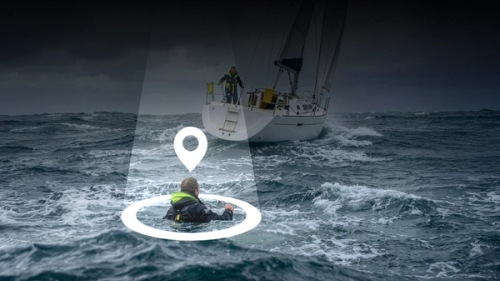
SEA.AI, for example, manufactures optical and thermal cameras with onboard AI processing that detect floating hazards. The systems integrate with navigation equipment and continue to evolve toward greater automation and more advanced decision-support capabilities, wrote Solenn Gouerou, head of marketing and communications at SEA.AI.
“However, the objective is not to replace the captain or crew. AI should reduce workload, improve situational awareness and peace of mind, and provide an additional layer of safety. Technology must remain understandable, reliable, and easy for crew to use in real operating conditions,” Gouerou said.
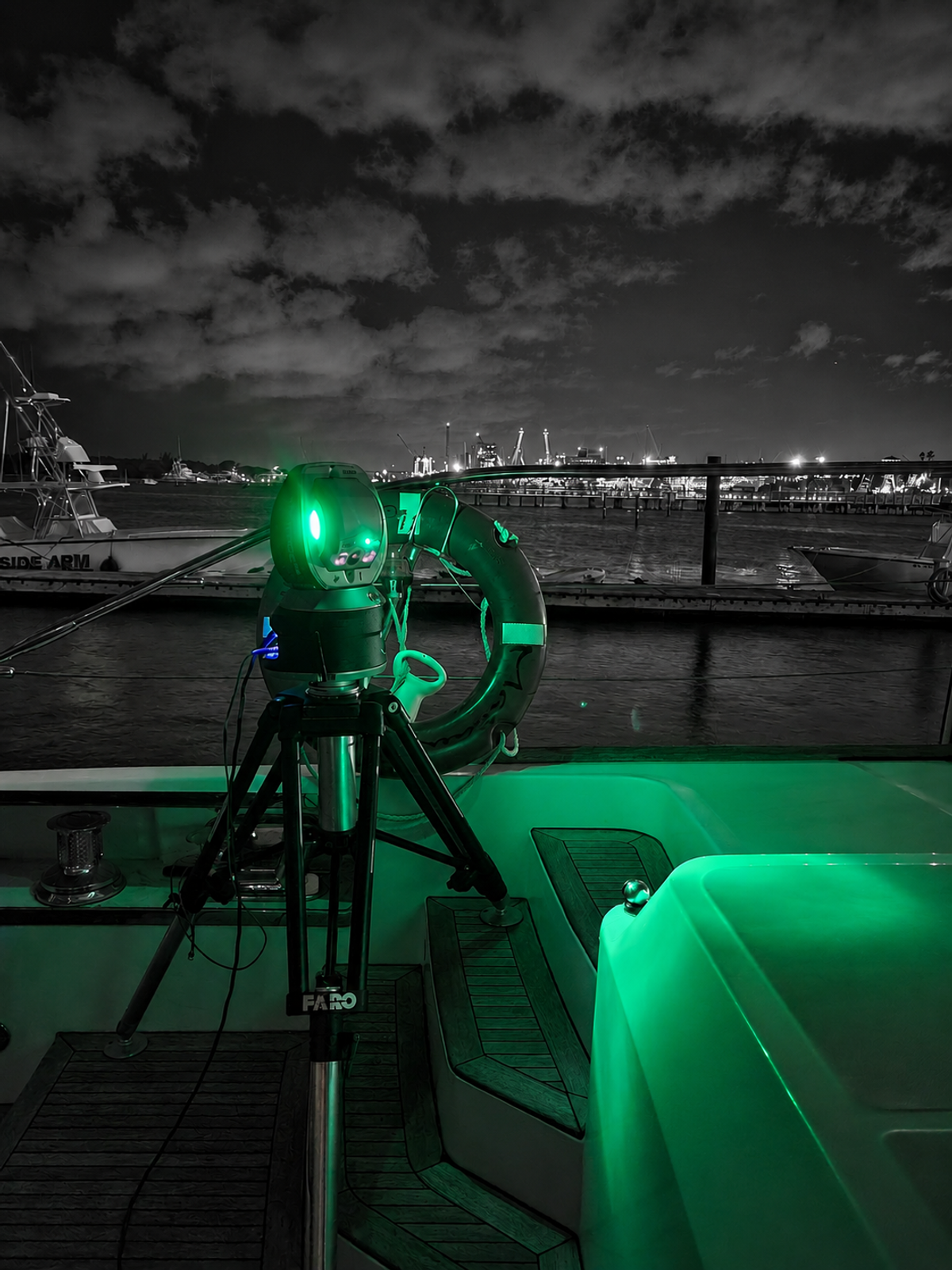
As technology advances, maintenance and repair are becoming equally important considerations. In the early days of yachting, captains, engineers, and crew could repair most onboard systems themselves. Today’s proprietary electronics, specialized equipment, and integrated machinery often require manufacturer-specific tools and expertise.
That reality has fueled ongoing debates over the “right to repair.” Recent legal decisions have increasingly favored owners’ ability to service their own equipment. In one example, a July court ruling requires John Deere to provide equipment owners with access to the tools and software needed to perform their own repairs.
The increasing sophistication of yacht systems is also reshaping crew composition. More vessels are hiring dedicated AV/IT (audio-visual and information technology) specialists, as well as electro-technical officers (ETOs), who specialize in electrical and electronic systems, and crew trained in cybersecurity.
Over the past decade, Tony Planamento, technical projects supervisor at Advanced Mechanical Enterprises (AME), has seen remote monitoring become a standard part of yacht maintenance. While vibration monitoring can still be performed on board, AME now offers fourth-generation wireless sensors that collect data remotely.
“We can still ride on the vessel, but with this wireless, we can avoid additional fuel and crew cost, and use the data when they are crossing back from the Bahamas or up and down the coast to see a baseline,” Planamento said.
The data can be integrated into onboard software using APIs (Application Programming Interfaces), while customized dashboards alert crews to potential issues. Remote access also allows AME experts to analyze system performance in real time.
“We can read the data and diagnose. We can say it was a false alarm or tell them they can make it back to harbor,” Planamento said.
Tony Valiente, chief operating officer and managing partner of The Yacht Group and Yacht Controller in Florida, has spent more than two decades developing wireless yacht control systems. He said the company’s latest technology offers digital cabling and addresses network congestion by using dual-band frequencies across multiple channels to overcome increasingly crowded Wi-Fi, Bluetooth, and radio-frequency environments.
The system also offers personalized operating profiles that control engine RPM, throttle ramp-up, and other performance settings. Profiles can be customized for each vessel and location, with updates made remotely via any Wi-Fi connection. Like many others in the industry, Valiente sees AI integration as the next step.
While many in yachting may be hoping for a personal robot someday, today’s technological advances focus on giving crew more capability, not replacing them. Even as automation continues to evolve, humanoid robots remain a long way from matching the expertise, experience, personal relationships, and sound judgment that professional yacht crew and marine service providers bring to the industry. For now.