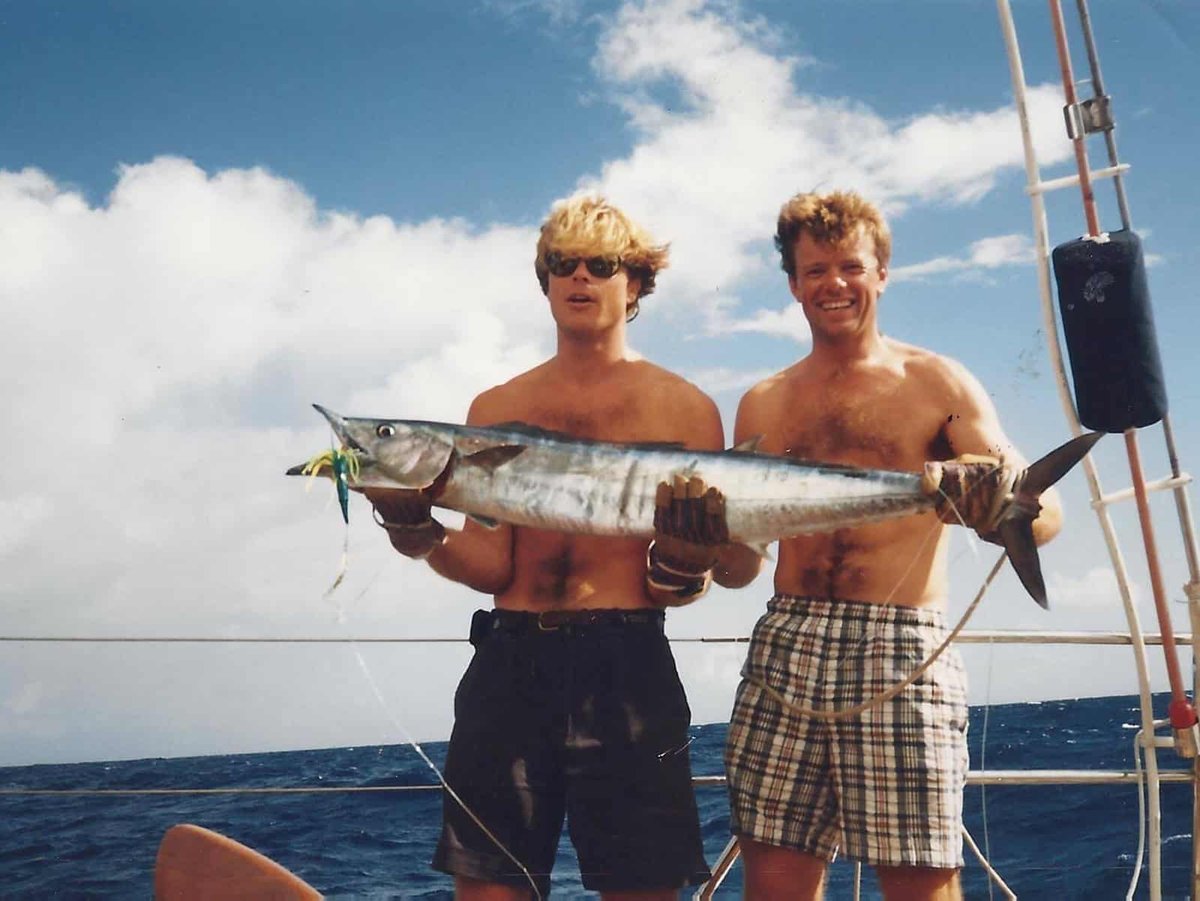

The Desaunois brothers are unafraid of making bold moves, both ashore and at sea.
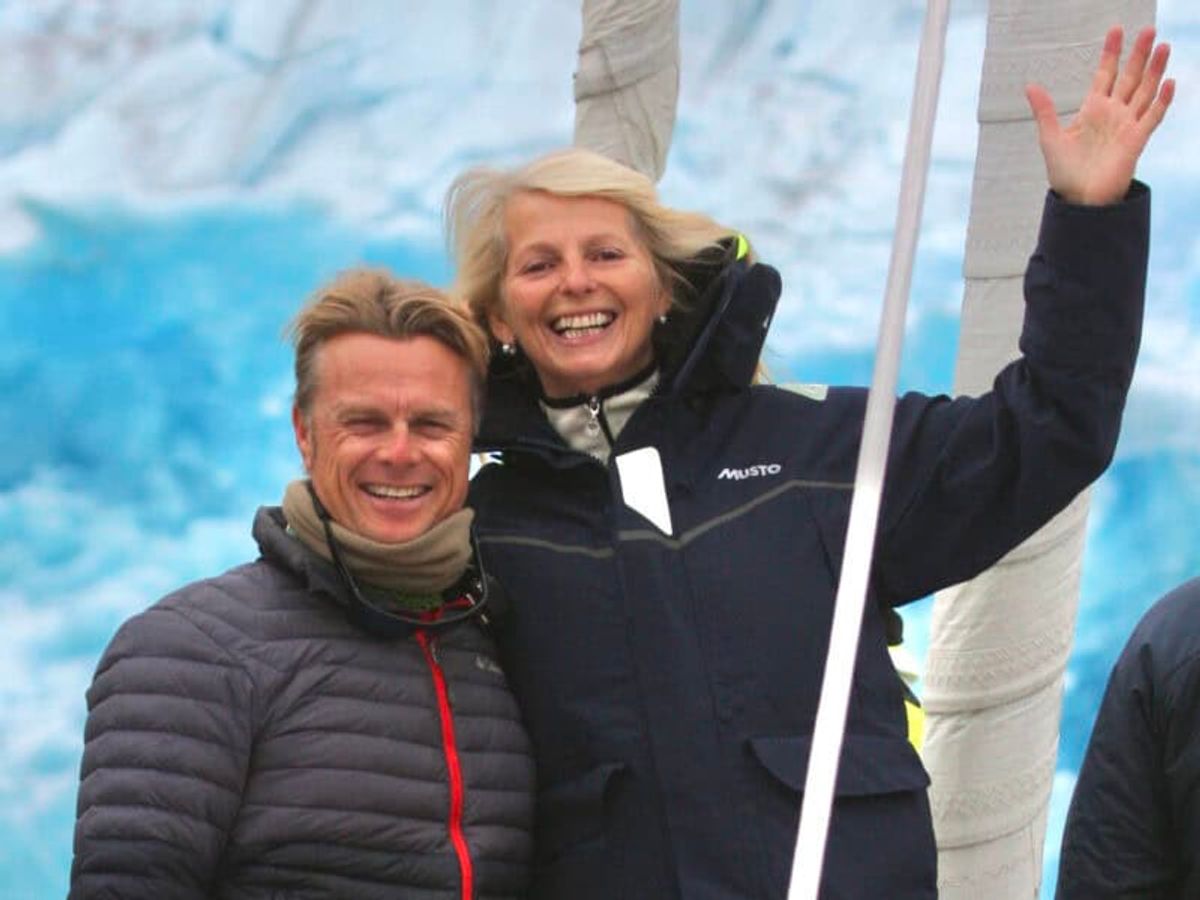
Derek and Marcus Desaunois like to test their limits. From exploring the polar regions and taking on the Northwest Passage to endurance testing in Ironmans and facing the elements in an unsupported 700-mile sailing race, it’s obvious that these brothers are all about chasing adventure.
The younger two of four brothers born in the Netherlands, they both found their way to the yachting industry, although their paths ultimately took them in different directions.
“I got on superyachts first,” said Derek, the older of the two. Marcus came later, but his story starts with a dramatic twist — he ran away to sea to escape conscription into the Dutch military. As Marcus explained, army service was still compulsory in the Netherlands at that time, but the policy was coming to an end. He hoped to wait it out.
“I suggested he make his way down to Spain to join us on the crossing to the Caribbean for the charter season and to get out of the country for a while,” Derek said. “He did, and the rest is history.”
Ultimately, Marcus did eventually report for military service. “I did come back, and I turned myself in, and after a week, they told me, ‘Well, okay, forget about it. You know, it’s over now.’ Now, it’s on a volunteer base as opposed to conscription. So, the plan worked,” he said. After spending a few days in a military jail — the food was excellent — he was free to run away to sea once more.
Derek and Marcus were united by a shared passion for sailing from a young age. Their journey began with the Sea Scouts at 12, and their love for the sea only grew. Their shared dream led them to persuade their parents to get a sailboat, a decision that would shape their future careers.
For Derek, this was a pivotal moment that opened his eyes to his future as a shipwright. At 16, he embarked on an apprenticeship with Jongert Shipyard, where he remained for 10 years.
“I got itchy feet, quit my job, and backpacked through Southeast Asia to Australia,” Derek said. He sailed back from Sydney to the U.K., through the Southern Ocean and around Cape Horn. “Then I hitchhiked — I had no money — to Southern France and Antibes to try my luck on superyachts.”
He got lucky and was hired as a deckhand on the three-master Aquarius W under Capt. Fred Dovaston. He then worked as a mate on Tamer II, his first of what proved to be many Jongert-built sailing boats. Within three years, he was offered his first captain’s position on the 98-foot Jongert Spes Nostra. He worked aboard for two owners.
Marcus was then working in construction, the family business, when Derek offered him a job as delivery crew from Palma to Antigua. “Hey, presto, life was never the same from then on,” Marcus said. Marcus, urged by Derek, went on to get his RYA Yachtmaster Offshore and Ocean, and then in 2000, he did his MCA Master 3000GT.
“[Derek] was the driving force to do my Yachtmaster Offshore and Ocean at the very young age of 23, and he told me to never stop working on tickets,” Marcus said.
Marcus’s career took him on a global adventure. He started as crew on sailing yachts until 1995, even experiencing a fire as a deckhand aboard the 21-meter S/Y Big Blue, which burned down in Soper’s Hole, BVI, due to an electrical issue in 1993. Marcus, along with the captain/owner, his wife, and their son, were forced to jump overboard and swim to safety. He lost everything.
Thankfully, he was personally well insured and was able to get a new Dutch passport in Curacao. He then flew to Derek’s location in Antigua and got himself another job on S/Y Sweptaway with Capt. Steve Ray within days. “I just got back on the job because I loved the business,” Marcus said.
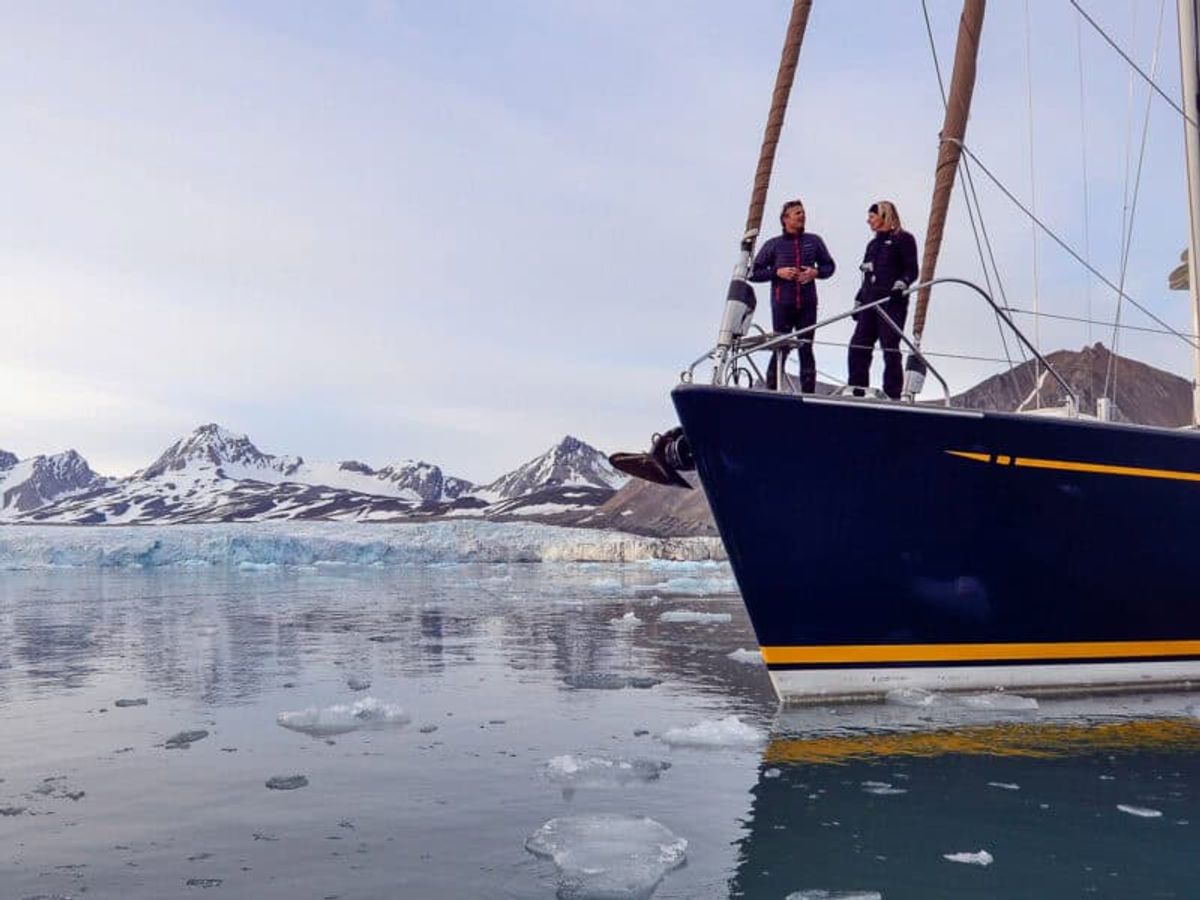
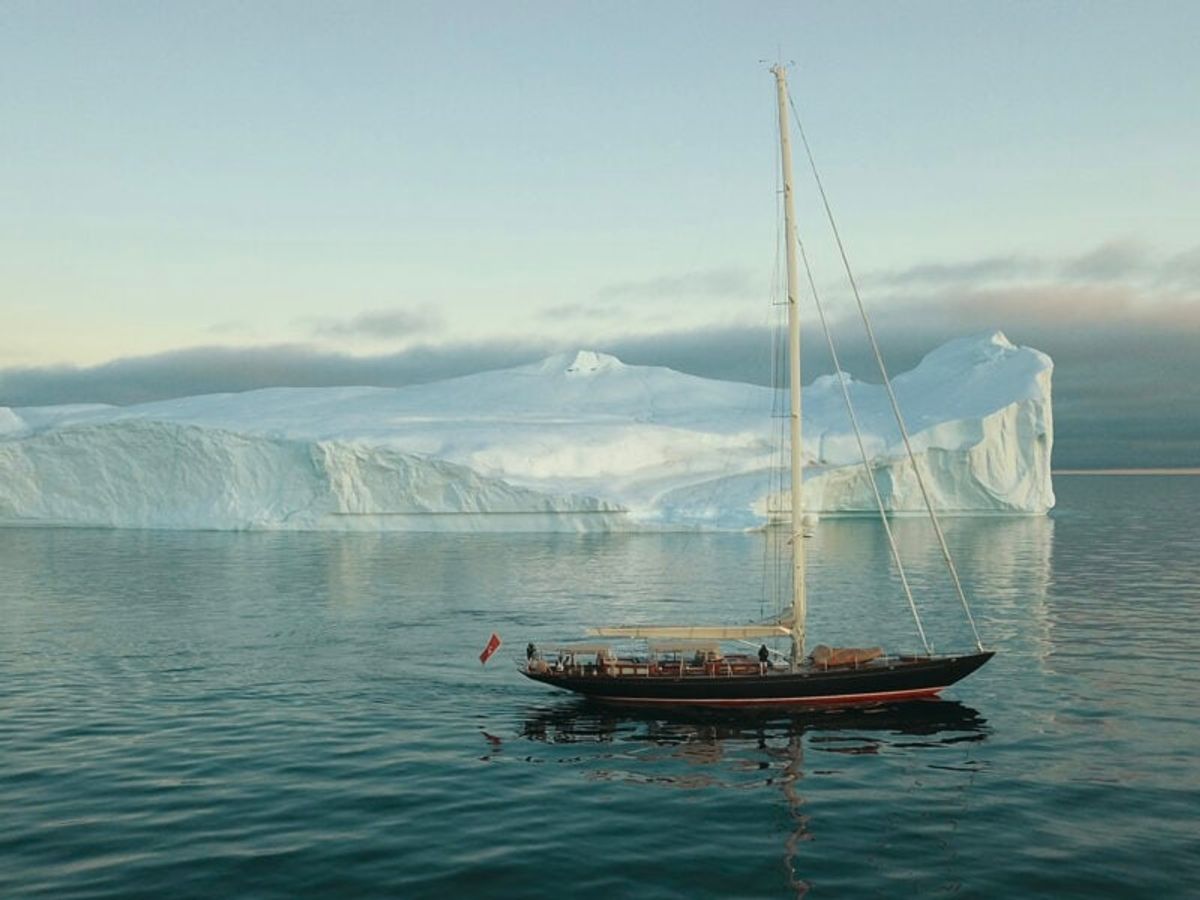
He was offered his first captain’s job on the 21-meter Jongert Lioness. The 25-meter Jongert Diotima followed this, then the 34-meter Fidelitas, where he spent 13 years. He sailed all over the Med, the Caribbean, and northern Europe. In 2014, he embarked on a smaller Jongert, the 24-meter Charisma Nova, with his wife Regina. This marked a shift in their itineraries, moving from the popular Med routes to more far-flung destinations. They completed their first Arctic expedition and visited Norway and Svalbard. Two years later, they moved to the 29-meter Atalante I, circumnavigating the North Atlantic, including Greenland, in two seasons. From 2018 to 2020, they managed the 37-meter La Cattiva, keeping busy even during COVID-19.
If that wasn’t challenging enough, Marcus moved from sailing to motor yachts. “To change from sail to motor was not an easy move,” he said. “I miss the thrills of the fast Atlantic crossings and the odd Bucket regatta, but I have been blessed to explore the wild with expedition-style motor yachts.” A bonus, he said — the large captain’s cabins. He jumped aboard the 47-meter Sanlorenzo Lars and then a 55-meter Feadship. Both explorer yachts, he was able to then re-visit Svalbard, Greenland, Alaska, and “the feared and famed Northwest Passage.”
While Marcus continued to build his captain career, Derek decided in 2000 to spend more time with his family, and he returned to his shipwright training. “I started working on boats for the sailing,” he said, and he got out just as regulations began ramping up.
His final captain’s job was aboard the classic schooner Ashanti IV, which he sailed on a 3.5-year voyage west around the world, taking in the Pacific Northwest and the 2000 America’s Cup in New Zealand. He slipped ashore and into a shipwright role at Rivergate.
“So you could say I never really got away from the industry,” Derek said. “I’m really happy where I ended up. I’m still on superyachts every day.”
The Northwest Passage was one of Marcus’s most challenging expeditions in his career. He joined an ice-classed Feadship in February 2023, only to learn that the vessel owners wanted to avoid contracting with a guiding company for the transit.
“This was quite a challenge; I only had a few months to organize it all,” Marcus said. “I got some help from an expert, but all the paperwork was done in-house, with the support of our management company.”
He was tasked with getting permission for the vessel and crew, plus permits for the submarine operations from Transport Canada and the Canadian Coast Guard, getting approval for the ice pilot, permits from Parks Canada, and environmental permission from Alaska and the mainland U.S.
“To organize this Northwest Passage, as the captain and chief officer only, with only a few months’ notice, was a huge challenge because you usually start two years before. I just came on in February, and in June, we were on our way,” Marcus said.
“We did run into some difficulties that could have been avoided. Therefore, I highly recommend using one of the guiding companies like EYOS Expeditions,” he said. “It was also very rewarding because, in the end, it all worked out well, and we had an incredible experience.”
As for his current itinerary, Marcus is aboard an ice-strengthened 55-meter Heesen motor yacht in Asia. “Expedition is not limited to the Arctic. I am very excited to cruise Thailand and Indonesia,” he said. And he feels the lure to head south — he’s cruised the northern Arctic extensively but never south. The plan is to move south through the Pacific first and then Patagonia before he hopes to make it to the Antarctic — take in the penguins this time, not the polar bears.
Derek may have settled into life ashore at Rivergate, but his itchy feet never disappeared completely, and he was always looking for the next adventure. “I wouldn’t call myself an adventure specialist, but I do love to go out there, either hiking, bicycling, or otherwise, for days on end, not knowing where I will be sleeping that night,” Derek said.
In yachting, he had competed in several half-marathons, and he took it up a notch after retiring and completed a few Ironman challenges in Australia. “I thought, that looks really painful. I wonder if I could do it,” he said. So he did.
Derek then discovered ultra-distance unsupported bicycle races across Australia. “I always looked for my physical and mental boundaries, participating in Ironman and multi-discipline adventure races, and I thought it would be fun to find out whether I could do it,” Derek said. As it turns out, he could, and he fell in love with the discipline.
Part of the beauty of Ironman competitions is that amateurs get to line up with professional athletes, which doesn’t happen in most sports, Derek explains. “It’s like you’re an amateur golfer, but you’re on the same tee as Tiger Woods,” he said.
“Now I’m hooked,” Derek said. “There is a great satisfaction in doing something you weren’t sure you were capable of.” His mantra, which he adopted from John F. Kennedy, is: “We do these things not because they’re easy, but because they’re hard.”
His next hard is tackling the R2AK, a race in the Pacific Northwest to Alaska. He first learned about it in 2016 and was fascinated.
The race website explains: “It’s like the Iditarod, on a boat, with a chance of drowning, being run down by a freighter, or eaten by a grizzly bear. There are squalls, killer whales, tidal currents that run upwards of 20 miles an hour, and some of the most beautiful scenery on earth.”
All you need to enter is a boat without an engine — and maybe some grit to get you through. The race is self-supported, with no supply drops or safety nets. The race has a proving ground — a 40-mile leg from Port Townsend to Victoria, British Columbia. The race is from Victoria to Ketchikan, Alaska, about 710 miles. Apart from two waypoints, there is no official race course. The winner claims $10,000 and epic bragging rights.
A confessed “tracker junkie,” Derek would follow the trackers during the races, and he soon began to build his own boat for the race. “I always knew that one day I had to participate,” Derek said. While COVID ruined his hopes for 2020, he finally decided that 2024 would be the year. The 2024 race begins June 9.
“What I love about it is that it’s unsupported and simply because it will be difficult at times. It’s also traveling through a stunning part of the world,” Derek said. “It’s traveling at a pace that allows you to take in so much more than with the speed of modern society.”
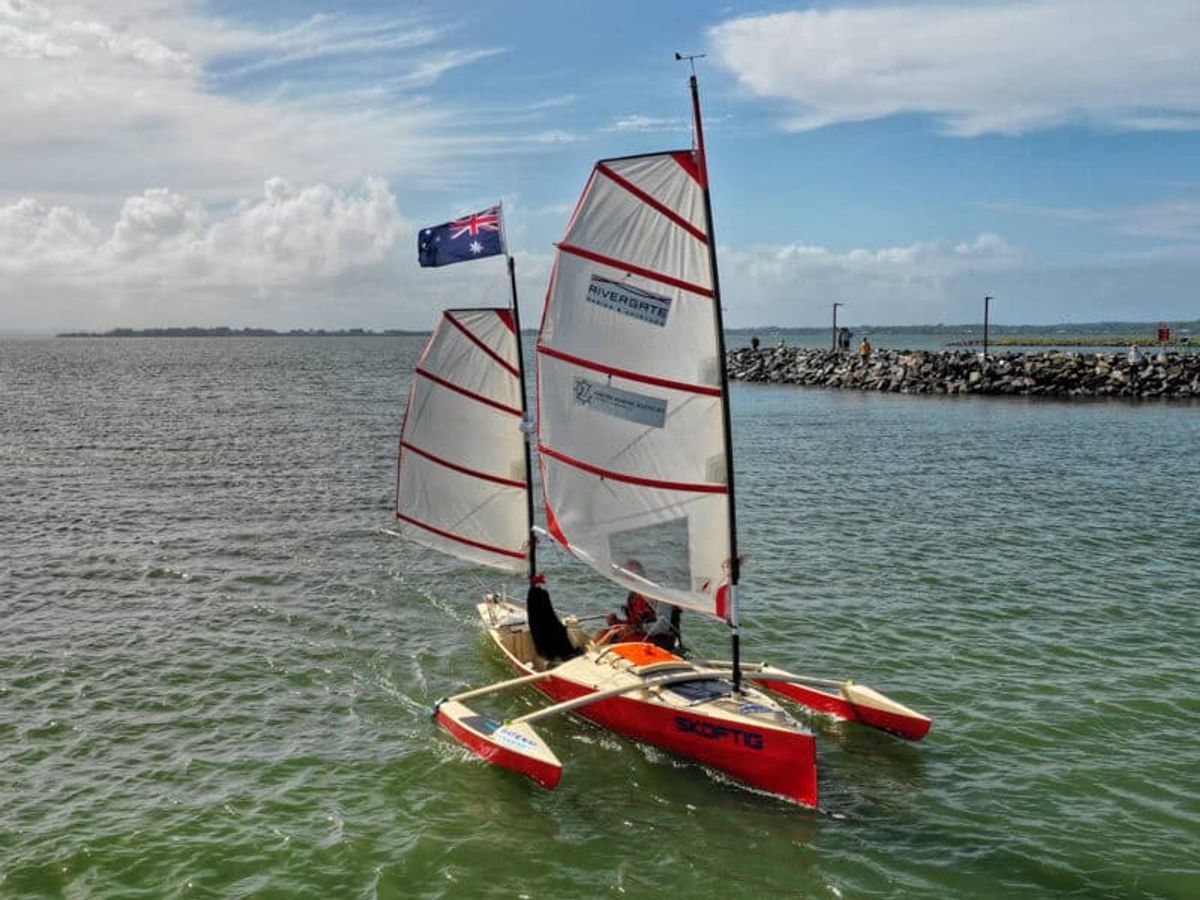
His boat is an Angus Rowcruiser, which he has modified with a pedal-driven prop and sailing capabilities. Rivergate and Carter Marine Agencies are sponsoring him for the race.
“I’m pretty much ready and mostly now studying coastal pilots for the PNW and the ferocious tidal currents and rapids you’ll find there,” he said. “I’m getting myself ready by cycling often and Pilates.”
The brothers, who completed a couple of Atlantic crossings together, don’t get to see as much of each other as they used to, although they talk often over WhatsApp and Facebook. With their parents also growing older, it “draws the whole family together,” Marcus said. But it’s been a few years now since they’ve been together in person, Derek said, but he hopes to change that next year when he plans to enter a cycling event in Holland. It will be an opportunity to reconnect with his whole family, including Marcus, if he can make it.
Even ashore, the adventure never ends. Marcus plans to be equally busy when he finally calls it a career. “I’m trying to become a recognized ice pilot,” he said. While there may not be schools to learn the job, vast ice experience is necessary in the north and south. So that’s his goal, mixed with some delivery or rotational work.
“We have had a great life. We had some great adventures,” Marcus said. “We are still having a great life with much more to come.”
Perhaps that’s the best thing to show for a life well lived.