


Not long ago, visible tattoos were a huge taboo for crew. The tides are turning, and tattooed crew are finding more acceptance across the industry.
Rejection is Far Less Common

“I have not been turned away from a job because of the placement of my tattoos. Everything is covered in my crew uniform,” said Mate/Engineer Cody Pisut, who has spent seven years in the industry. Now working aboard a 26-meter motor yacht, he hasn’t encountered any ink-related issues.
“Tattoos are continuing to be more accepted, especially on smaller boats, since I have started in the industry,” Pisut said. “I’m seeing less job postings state ‘no tattoos’ in more recent times.”
Engineer Mike Hansen, who works aboard 38-meter M/Y Charlotte Ann, has had a similar experience. Since entering yachting four years ago, he’s yet to experience any negativity from captains or crew.
“Tattoos are probably more about appearance standards, since we are in the yachting industry, which is a very [luxurious], high-standard industry,” Hansen said.
In engineering roles specifically, visible tattoos often carry less stigma. “Being in an engineering position, it would kind of be expected to have some ink. The only people that might frown upon it would probably be the owners,” Hansen said.
Still, he cautions new crew. “I would advise no face, hand, or neck tattoos, unless you plan on working in the bilge for your entire career.” And avoid vulgar or inappropriate tattoos.
Why Tattoos Were Once Taboo

Pisut attributes the industry’s lingering hesitation to outdated stereotypes.
“The negative outlook on tattoos has stemmed from the stigma of them being trashy or gang/crime related. Many yacht owners are concerned with appearances and want clean-looking crew, which also holds true for hair dyes, facial piercings, and facial hair.”
Norms are evolving. “Tattoos are becoming more and more common with the times and being very acceptable, even among the female yachties. Especially with the whole ‘your body, your choice,’” Hansen said.
That said, tattoo acceptance still varies. “Every boat is different,” Pisut said. “I’ve seen 200-plus foot yachts with chief engineers and captains covered in tattoos while boats under 100 feet won’t even consider a crewmember if they have any. It’s possible to move up in the industry while having tattoos but depending on the boat it may not be easy. Each owner has their own opinion on them and there’s no set standard.”
A Tattoo Artist’s Perspective
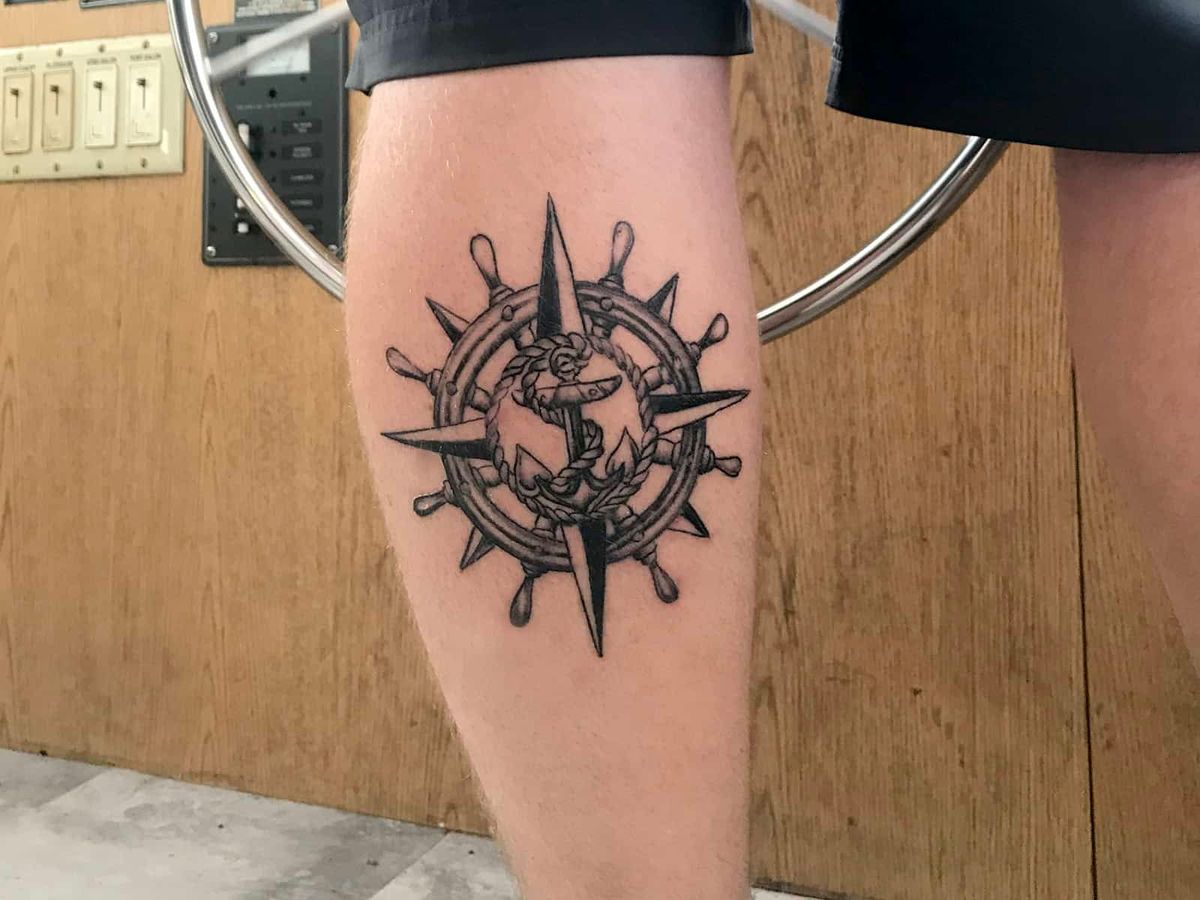
Colette Ruelette, a professional tattoo artist since 1993, has worked with many crew. “The stigma of tattoos has a reputation that clashes with this upper crust illusion of flawless perfection. Some people will never see tattooing as an art — nor the difference in the quality of work.”
Her crew clients often lean toward nautical or sentimental designs. “U.S. and British sailors popularized tattooing by the late 1800s, getting tattooed to mark their memories, travels, and accomplishments,” she said.
Crew today still choose designs that reflect their love of the sea or honor their homeland. “It’s a memento or possession they can keep on board in their tiny living quarters. Designs usually involve their accomplishments, or passion for the seas.”
In recent years, she’s noticed yachties getting highly visible tattoo art — a shift from when ink was hidden. “Now as long as they keep it classy, it’s becoming more popular and acceptable in such an elite industry.”
Why Placement Still Matters
Even as acceptance grows, placement still counts.
“If you have a tattoo on your face or neck, it definitely shows less high-class standards than a nice underwater/nautical themed tattoo on your arm or leg that can be easily concealed,” Hansen said.
“Easily covered tattoos, especially ones covered in short-sleeve uniforms, will lead to more opportunity in yachting,” Pisut said. “‘Appropriate’ tattoos can also make finding jobs easier — obscene images or language will lead to a negative outlook on a candidate.”