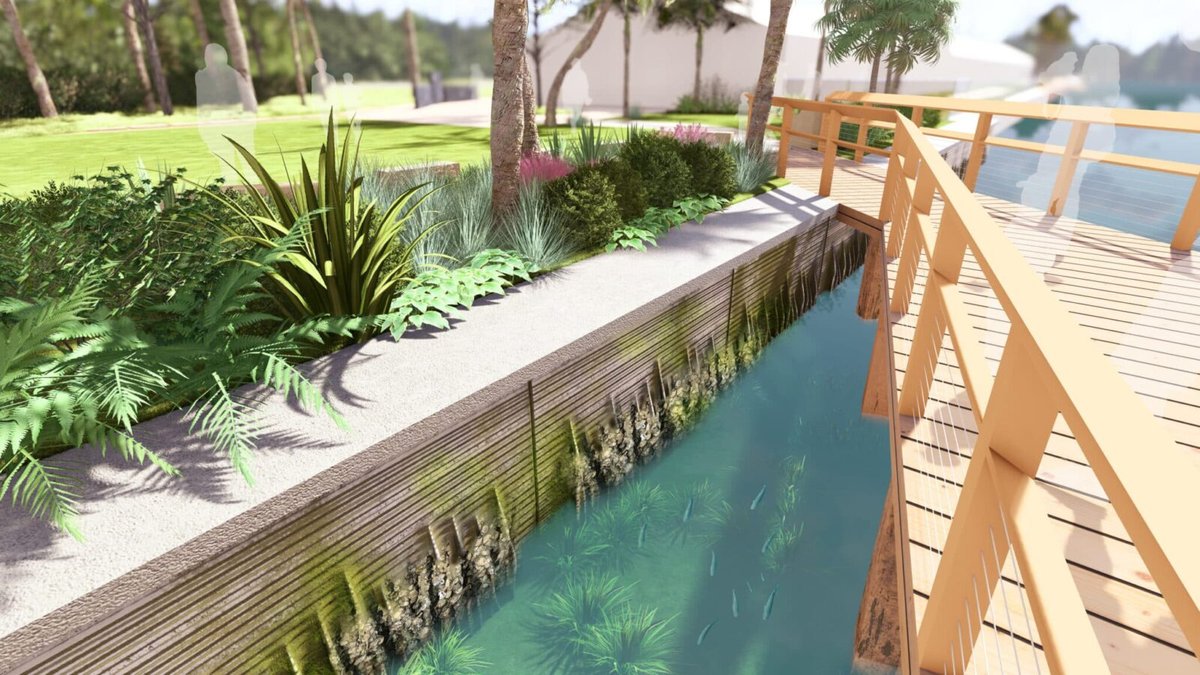

The Church by the Sea in Fort Lauderdale is pioneering a world-first — a living seawall, a fully integrated vertical reef seawall. The church had to replace its seawall and chose to transform what was a simple flat barrier into a habitat designed to attract marine life and improve water quality while also complying with Broward County’s updated tidal barrier requirements.
The church is located along the narrow Marion River Canal, a waterway originally dredged from what was known as Mayan Lake. The new seawall will feature 860 feet of 3D-printed concrete from KindDesigns, with mangrove-inspired textures to promote colonization by oysters, mussels, and other marine life. It could create 5,160 square feet of marine habitat, and once complete, it will be the largest living seawall in Florida.
The environmental benefits include improved water filtration — established oyster colonies can filter more than 1 million gallons of water daily — and ecosystem revival. The Fort Lauderdale living seawall is expected to host 500,000 oysters. Clean water encourages seagrass recovery, stabilizes sediments, and boosts biodiversity.
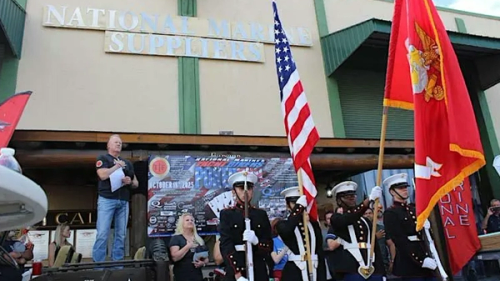
“This isn’t just about building a wall — it’s about creating a living system that cleans the water, supports marine life, and educates the community,” said Dr. David Finneran, the project’s scientific director, during a Memorial Day project launch. “Our goal is to demonstrate what’s possible when we align science, design, and local stewardship.”
While the church is hosting, the Living Seawall project is a non-profit initiative open to scientists, donors, and supporters. Panel installation is scheduled to begin in May 2026, with a planned viewing deck open to the public in February 2027.
Check out the latest Triton issue.