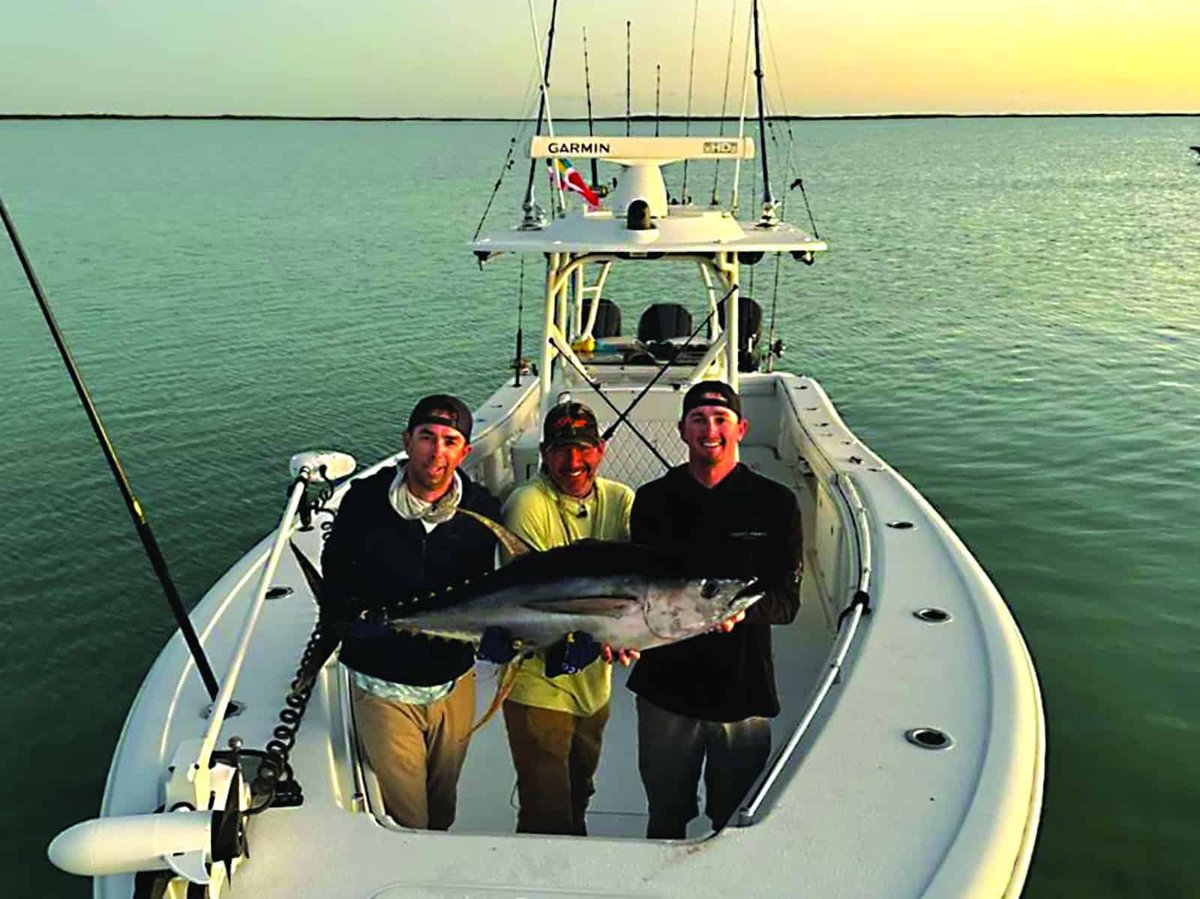

From the bluewater canyons of the Bahamas to the bottom-rich ledges off Mexico, captains are often called to perform under pressure in waters they’ve never fished before. For many, the winning formula isn’t found in electronics alone — it’s drawn from shared knowledge, lived experience, and local insight passed between generations.
Capt. Chris Pascual, who runs a 45-foot Hatteras sportfish out of Fort Lauderdale, got his start fishing freshwater ponds. He was first introduced to fishing by his grandfather, who, while not a seasoned angler himself, introduced Pascual to the outdoors at a young age.
What started with ponds and weekends at Dania Pier evolved into a full-blown career. Pascual earned his 100-ton license in November 2023, crediting his development to “trial and error,” coupled with stories from seasoned Florida fishermen like Rob Kregan, who’s been plying these waters since the 1960s.
“There are many options out there today,” Pascual said. “I prefer to fish with locals, observe their ways, and try.”
Although he makes use of resources such as Navionics and CMOR Mapping, Pascual places high value on what he calls the “wealth of knowledge” passed down among veteran captains. His preferred challenge is the goliath grouper — a powerhouse of a bottom fish.
His advice to younger captains echoes his philosophy: “If you’re not having fun, you’re in the wrong industry.”
Capt. Tyler Hopkinson, also based in Fort Lauderdale, comes from a family steeped in marine tradition. His father has captained for more than three decades, and his grandmother worked on the docks. Hopkinson began his own journey in high school as a dockhand, working his way up through the ranks before earning his 100-ton license in 2017.
While at the helm of his first sportfish, Hopkinson was given the opportunity to fish international waters — among them the Cayman Islands, Saint Lucia, Grenada, the Bahamas, and Mexico. Like many seasoned captains, he balanced instincts with input from his team.
“A captain is only as good as his mate,” Hopkinson said, highlighting one mate in particular who played a key role while they fished Mexico.
Although mapping software has improved dramatically, Hopkinson still prefers local wisdom and his own seasoned judgment.
“When it comes down to it,” he said, “I would prefer local knowledge, relying on friends, and putting my own skills to the test.”
His adrenaline fish is the blue marlin. “As the electric blue comes up full spread, everyone gets involved, and it becomes a team sport.”
To those entering the sportfishing world, Hopkinson offers practical advice: “Don’t be afraid to ask. A lot of people are friendlier than they look, and do your research.”
Farther south in the Florida Keys, Capt. Vinnie Sacks found his way into the industry after a lifetime of immersion. From fishing with his father from the time he could hold a rod, Sacks eventually transitioned from a charter guest to a crewmember and finally a captain. Now the owner and operator of the 48-foot Y B Normal, he has 16 years of experience under his belt.
Sacks said he learned “by trial and error by helping out on charters,” adding that even with modern tools like a $50-a-month Navionics subscription, nothing beats time on the water and trust in your network.
“Try to get in with people who fish a lot,” he said. “They have local knowledge, and in this industry, local knowledge is king. There is a wealth of knowledge from years of experience.”
He prefers bottom fishing and names the black grouper as his top target when the bite turns on.
Capt. TJ Vaughn, who’s spent most of his life fishing between Hallandale and Deerfield Beach, has been a licensed captain for nine years and in the industry for 16. His path, like many others, began with childhood trips alongside his father.
Vaughn has fished throughout the Caribbean, including the Dominican Republic, Colombia, Turks and Caicos, and beyond. His approach to new waters is grounded in experience, supported by an eye for structures like artificial reefs and underwater mounds, and refined by advice from seasoned local crews.
His favorite gamefish is the wahoo — revered for its speed and aggression.
“Don’t be discouraged by lack of success,” Vaughn said. “Success doesn’t come right away, but from working hard.”
In a high-pressure industry with strong personalities, Vaughn offers a reminder: “You are your number one cheerleader.”
For all four captains, the message is clear: while modern mapping tools and digital platforms have their place, the real keys to unlocking productive fishing spots in new waters lie in relationships, repetition, and listening to those who’ve fished before them.