
Whether connected to a superyacht or a stand-alone program, how different are crew responsibilities on a sportfisherman?
Ah, yacht tenders. They’re the light, quick, and nimble vessels to ferry guests from place to place whether dressed to the nines, prepared to dive the depths, or to cut the wake. There are so many styles designed for every activity with many large yachts carrying more than one. So why do some yachts choose a sportfisher as their tender? After all, it’s not going to fit in the tender garage and it’s not an easy tow.
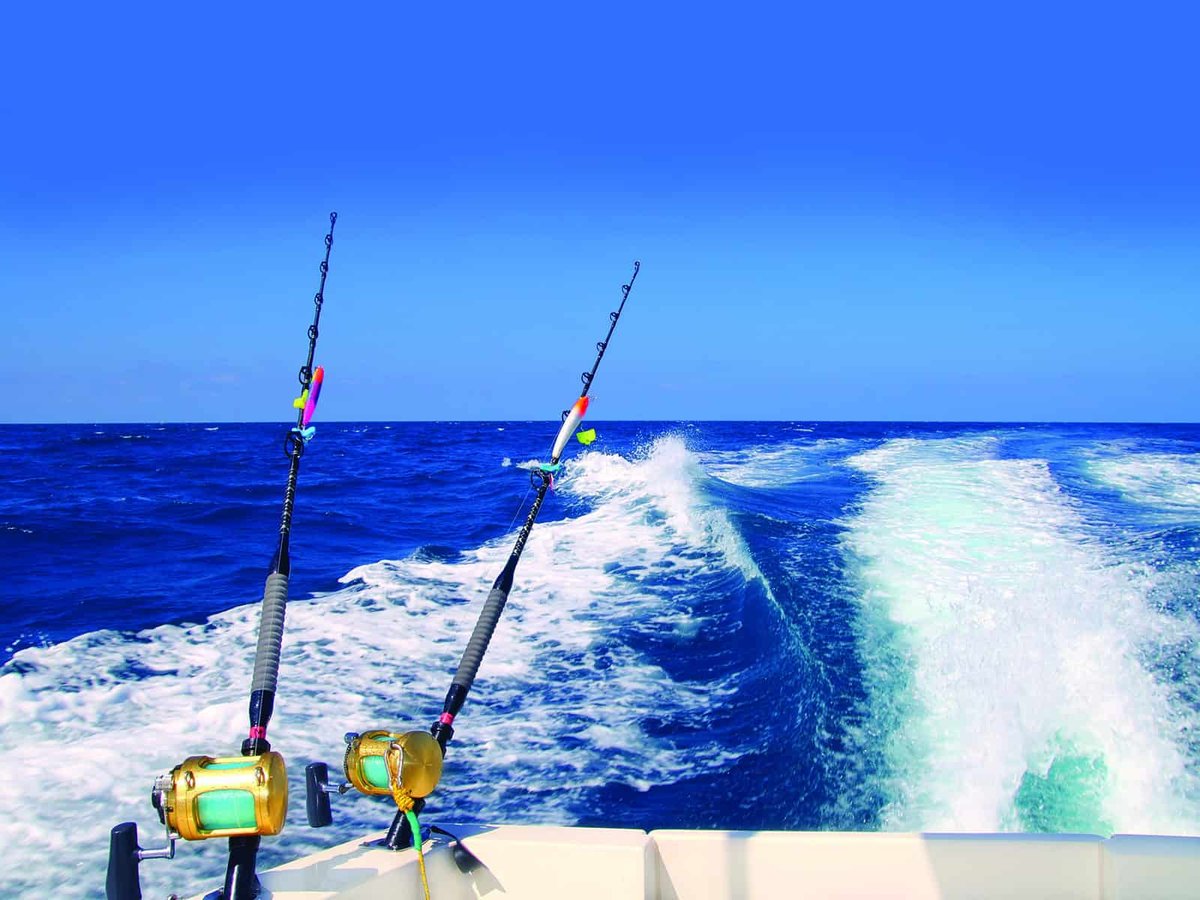
A sportfisher yacht has a distinct style and a specialized design tailored for specific fishing conditions. It is purpose-built to handle rough seas, go fast, and be luxuriously comfortable, while usually having the latest advancements in electronic equipment and rigging. Decked out with a flybridge, outriggers, perhaps a tuna tower, and a lower cockpit freeboard and transom door to make it easier to haul in the catch, while powerful propulsion systems have created faster, fuel-efficient yachts.
As a dedicated platform for fishing with all the features, specialized gear, and provisions to appease any angler, the sportfisher also has the capability to take guests to shore, diving, or day trips to coves where the main yacht has trouble reaching. Whether the sportfisherman is the main yacht’s traveling companion or is a stand-alone program, how do crew responsibilities differ? Turns out they don’t differ much at all.
The owner of a 164-foot Westport utilizes two sportfisherman yachts, primarily for tournament fishing in the Bahamas and the Northeast United States. “The yachts have their own captain and crew and operate as their own entity,” the captain of one of the sportfishers, who preferred to remain anonymous, said. The smaller sportfisher has two crew on board, including the captain, and the larger has three. Each yacht is its own program and though they travel with the main vessel, they have their own characteristics. Primarily, the fishing setup includes outriggers and specialized gear like rods, lines, lures and more.
“With a two-person crew, the skipper takes charge of the actual operation and moving of the boat, while the mate takes care of the fishing and cleaning or maintenance issues,” said Peter Frederiksen, former communications director for Viking Yachts. “Thus, the captain knows what temperature the engine runs at, weather forecasts, et cetera, but the mate knows how many fish hooks are on the boat. With an owner/operator situation, he assumes all of the details and maybe hires a deck hand when needed. A chase boat or tender operator can be either, but with a superyacht vessel, the skipper will rely on his crew to handle the chores.”
In most cases, the large yacht’s captain isn’t also running the sportfisher. He or she has the ability, but managing just one yacht takes full attention. Propulsion, electronic, and house systems may have some similarities to the main yacht, but when it comes to fishing, the sportfish yacht is its own beast. Beyond the two or three crew, there are usually more people managing the cockpit, especially during a tournament.
“A lot of it is making sure that all the tackle is up to speed,” Frederiksen said. Tournament fishermen often use a dredge, which is basically a teaser that’s full of maybe 20 or 30 rigged mullets that are put out on either side of the boat to act as a teaser to tempt fish into the lures and the hooks. But what happens is, if it’s a big boat, one guy can’t do it all.”
Then there’s the “prospecting” aspect where someone constantly lets out a rigged bait off the transom and reels it in with the purpose of confusing the fish to think a single ballyhoo or mullet has left the school. “Sometimes one guy does that all day long,” Frederiksen said.
Whether the sportfisher is a stand-alone program or part of a superyacht program, the responsibilities are basically the same. “You [have] somebody that’s going to drive the boat, and you have somebody to work in the cockpit,” Frederiksen said. When it comes time to fish, additional crew may come aboard to assist, but chances are, they already know their stuff and have worked with the yacht before. In either case, knowledge of the responsibilities and actions required can be the difference between winning or being first to finish last.