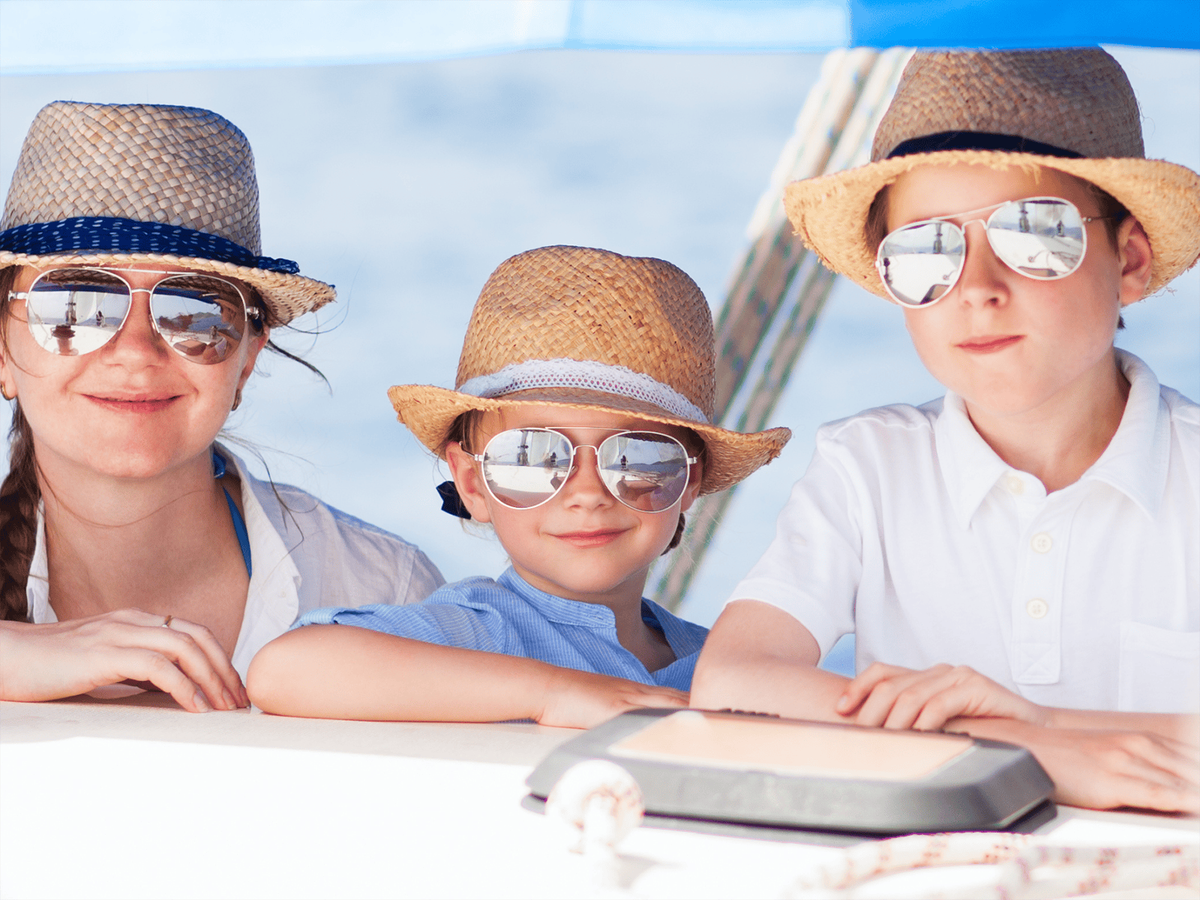

I’m Ella. I have more than nine years’ experience in yachting, seven of which were spent as a superyacht nanny. I have been lucky to work on the most incredible charters and family trips.
Working as a nanny on a family charters brings a unique blend of excitement and challenges and requires the crew to be not only skilled at their usual responsibilities, but also adept at catering to the needs of young guests.

Let’s start off with a few questions about the role of a superyacht nanny:
Does a superyacht nanny work directly with the chef to make sure the children’s meals are correct?
Typically the nanny will liaise with the chief stewardess on the children’s meals. I find out from the parents if they are happy with the proposed menu (and if there are any changes they would like), what time they would like the children to eat, and if all guests are dining together.
Are any duties split with regular crew duties?
In nanny/stew roles, there is a lot of crossover with standard crew duties. These can be quite tricky as a lot of yachts now have “no unattended children” policies, which means it is hard to nip off to do crew duties when the children are awake. When they are napping, it can be a good opportunity to undertake stew jobs.
As for freelance nanny roles, there is typically no expectation of doing stew duties. However, I always make my bed properly, keep the children’s areas tidy, sanitize toys every three to four days, and help out wherever I can. If turn-downs haven’t happened before the children’s bedtime (and the kids are sleeping in their parent’s cabin), I will often help with turn-downs as I know I am good at tip-toeing. If the babies/children wake up, I am a familiar face and can settle them back to sleep.
Do you work with different boats and how do they process different requests you have as a nanny?
I work freelance and so I am always on different boats, from 20-meter day boats to 90-meter plus superyachts. Ahead of the trip, I liaise with the chief stewardess to ensure we have everything required for the children for the charter’s duration. I like to source toys and activities to do on board as I know from experience what works really well. Chief stewardesses seem to have a funny knack for buying the same Paw Patrol and Peppa Pig activities each time — it is really strange how often it happens! As for children’s other provisions — toiletries, crockery, high chairs, etc. — the chief stewardess takes care of this (I am available to chat through options and offer recommendations). Lastly, the guests will normally bring their own baby formula, diapers, and more as the brands they are using are often not available in the yacht’s destination.
What is a day in the life of a superyacht nanny like?
Typically, the first day is madness, especially the first hour the children are on board. They are all over the place, taking everything in, getting to understand what is where and what incredible things are on board. It is a trip they have been really looking forward to so there is a lot of excitement!
I recommend not showing them everything at once — I am sure there are incredible things the yacht offers that can be held back a bit. This way the excitement lasts longer.
Safety on board is paramount, especially so with children and babies. Set the safety protocols from the start of the trip and highlight just how important they are to the children. If they are old enough to understand, involve them in the safety briefing.
Morning breakfasts are normally two rounds — first the kids eat when they wake up, then they snack as the adults eat breakfast. This sort of doubles as a mid-morning snack and gives them lots of energy for water sports.
After breakfast has settled, swimsuits are found, and sun cream is applied, it is time for water sports! The morning is often the best time of the day to make use of all the yacht toys as the water is calmer and the sun a little less intense.
If lunch is on board, the family will often dine together with a family style buffet. Afternoons are kept calmer, especially after a big lunch. Younger children might take a nap (thoroughly recommended to recharge their batteries!), while I encourage indoor activities such as Legos, den making, arts and crafts, or games in air-conditioned spaces with older kids.
After some chill-out time, it is often back in the water for the kids, unless the yacht is underway. If there is a pool on board, I often find deck crew having water gun fights with them!
In the evening, children normally dine earlier than adults (and also often before canapés have been served). For housekeeping, I know this set-up can make turn-downs very tricky — parents getting ready while kids eat, then kids bath and bed routine with nanny when cocktails and canapés begin.
To keep the charter exciting for everyone, I recommend leaving activities like treasure hunts and water Olympics challenges to one of the last days. The first days are filled with exploring the yacht and all the water sports it offers, so these synonymous charter activities keep the “wow” factor alive among guests!
A family charter experience should be a safe, enjoyable, and memorable voyage for guests of all ages. Remember, effective communication, proactive planning, and a commitment to safety are the foundations for a successful family charter.
Here are my top insider hacks for helping the deck crew make a family charter a resounding success.
Safety First on the Slide:
Slides are a beloved feature of family charters, but they come with risks, especially for little ones. When sliding down with a child, ensure they sit properly on your lap, with their body not touching the slide. This prevents accidents (potentially broken legs) where their legs may get caught under yours. Alternatively, consider sliding down first and being there to greet them in the water.
Lead by Example:
Children are keen observers and often emulate the behavior of adults around them. To avoid unexpected water gun attacks or other playful antics, lead by example and demonstrate respectful and considerate behavior on board. Water fight etiquette is also important — no drenching the captain or taking indoor shots.
Respect Parental/Childcarer Guidelines:
While you may have different opinions on what children can safely do, it is essential to follow the directives of parents or guardians.
Respecting their wishes fosters trust and ensures consistency in enforcing rules and boundaries. From personal experience as a nanny, I often look to crew to reiterate rules to children — for example, “checking” with a deckhand that children are not allowed on the fore deck when dropping anchor. Why? It is not safe and children can be a distraction that hinders maneuvering.
Protect Deck Surfaces:
For meals enjoyed on deck, use a drop cloth under any highchairs being used to ensure the teak is protected from spills and mess. This simple yet effective measure helps safeguard the wooden floors while accommodating the needs of young guests who are just starting to explore the exciting world of food.
If you’d like to find out more about Ella’s Superyacht Nanny services – job referrals, guides, coaching, provisioning and more — email ella@superyachtnanny.co or superyachtnanny.co.