
There’s nothing quite like the thrill of sportfishing — rod in hand, the engine idling, and the flash of silver just beneath the surface. The excitement doesn’t end once the fish is on the hook being reeled up on deck — that’s just the start of the show! The enthusiasm and anticipation continues in the galley where the alchemy begins: transforming a just-caught fish into a safe, delicious sushi-grade meal.
Before anyone sharpens a knife, safety is key, starting with understanding toxins. Ciguatera poisoning comes from eating reef fish that have accumulated toxins from certain microalgae. Common dangerous species include barracuda, amberjack, grouper, and snapper. Fish caught near coral reefs in warm waters like the Caribbean or South Pacific are especially susceptible. If you’re not 100% sure about the species and its origin, don’t serve it raw — or at all. Sportfishing guides and online regional toxin reports can help steer you in the right direction. When in doubt, opt for open-ocean pelagic species like tuna, mahi-mahi, or wahoo, which are far less likely to carry the toxin.
Once you’ve got a safe species on deck, how fast you’re ready for action is critical. You must have a plan for dealing with a fresh catch quickly. The first step is to bleed the fish immediately. This is typically done by slicing the gills or making a small incision near the tail and placing the fish head down in a bucket of seawater. This process improves flavor, appearance, and shelf life. Next, and also time sensitive, is gutting and rinsing. The internal organs should be removed as soon as possible, and the cavity thoroughly cleaned with clean, cold, potable water.
If you’re considering sashimi, here’s where things get serious. “Sushi-grade” is not a certification — it’s a standard set by the handler. First, the fish must be caught, handled, and cooled correctly. On many sportfishing yachts, that means placing it into an ice slurry the moment the fish is cleaned, bringing its core temperature down quickly to slow bacterial growth. If the fish will be served raw, the USDA recommends freezing it to -4°F (-20°C) for at least seven days or flash freezing at -31°F (-35°C) for 15 hours to kill parasites. While some chefs skip this with certain species caught in deep, cold waters (like bluefin tuna), most abide by the freeze rule to be safe.
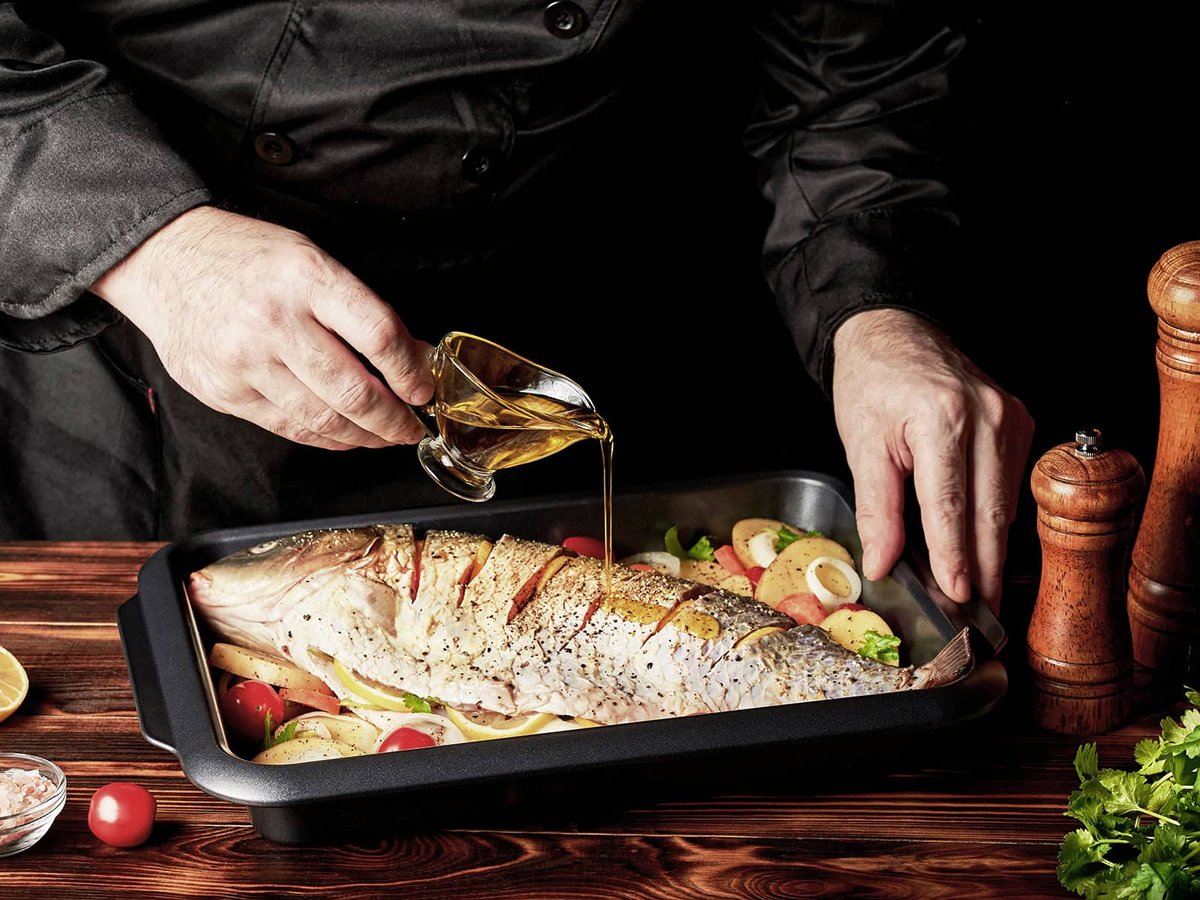
Once chilled or frozen, the fish should be filleted with surgically clean knives on sanitized surfaces. This is where a yacht galley’s precision pays off. Vacuum-sealing portions not only maintain freshness but also slightly ages the fish, enhancing umami flavor for sashimi-style presentations.
While the fishermen enjoy a cold drink, eager to see what the chef has created, there is true satisfaction in plating a catch that’s hours — sometimes minutes — old. Whether it’s seared, grilled, or delicately sliced raw with a drizzle of ponzu, the journey from hook to table turns into this perfect mix of skill, timing, and respect so that the line between fisherman and chef is seamless.
Battling the shark
It was my second day on board, still figuring out where the coffee lived and how to not trip over deck lines in the dark. At 4 a.m., running purely on ego and a little peer pressure, I joined the deck crew for a pre-dawn fishing session in the Exumas. Rods in hand, and counting the minutes until sunrise, it felt like a scene from some epic ocean adventure film.
About 30 minutes in, I got a bite. A big one. My reel started screaming, and so did my call for help. I locked in, rod digging into my hip, and was fully convinced I was about to pull in the fish of the season. Ten minutes of struggling later — arms burning, crew shouting tips, and my face locked in what can only be described as “confused determination” — I finally won the battle.
But when the catch surfaced, only two-thirds of it made it back.
Clean bite. Tail gone. The ocean had its own story. Turns out, I wasn’t just fighting the fish — I was in a tug-of-war with a shark who was clearly more experienced and a lot hungrier than me.
Lesson learned: Out here, intentions and ego are no match for innate survival skills.