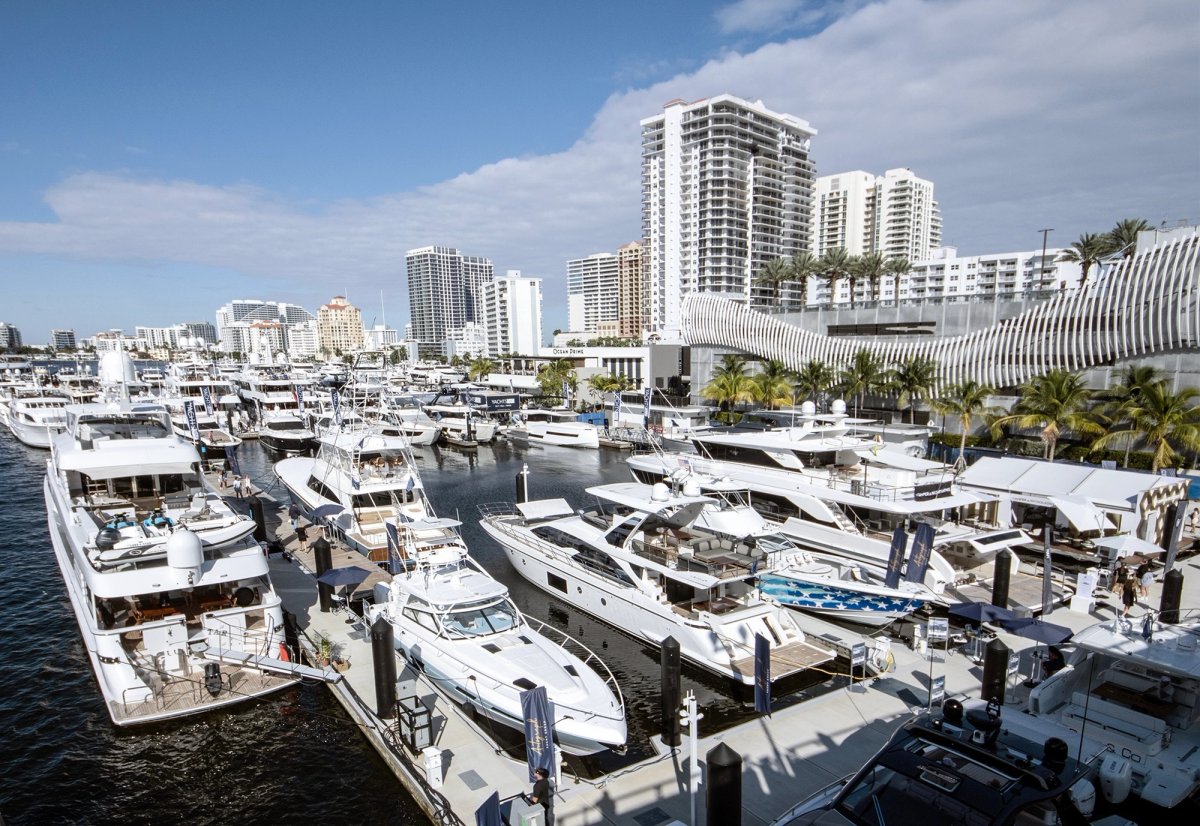

As the end of October approaches, the world’s largest in-water boat show is preparing to dominate the yachting world again. The Fort Lauderdale International Boat Show (FLIBS) returns Oct. 28 – Nov. 1, with crews building docks section by section, electricians following behind to install power, and yachts arriving in sequence to create a temporary waterfront city assembled from scratch.
With the Marine Industries Association of South Florida (MIASF) owning the show and Informa Markets producing and operating it, FLIBS has grown to span several waterfront locations across Fort Lauderdale. Last year, the show drew more than 100,000 visitors. Along the way, FLIBS has passed through plenty of memorable chapters. Triton looks back at some of the moments that helped shape the show into what it is today.
The Wandering Years
Before Bahia Mar became synonymous with FLIBS, the show was something of a nomad. It began in 1959 at Lauderdale Marina, drawing just 13 exhibitors. Still, for an inaugural show created by a small group of Fort Lauderdale marine-industry businessmen like Robert O. Cox and Frank Denison, it was a success.
The show’s second year crossed the Intracoastal to Pier Sixty-Six. With no admission or exhibitor fees, it was still a work in progress, yet it continued to succeed. Organizers used posters of beauty pageant contestants to promote the event, and a motor yacht was even converted into a floating billboard, according to the International Yacht Brokers Association.
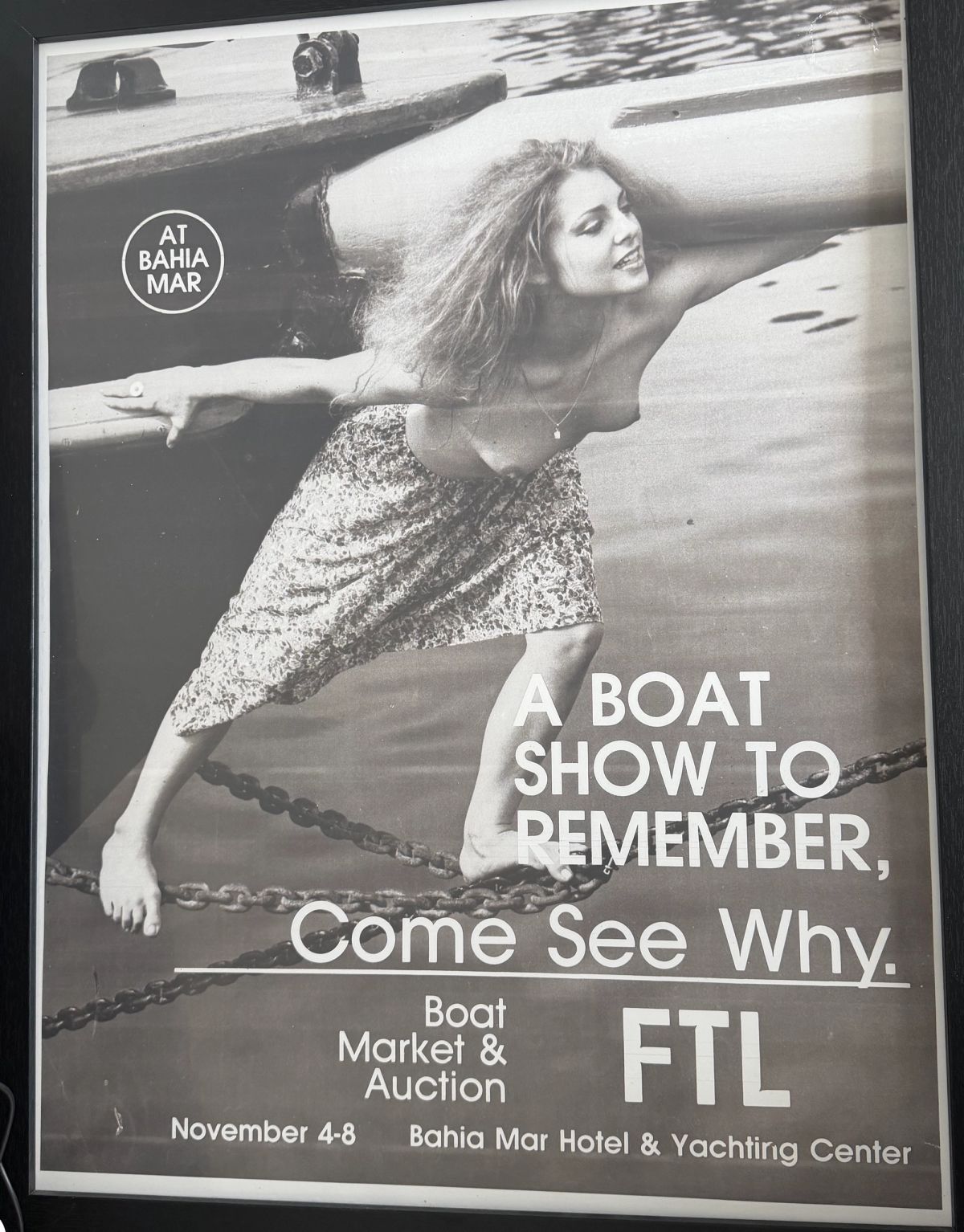
With the show growing, more space was needed. The now-named “Marine Industry Association Summer Boat Show” moved to Port Everglades from 1970–1972, charging admission for the first time. In 1973, an experiment saw the show move to Dania Jai-Alai when exhibitors wanted more indoor exhibition space. However, the move was brief due to one problem: there was no water. The show returned to the water in 1974–1975 at the Downtown Municipal Docks, with boats displayed on both sides of the New River. As each new location brought its own set of challenges, the show ultimately found a permanent home at Bahia Mar in 1976, where it has remained ever since.
Surviving Hurricane Wilma
Just three days before FLIBS was scheduled to open on Oct. 27, 2005, Hurricane Wilma made landfall on Florida’s southwest coast as a Category 3 hurricane, exiting near Palm Beach County as a Category 2. Broward County experienced severe hurricane-force conditions and widespread damage. Just one week later, FLIBS still took place.
Before Wilma arrived, show producer Kaye Pearson and his crew stripped fabric skins from all but five of the show’s tents, removed computers from the property, and kept vessels from entering the marina, according to Boating Industry. Parts of South Florida were still without electricity, gasoline was difficult to find, and only about a quarter of Broward County’s traffic lights were operating when the show opened, but FLIBS continued.
Pearson, MIASF, and local officials believed that cancelling FLIBS would have harmed Fort Lauderdale’s economy even more. MIASF polled its membership and received a majority of votes in favor of continuing, according to Boating Industry. Only 61 of 1,400 registered exhibitors did not attend. Attendance fell by 29%, but organizers said sales ranged from good to great and helped put money back into hotels, restaurants, taxis, and other local businesses.
When the Market Turned
Lehman Brothers filed for bankruptcy on Sept. 15, 2008, just six weeks before the 2008 FLIBS, intensifying a financial crisis already hurting the boating industry. Before FLIBS opened, industry reports said boat sales were lagging, manufacturers were laying off workers, and some marine lenders were pulling back. Still, FLIBS was massive.
The show covered three million square feet at six locations, featuring more than $3 billion worth of boats, yachts, equipment, and accessories. Attendance held up well compared to pre-show expectations, but sales were another story. Exhibitors reported weaker results.
However, according to Boating Industry, show management decided to market the event in Russia, the Middle East, and South America. International attendance increased about 15%, helped in part by favorable exchange rates earlier in the year. While much of the boating industry was squeezed during the financial crisis, yachts over 80 feet at FLIBS remained comparatively healthy. Although the financial crisis hurt, 2008’s FLIBS showed how far the show had come from its small local roots to a global class of yacht buyers.
Navigating 2020
The 61st edition of FLIBS ran Oct. 28 – Nov. 1, 2020. This was just months after boat shows and other events around the world had been canceled due to the COVID-19 pandemic. While Broward County officials debated the show’s safety plan in September, just two months before opening day, MIASF and Informa Markets were confident they could proceed safely.
Eventually, they did proceed. The show looked a little different: mandatory masks, widened docks, temperature checks using thermal imaging scanners, contactless tickets, expanded entrances to reduce congestion, and hand-sanitizing stations were littered throughout the show. While attendance was down 20% compared to the year before, several exhibitors, including MarineMax and Contender, reported great business.
As FLIBS continues to grow and evolve, its history suggests the show will keep adapting to whatever comes next. If the past is any indication, the next chapter is already taking shape along Fort Lauderdale’s waterfront.