
Corals are in an unfair fight. As microscopic marine animals, they battle giant forces of warming seas, pollution, tourism, reef destruction, unsustainable fishing, and invasive species.
More than 60% of the world’s reefs are at risk according to the World Resource Institute, and nearly 90% of Florida’s coral reefs have been decimated over the last 40 years, according to the National Oceanic and Atmospheric Administration.
However, corals have allies in the ring because coral reefs protect coastlines, livelihoods, and ways of life, according to Alice Grainger, senior director of strategic engagement at Coral Restoration Foundation (CRF).
“A healthy reef will reduce up to 97% of wave energy before it hits the shore — that’s the difference between water gently lapping at the beach and a wave smashing into homes,” she said.
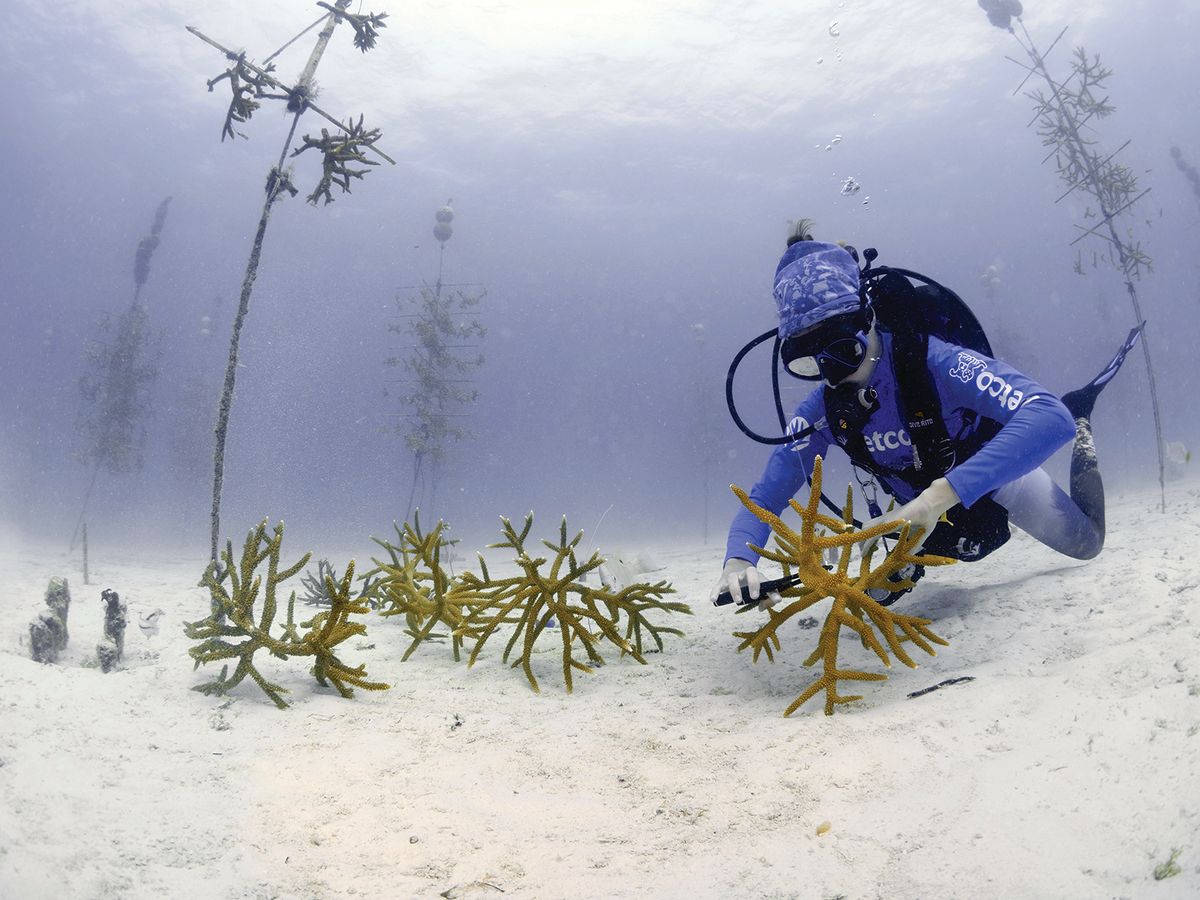
To the rescue are scientists, researchers, advocates, and volunteers to attack on a variety of fronts. Since it takes millions of corals to make a reef, many groups work to propagate the endangered creatures. Some harvest “coral of opportunity,” that have been naturally dislodged in storms or wrecks, while others collect polyps or larvae to propagate in laboratories and sea farms. Most groups replant, maintain, and monitor corals after they are “outplanted,” or moved onto artificial or existing reefs.
On the frontlines are a few of these innovations and innovators:
Land-based coral cultivation is just one tool used by the Reef Renewal Foundation to enhance large-scale coral repopulation, testing, and the maintenance of a gene bank.
Coral-attracting chemicals are being tested by researchers at UC San Diego’s Scripps Institution of Oceanography and Jacobs School of Engineering. A nano-particle gel applied to reefs releases chemical signals that encourage coral larvae to settle and grow where a damaged reef might emit deterrent cues.
Microfragmentation increases the growth rates and numbers of corals quickly. The Mote Marine Laboratory’s process is growing micro-sized pieces from cuttings of larger fragments of live coral for outplanting.
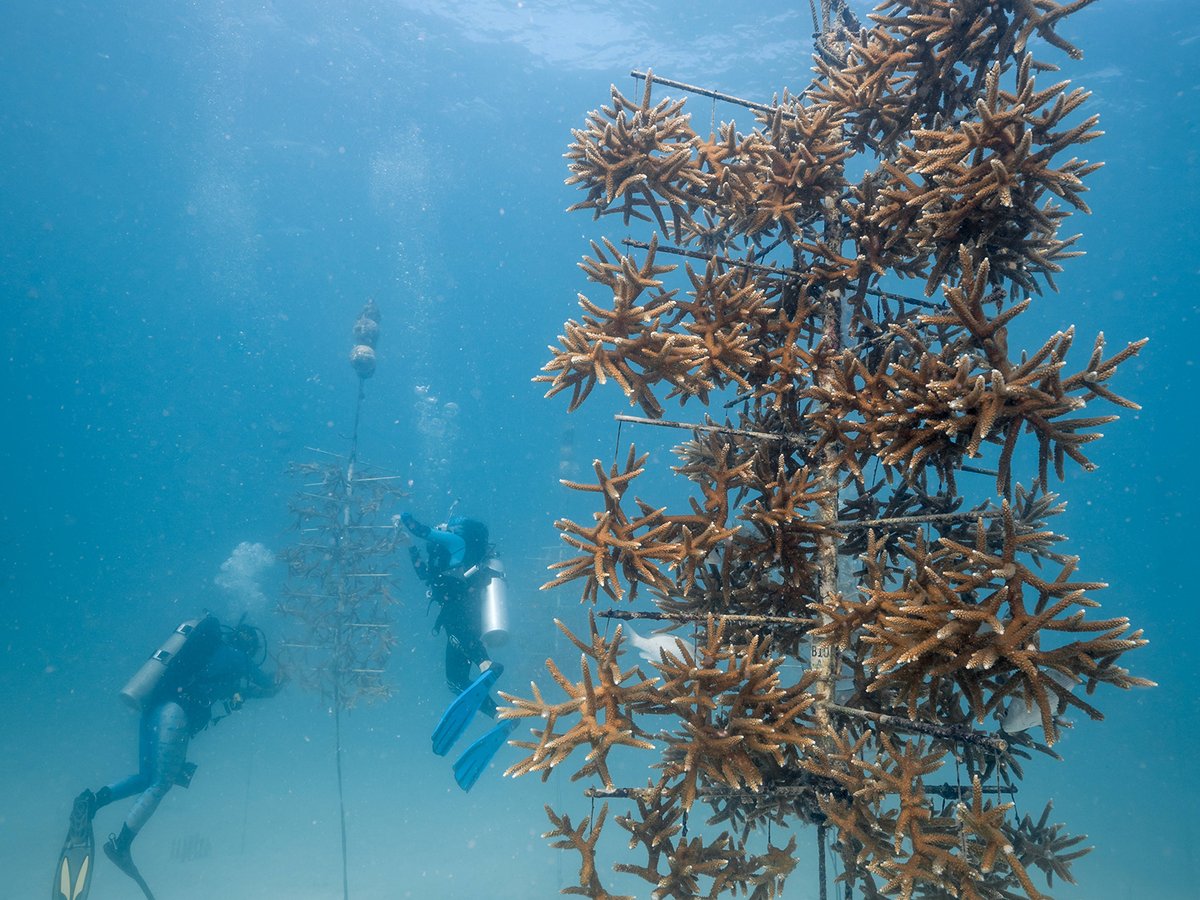
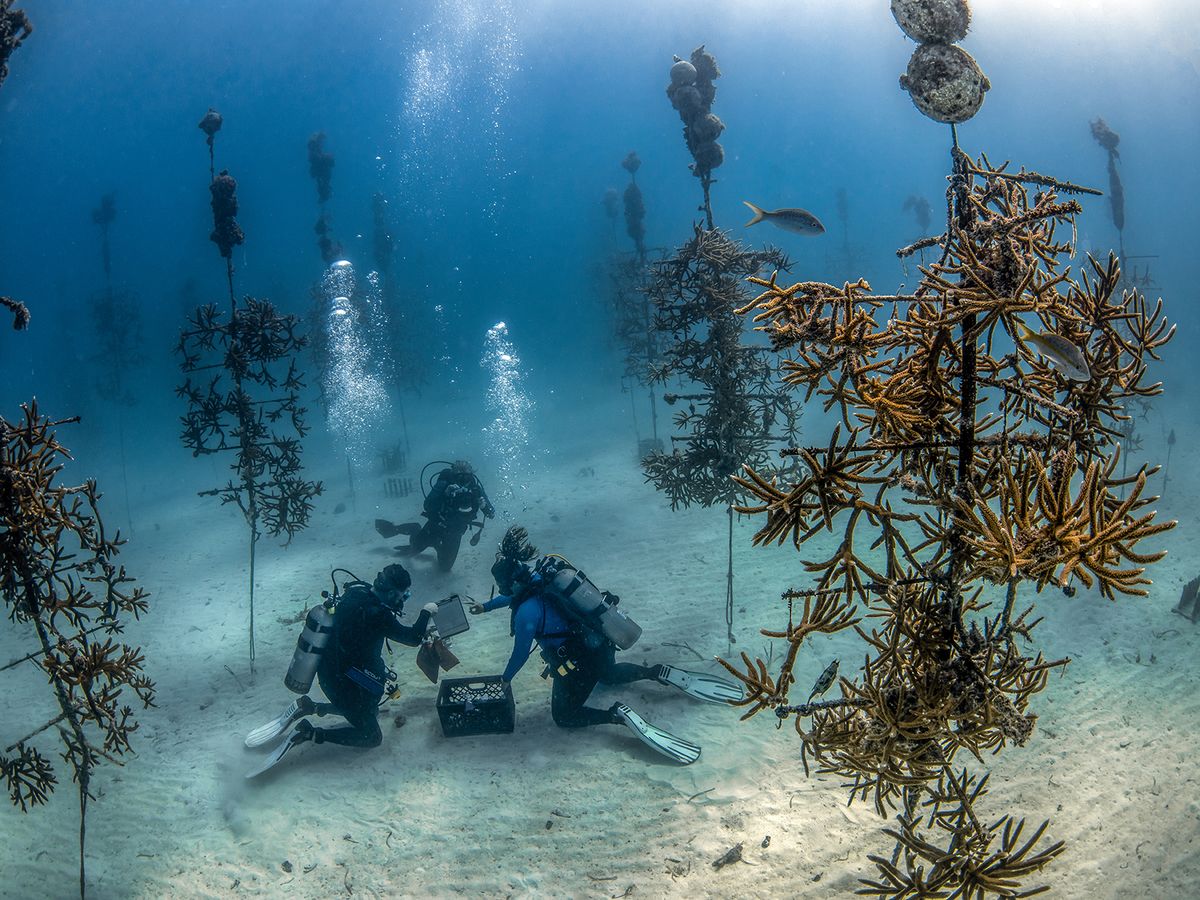
Coral Trees grow coral with a simple, low-footprint, scalable tool from CRF. The vertical “trees” house coral nurseries in the open ocean. These corals grow to basketball size in six to nine months, and are then harvested and rehomed onto reefs, according to Grainger.
Reef Stars are hexagonal steel structures deployed for artificial reefs in areas of damage. The Mars Assisted Reef Restoration System showcase is the HOPE Reef in Indonesia, formerly a dead field of coral rubble, that now has spawned new growth.
Coral Clips by Coral Nurture are nails with a metal clip used to attach coral outplants directly to reefs. Transplantations have been used on the Great Barrier Reef for coral fragments to quickly anchor to a reef from a donor reef or nursery. More than 100,000 outplants have been attached to date.
Intentionally Built Artificial Reefs include art and memorial structures deployed as artificial reefs. The 1000 Mermaids Artificial Reef Project includes underwater sculptures designed to enhance marine habitats and Eternal Reefs allow supporters to live on as part of an artificial reef with memorial markers from Reef Ball Foundation and Reef Innovations.
Each effort makes a difference.
“We are not saving the planet — the planet will survive,” Grainger said. “It’s been through mass extinctions before. What’s at stake now is us — humanity. That’s why this work matters, it’s not just about marine life, it’s about supporting communities.”
Although coral restoration is not the whole answer, it is an essential part of the solution.
“Right now, we know that, at the very least, we are preventing the extinction of these species,” Grainger said. “And that’s something worth fighting for.”