Ask an owner about a yacht’s name and they will talk about meaning, family, a private joke, a place that mattered. Ask the captain, and you will hear about Channel 16.
A name is not only something painted on a transom. It is a working tool, used dozens of times a day by the people who run the boat. Over the radio with port control. With the agent arranging a berth. With the provisioner, the fuel dock, the marina office, the tender driver circling a crowded anchorage at dusk. For an owner, the name is identity. For the captain and crew, it is a piece of operational equipment, and like any equipment, some are better made than others.
Two failures show up again and again, and both land on the bridge rather than the owner.
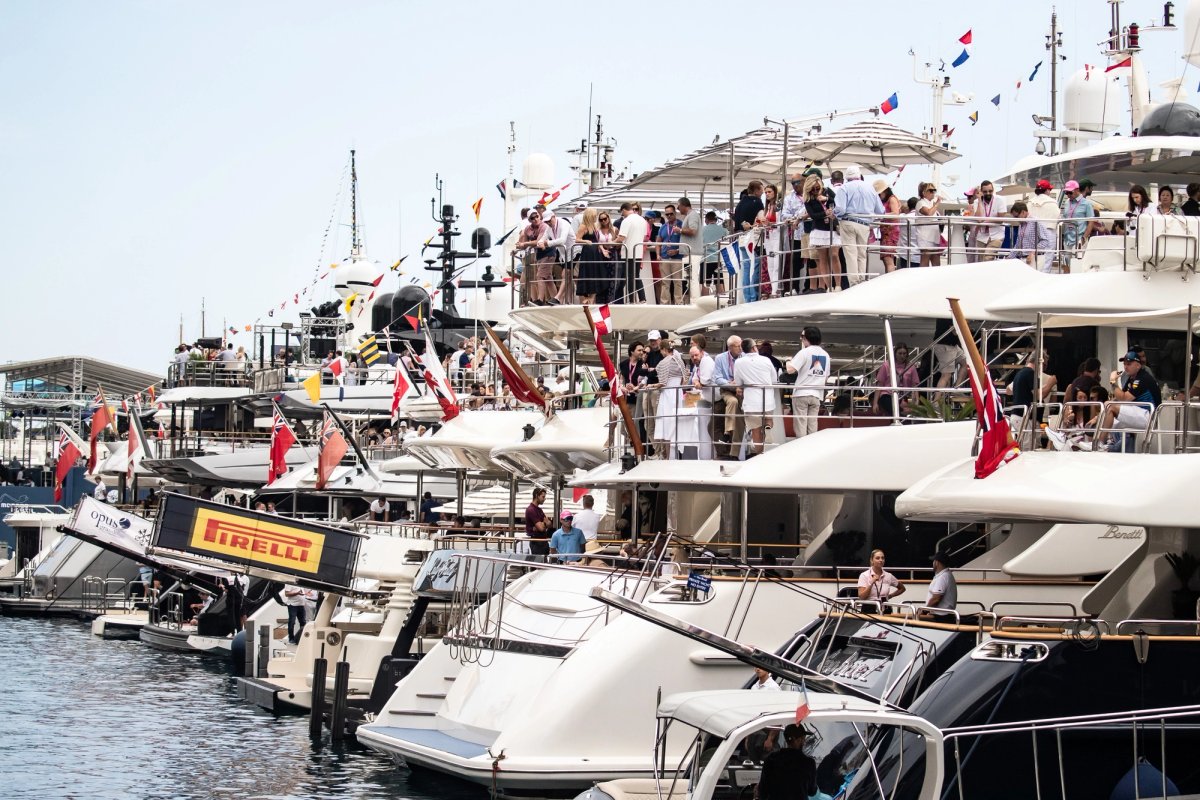
The first is sameness. Roughly one in four yachts above 30 meters share a name with at least one other vessel, and on the water, that overlap stops being a statistic. Anyone who has worked a busy Mediterranean season knows there is rarely just one Serenity in the anchorage, or one Freedom on the radio. Hail a common name on a busy summer evening and you may raise three boats at once, or none, while the one you actually want is still waiting. Names that look distinct in print can collide on the water, two vessels a vowel apart, indistinguishable once compressed through a handheld, an accent, and a gust of wind. Crew develop workarounds — last names, hull colors, the one by the fuel dock — but a workaround is just evidence that the name itself is not doing its job.
The second failure is harder to see on paper and obvious the moment you say it aloud: pronunciation. A name can look elegant in a brochure and fall apart over VHF. Take a name like Harmony: the H that anchors it in English disappears in French or Spanish. A J shifts shape from one language to the next, and a V and a B are near-indistinguishable to a Spanish speaker. These are not failures of taste but of transmission, and they surface the moment a name has to cross a border or a radio channel. In a Mediterranean port at the height of the season, with traffic stacked up and a harbormaster working in his third language of the afternoon, the name that travels cleanly is worth more than the name that photographs well. A captain knows this instinctively. It is the bridge team who have to repeat it, spell it, and hear it mangled back.
This is the part of naming that rarely gets considered before the lettering goes on, and it is the part that matters most to the people running the vessel.
It can also be approached with discipline rather than guesswork. At YachtNamer, ease of pronunciation is treated as a measurable criterion, scored as deliberately as distinctiveness or meaning. A candidate name is pressure-tested for how it sounds aloud, across accents, and across the languages of the ports a vessel will actually visit, not just how it reads on the page. We build a name the way a good yard builds a system, with the people who will operate it in mind. The question is not only whether a name is beautiful, but also whether it will survive a radio call. Those are different tests, and a name needs to pass both.
None of this argues against names that carry meaning. The best ones do both — they mean something to the owner and work at sea. A name can be personal and still be clear. It can be evocative and still be easy to say. The two are not in tension; they simply require that someone think about the name’s operational life and not only its sentiment.
That someone is rarely the owner, and almost never the person who lives with the consequences. The captain and crew inherit the name. They say it more often than anyone, in more demanding conditions, and they are the first to feel it when a name is confusing, forgettable, or a mouthful at the worst possible moment.
So, here is a small proposal for anyone naming a vessel, or advising someone who is. Before the decision is final, say the name out loud as if you were hailing port control in a crosswind. Say it as if there were two other boats nearby with names just like it. Say it as if the person on the other end had never seen it written down. If it still comes through clearly, you have a name that will serve the boat, and the people who run her, for its whole working life.
Getting a name right is not luck. It is a discipline, and as long as she wears it, the whole crew lives with the result. Get it wrong, and the bridge will know first. They always do.
Hermann Spicker is the founder of YachtNamer, the world's first studio dedicated to superyacht naming and identity. YachtNamer works with owners, shipyards, and brokers to create distinctive names and identities for vessels, bringing professional rigor to a decision too often left to chance.