
Yachting promises picture-perfect moments, but behind the glamour lies a reality few like to acknowledge: things can go wrong. When they do, the consequences can be dangerous and costly.
Two incidents illustrate how quickly a routine day can spiral. In July 2025, a California captain went viral after crashing his 70-foot vessel into a concrete barrier in Marina del Rey when he was unable to stop the engines. Four years earlier, the 77-meter M/Y Go lost control in St. Maarten, narrowly avoiding a collision with the island’s bridge.
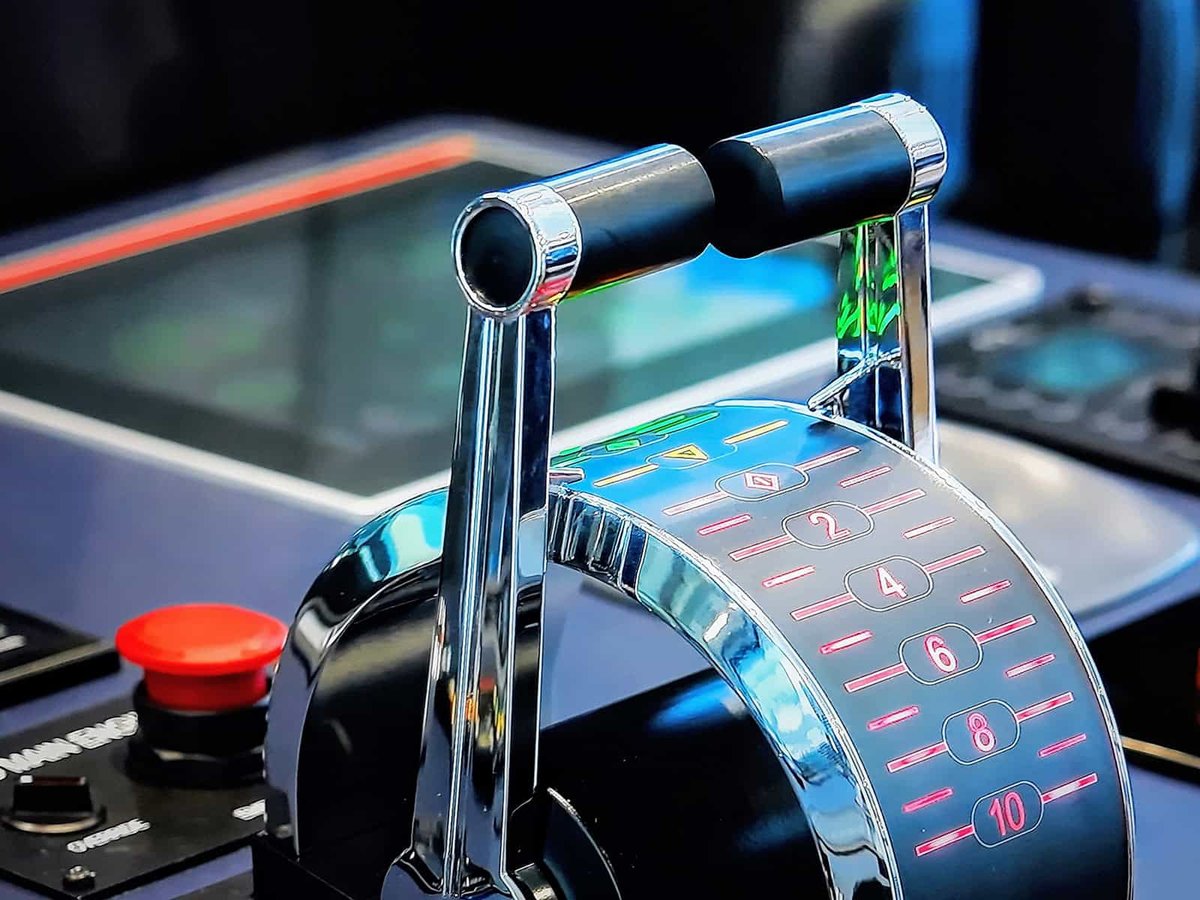
In Marina del Rey, local news reported a mechanical malfunction. Social media accounts quoted the captain as saying the throttles were stuck and the engines wouldn’t shut down. To avoid hitting nearby boats and people, he deliberately aimed for the dock. It’s unclear whether he was alone on the boat at the time.
The captain of M/Y Go, Simon Johnson, apparently faced a similar choice. “The yacht started moving mysteriously forward,” he told the island’s newspaper, The Daily Herald, at the time. “There was nothing I seemed to be able to do; all the controls on the bridge were showing normal.” The engine room also showed normal operations.

“I found I had extremely limited control, almost limited to only the bow thruster, but with now only 50 meters between us and the bridge, I had to make a decision fast,” Johnson said. He had 13 seconds to decide on his movements and ultimately chose to steer into the yacht club dock, avoiding major damage, injuries, or spills.
So what should captains do when control fails?
“Trying to reduce damage and injury should be the main priority,” John, an engineer, who prefers to remain anonymous but has decades of experience in both oil and gas and yachting, said.
Most experienced captains and engineers agreed on a fundamental principle: stop the engines if possible or drop anchor to slow the vessel. “If the engines are stuck in gear, dropping the anchors and shutting them down are the logical solutions,” said Capt. Mark Gallaway of the 137-foot M/Y Future.
Paul, another experienced engineer who also asked to be anonymous, agreed. “Something will work. An engine cannot run without fuel or air.”
“Emergency engine stops should be used, and anchors deployed to regain control while the issue is investigated,” John said.
Yet, as the Go incident revealed, anchors aren’t always a solution. Capt. Johnson believed dropping anchor would have been disastrous in his situation. “By the time the anchor hit the bottom, we would have been 30 meters further in,” Capt. Johnson explained at the time. “We would have pinned the bow upwind and slewed the stern toward the rocks and bridge.”
Chief Engineer Jeff Vrana, with 45 years in the industry, noted that sometimes a captain faces only bad choices. In the California incident, “He may have thought, another boat is coming toward me — I’ll take the dock. His options were bad and worse. He chose bad.”
Timing is everything, too. “It depends on how much time you have to evaluate the situation,” Paul said. “Sometimes you have seconds. Sometimes minutes. And sometimes a controlled crash is the answer. No one was harmed and no one was killed. Perhaps he/she made the best decision. One should not be so quick to judge.”
Capt. Johnson considered his controlled crash — with no injuries, spills, or extensive damage — the right decision. “The decision I made was one I would make again if faced with the same circumstances,” he told The Daily Herald.
Managing the Damage
Gallaway believes steering failures are about minimizing harm: “If it’s during docking, you work with the wind and current in the moment. If control is lost underway, you rely on anchors and emergency shutdowns. Every situation is going to be different,” he said, depending on operator experience and how quickly the crew can get roaming fenders in place.
“[You must] prepare for a sudden stop or collision. If passengers are aboard, they should be warned to hang on to something fixed to avoid being catapulted and injured.” He also recommends sounding the emergency horn — seven short blasts and one long — to alert anyone nearby who might assist.
Prevention
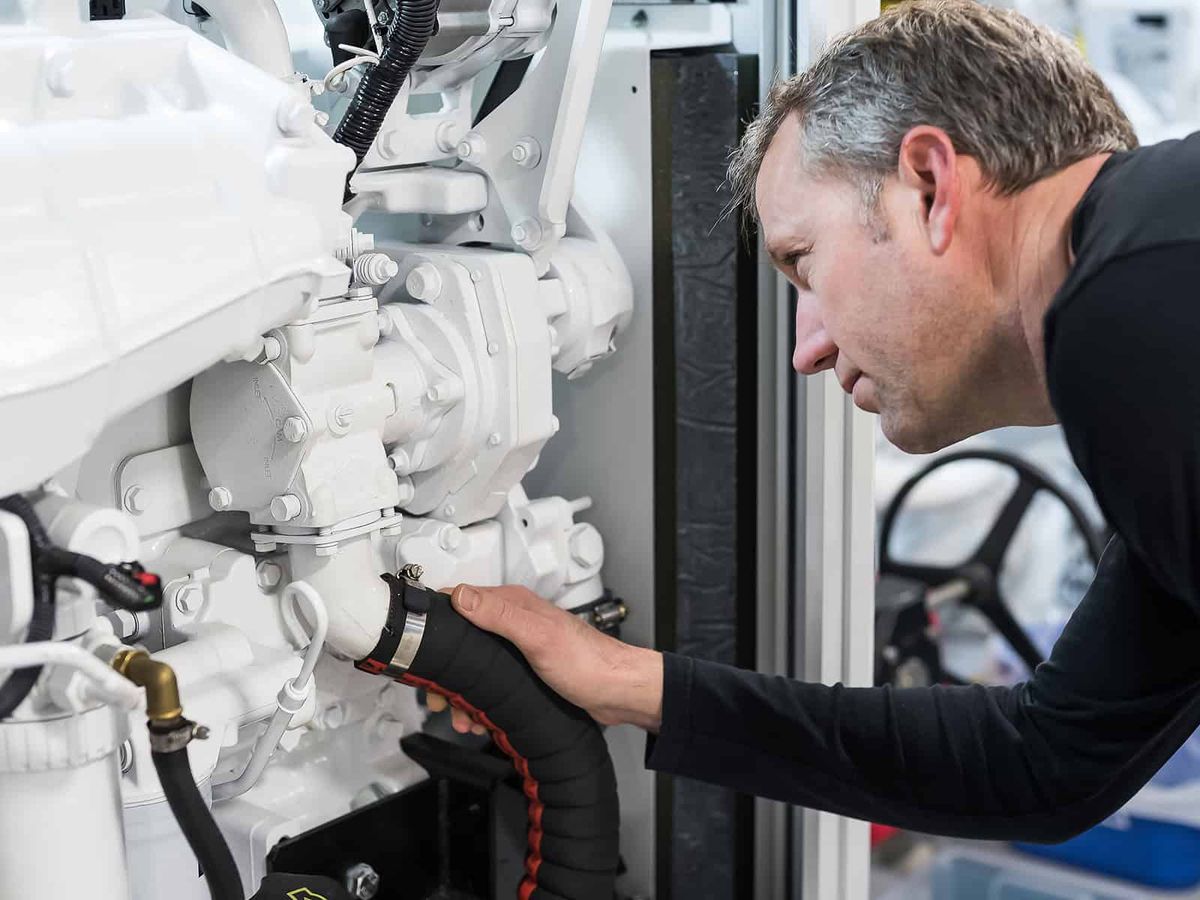
Preventing an incident is always best, but not always possible. “Preventing control issues starts with routine maintenance and testing,” John said. He recommends regular dockside checks of engines, generators, steering, hydraulics, and thrusters, with results logged and shared with the captain. Any faults must be reported and addressed immediately to ensure confidence in maneuvering.
Vrana agreed — you solve any problem until the boat is reliable again. In his mind, that means testing. First a dock test with lines on, then a sea trial test.
Crew training and risk mitigation are also important. Knowing how to handle emergencies can mean the difference between a close call and a major disaster. “It’s a team effort,” Vrana said. “The first officer must make sure that the anchor is ready to drop on a ship or a yacht at all times, whenever you’re in limited maneuvering spaces.”
“Crew training and procedures are important,” John said. “Knowing what to do in an emergency can mean life and death, or a very expensive insurance bill.”
Yachting may sell the dream, but when the unexpected happens, split-second judgment and thorough preparation can determine how well the story ends.