
This year’s headlines have been filled with superyacht fires, fatalities, and crimes at sea. Are these events actually increasing or just more visible?
A Year of Yacht Fires
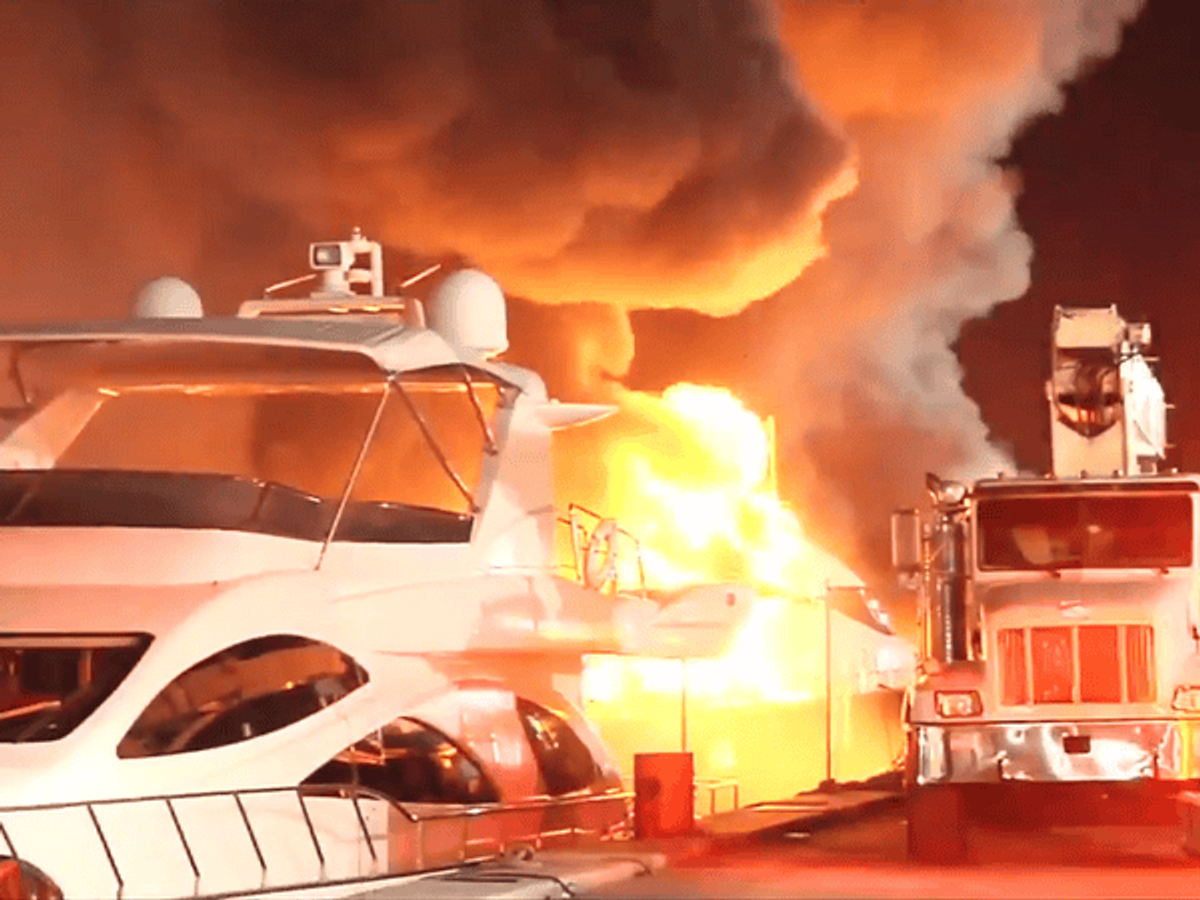
Several major yacht fires dominated the news:
• March: Three yachts burned and sank on the Miami River, an incident investigated as arson.
• June: A single boat fire escalated into a six-vessel blaze in Sunny Isles Beach, Florida; a 26.2-meter Falcon yacht was one of the damaged boats.
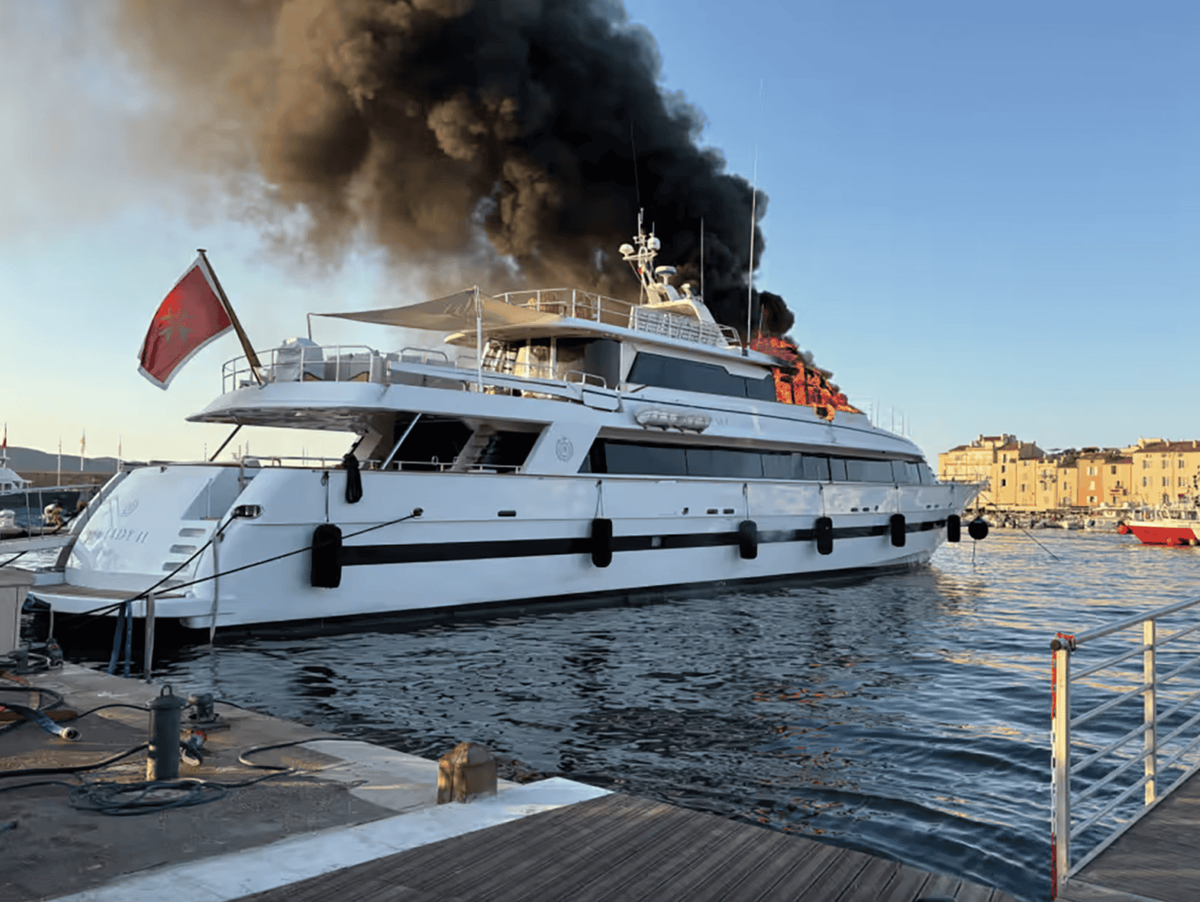
• July : The 41-meter Sea Lady II caught fire and sank in St. Tropez. Two out of eight crew suffered minor smoke inhalation; the cause is believed to be an electrical fire on the bridge deck.
• August: The 29-meter M/Y Da Vinci went up in flames off Formentera, Spain, after a fire spread from the engine room.
• October: In Washington, D.C., the 58-meter Dancing Hare sustained an electrical fire on the upper deck.
• October: A fire in the engine room of the 49.8-meter Espadarte forced the evacuation of 16 people off Agropoli, Italy.
Is the Industry Really Seeing More Incidents?
“More happens than makes the headlines,” said Capt. Kelly Gordon of 142-foot CABO. “Lots of near-misses and ‘we handled it’ events don’t meet the threshold for public reporting.”
Most issues are minor and resolved early. She believes visibility — not frequency — is the real shift.
“Social media, AIS trackers, and niche yachting accounts now surface incidents we’d never have heard about 10 years ago,” Gordon said. Larger vessels, tighter turnarounds, and more complex systems also raise the stakes.
“It might seem that way from the outside because social media amplifies shocking stories,” said Spa Stewardess Laura Riera.
The Lithium-Ion Factor
One area is becoming more frequent: lithium-ion battery fires.
“Fires are not normally under-reported, so any increase in report numbers is likely to be accurate,” said Adam Parnell, director maritime at CHIRP (Confidential Human Factors Incident Reporting Programme). “A number of these fires are caused by lithium-ion batteries, which are quickly becoming ubiquitous, especially in water toys.”
In August, the U.S. National Transportation Safety Board concluded its investigation into the April 2024 explosion aboard 24.9-meter catamaran Flagship in Miami, determining that a faulty 24-volt lithium-ion battery bank was the “probable cause.”
Thermal runaway — when an overcharged or damaged battery releases flammable gases — can escalate quickly. CHIRP, an independent charity dedicated to improving safety in the air and at sea, urges using high-quality batteries, following proper charging protocols, and timely replacement to significantly reduce risk.
The Complexity of Whisper Networks
Crew increasingly rely on private WhatsApp and Facebook groups to warn each other about unsafe boats, scams, or toxic environments. “It’s a quiet way of keeping one another safe,” Riera said, citing groups like Yachties Name and Shame.

Gordon sees their value but cautions that some groups have drifted into “unprofessional” territory, becoming places to complain or “wrongfully oust folks.”
Why Reporting Crimes Remains Difficult
Reporting is rarely straightforward. “Crew may be fearful of losing their job if they report an incident, or of being ‘blacklisted’ in the industry, and this is an area where we need to see real cultural change in yachting,” said Laura Beard, Welfare of Yacht Crew Project Manager for International Seafarers Welfare and Assistance Network.
ISWAN’s free, confidential helpline, YachtCrewHelp, has seen increased contacts from crew shaken by serious incidents or near misses. It’s available 24/7/365.
Crimes at Sea
Money laundering: In March, French authorities auctioned 41-meter Stefania, seized in an arms and drug trafficking investigation of Belarusian national Chaslau Koniukh.
Murder: In July, 20-year-old stew Paige Bell was killed aboard Far From It in The Bahamas. She’d previously reported sexual harassment by engineer Brigido Munoz, now charged with her murder. The case sparked calls for stronger hiring standards and background checks.
What About NDAs?
Non-disclosure agreements often intimidate crew, but shouldn’t silence them.
“NDAs are meant to protect the owner’s privacy, not to cover up illegal activity,” Riera said. “A non-disclosure agreement has no legal value when something criminal has happened.”
Beard agrees: none of the NDAs she signed when working as crew would’ve prevented lawful reporting, though the legal language can be confusing, so crew should always ask questions before signing.
Gordon stresses that contracts should explicitly carve out exceptions so NDAs can’t be misused as gag orders around safety violations, assault, or harassment.
Changing the Tide
Riera believes clearer education and reporting pathways are essential, especially around sexual harassment. Fear of retaliation or blacklisting still keeps many quiet.
“The public might be surprised to know that most captains want more transparency because silence doesn’t make us safer,” Gordon said. She advocates for a central reporting agency and stronger industry standards on bullying, harassment, drugs, and alcohol — areas where the commercial industry already outperforms yachting.
She’s optimistic, pointing to the Cayman Flag state as one of the most forward-thinking authorities. Real change, she says, will require alignment among flag states, class societies, crew, owners, and management — and progress is underway.