
An update on the training and education industry for yacht crew.
Every level of yacht crew education is changing, from starting your basic training to obtaining your captain’s license. Triton spoke to different academies and training facilities to better understand the current state of crew education, what changes professionals would like to see, if green crew are prepared enough, and new trends.
The Standards of Training, Certification, and Watchkeeping for Seafarers, or STCW, is the building block of a yachtie’s career. While many crewmembers have further advanced their careers, they should still be interested in the basis — especially if they’re senior crew. Hiring crew right after certification is a reality for yachts, so should longtime crewmembers feel confident that basic training teaches new crew enough? Will Williamson, marine programs coordinator at Resolve Maritime Academy, believes so.
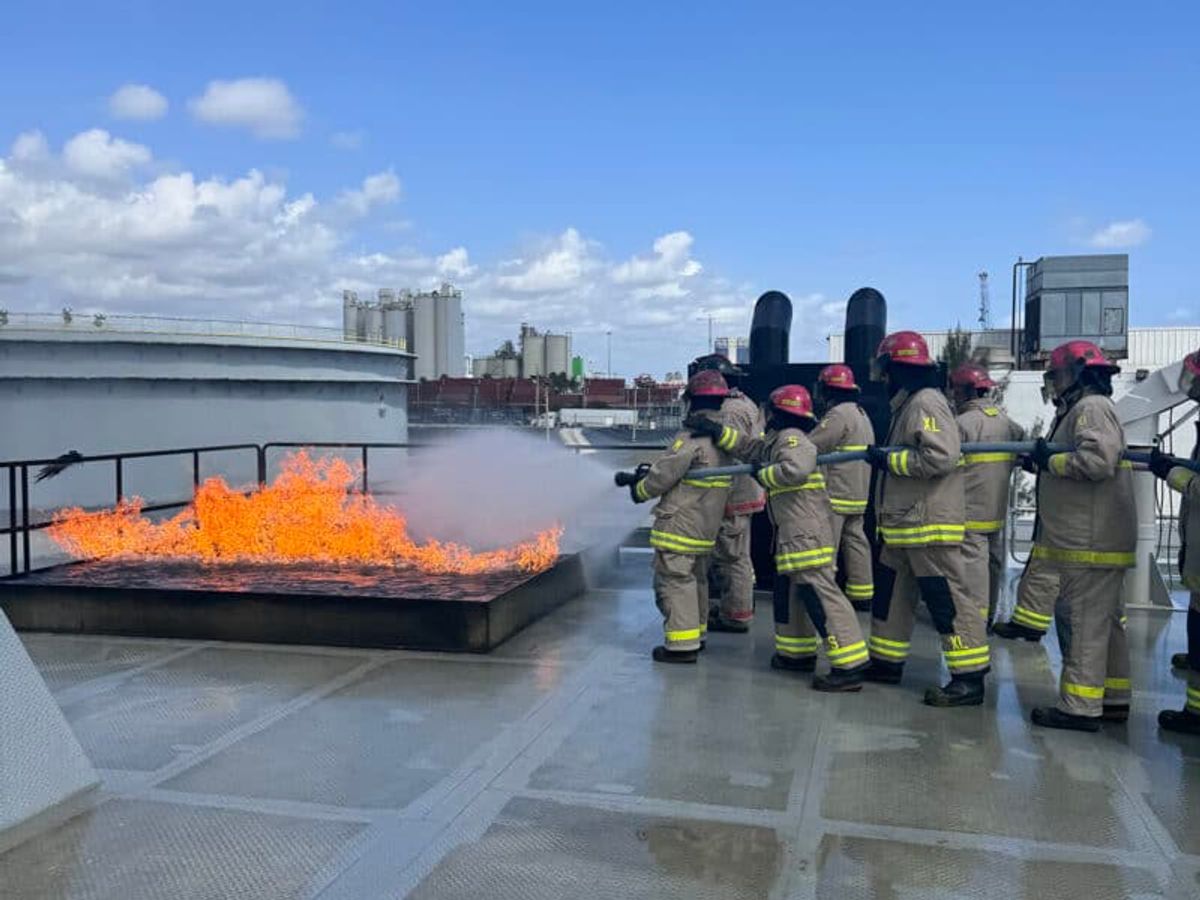
“Could we add some damage control in there? Sure, but keep in mind that a lot of our potential crewmembers that are coming through STCW basic have never been exposed to maritime anything,” Williamson said. “You don’t want to ramp it up too much to where it freaks them out, or it’s too much that they don’t want to go into the maritime industry, but you want to give them enough that they see that this is not a nine-to-five office job and that they’re going to work in an environment that is inherently dangerous.”
A leading mariner training center in Fort Lauderdale, Florida, Resolve offers professional yacht training, certification for different STCW courses, and advanced firefighting courses in their state-of-the-art facilities.
“I think if we look at the idea behind basic training, it’s really more about [crewmembers’] safety, and I think in that regard, the current basic training course is very effective at that,” said Capt. Ted Morley, CEO and school president of Maritime Professional Training (MPT). MPT is a full-service private maritime school that offers training for commercial and yachting careers in Fort Lauderdale, Florida.
While STCW’s basic training is considered acceptable for green crew, that doesn’t mean education professionals don’t wish more was added to it — or removed. Lana Farrell, executive director at Resolve, values the attention to fire that basic training offers, but believes more time should be given to real-life scenarios over the full bunker gear.
“There are some opportunities that may be missed with so much time oriented towards some of the dress outs, and not to take away from the importance of it, but some of these first-time mariners may not need to know about full gear out versus, ‘There’s a fire in the galley, what are your first initiatives,’” Farrell said.
Morley agrees with Farrell’s premise, stating that he thinks it’s important to keep training relevant to the real world. One thing Morley would change from basic training is the new technology lag.
“There can [be] a lag to remove obsolete training requirements as technology moves away from certain areas — think of how long LORAN-C questions remained on the exams even after both the technology and real-world equipment changed,” he wrote in an email.

Basic training, with additions and removals, can still only cover so much. As crew enter the industry and choose which area they want to specialize in, there are heaps of additional courses they can choose from Resolve, MPT, and The Yacht Stew Academy — a fully online accredited training academy created by Gemma Hulbert. Hulbert started the academy after years working as a crewmember in the industry and she helps interior crew advocate for their own education.
“Stepping on board as a junior crewmember, there are so many nuances and so much to learn and understand that STCW [basic training] doesn’t really touch because it’s not specific for yacht crew,” Hulbert said.
While additional, role-specific courses are invaluable for crewmembers, Capt. Hugo Ortega says crew should make sure to take them from accredited, legitimate academies.
“A deckhand course that takes two to three weeks is pretty ridiculous, and you might think it could be helpful, but I’ve talked to crew that come out of those courses and they say no, it wasn’t helpful, it was a waste of time and super expensive,” Ortega said. “There’s a lot of thievery and bad stuff from people that are looking to make money off crew, too.”
Ortega is the founder and CEO of Superyacht Sunday School, where he helps hopeful crewmembers enter the industry and guides them toward securing their first jobs, sets them up with a plan for success in the industry, and mentors them in the process.
Professional educators must also stay vigilant of incoming trends and curriculum changes as they look to prepare crew the best they can. One incoming change is an approved amendment to the STCW code that will tackle bullying, harassment, and sexual assault in the maritime sector. MPT works with flag states and non-governmental organizations to ensure they’re staying current with regulatory requirements, and to stay aware of what’s to come. The new harassment amendments were easy for Morley to prepare for.
“I was part of the U.S. effort that worked on the SASH (Sexual Assault and Sexual Harassment) recommendations to the IMO (International Maritime Organization) — that particular training piece is something I am quite proud to be part of,” Morley wrote.
While Morley also mentions technological advancements as a continual trend in crew education, Williamson focused on something that can endanger almost every yacht on the ocean — lithium-ion batteries. Fires caused by these batteries have become nightmare scenarios for all mariners, and Williamson sees it as a hot topic crew want to learn more about.
Ortega, at the frontlines of the incoming crew, has seen a trend that is the product of the reality TV series “Below Deck.” He has noticed many new crewmembers expect the industry to be exactly how the show presents it, and while some interactions on the show remind him of times he had in the crew mess, it leads crewmembers the wrong way just as often.
“They’re not doing their due diligence and research back home before they get on the hunt, so you see these people getting into desperation mode,” Ortega said. “They’re on Facebook groups, they’re on social media, pretty much a nervous wreck because their visas are about to finish or they’re about to run out of money.”
Hugo says this trend can often lead to desperate crewmembers being taken advantage of with extremely low wages due to their situation. He hopes to continue spreading transparency in the industry through Superyacht Sunday School.
Hulbert is seeing two trends in interior education: the openness of learning between interior crewmembers and the growing owner demand for crew responsibility.
“What [owners] are expecting is growing because, within the hospitality industry as a whole, we’re always progressing to make sure that the guest’s experience is continually elevated,” Hulbert said. “It’s important that the student’s education is continually elevated as well so that they can match that need.”
While crew responsibilities continue to grow, more crew are hungry to learn through higher education — and training and education schools, academies, and facilities like these will be ready to help.
Images by Ethical Yacht Wear, Resolve Maritime Academy, Maritime Professional Training, and The Yacht Stew Academy.