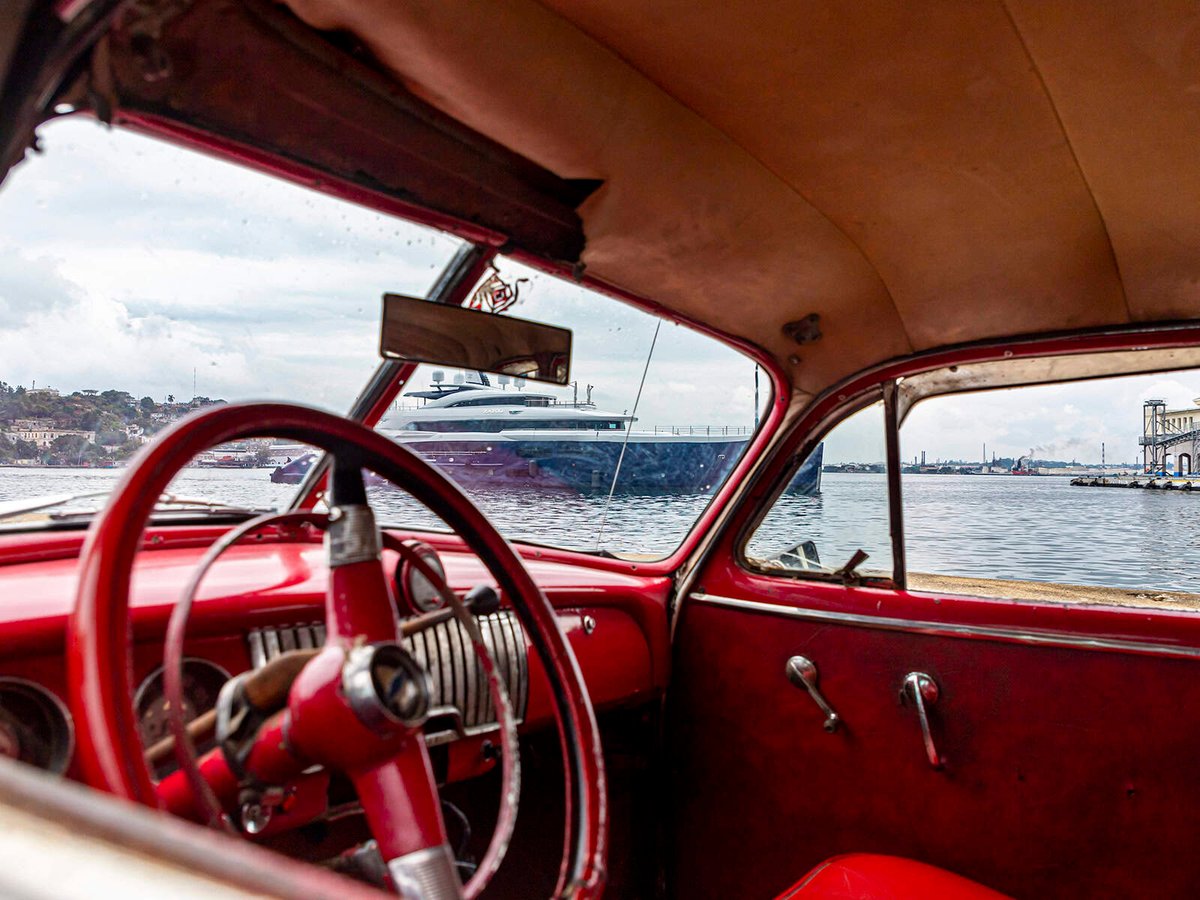
Cigars, salsa, classic cars, and a rich history might be what comes to mind when thinking of Cuba, but what about the archipelago as a yachting destination? Cuba boasts seven international ports of entry, private aircraft landing facilities, deep anchorages throughout the minor archipelagos and major bays, and a plethora of marine and land experiences. Triton reached out to CubaPlus Travel and Cuba Luxury Expeditions to find out why Cuba should be added to your charter schedule.
Entering and Exiting Cuba
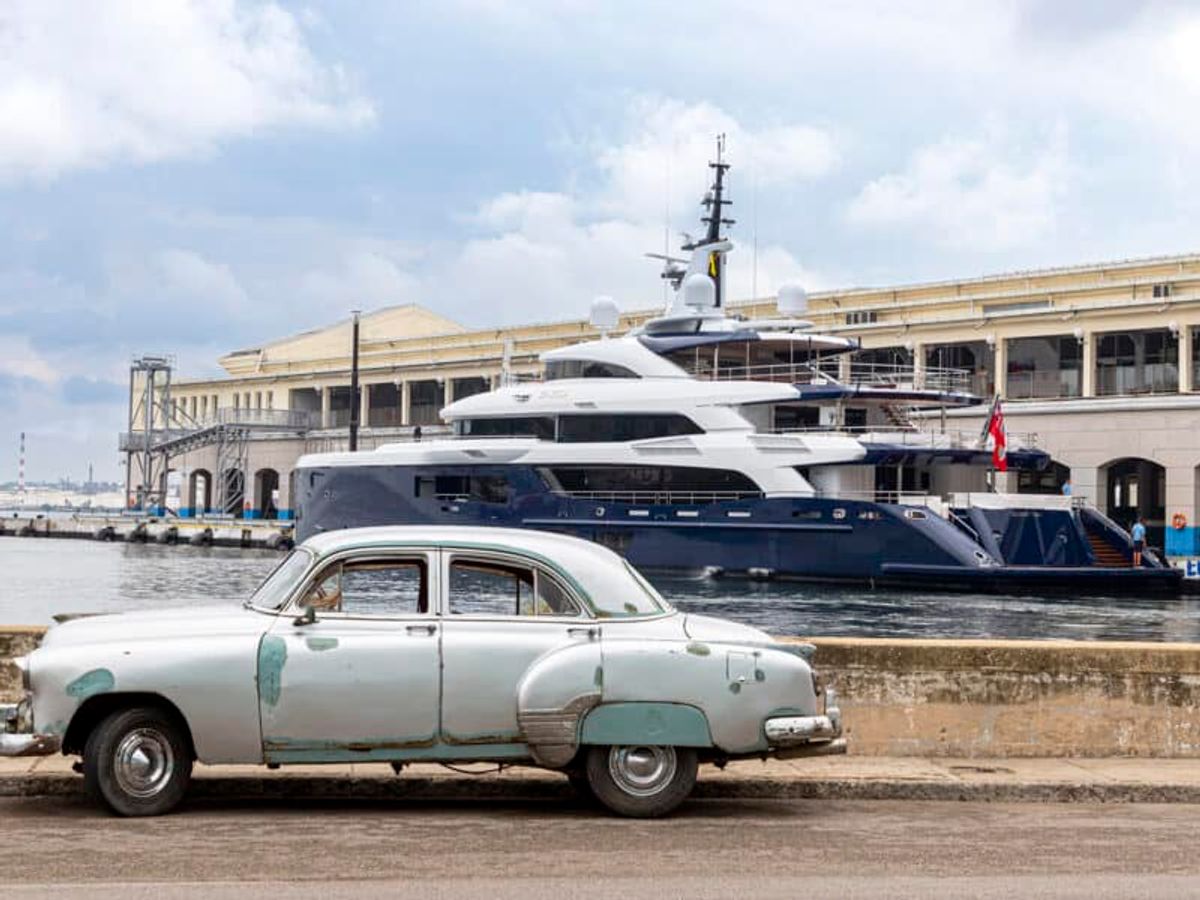
Despite the strained modern diplomatic relationships between the United States and Cuba, Senior Travel Consultant Maria Romeu of CubaPlus Travel said Cuba welcomes all vessels and visitors regardless of their country, nationality, citizenship, or residence. While the Trump administration imposed restrictions in 2017 on U.S.-owned, -manufactured, or -flagged vessels from entering Cuba, U.S. laws established in 1997 allow U.S. citizens or people under U.S. jurisdiction to travel to Cuba legally under a general license. The license does not require a formal application and is considered implicit if you purchase your travel from a licensed Cuba travel provider, according to Romeu.
Romeu also states that yachts not owned, manufactured, or flagged in the U.S. will be able to enter Cuba and subsequently re-enter the U.S. after visiting Cuba. A yacht agent is highly recommended when visiting Cuba, as Cuban authorities will require vessels to provide ship’s documents, crew and guest lists with color PDFs of passport photo pages in advance, as well as a tourist card if arriving aboard the vessel. An electronic visa is needed for those arriving by plane. Along with their local knowledge, yacht agents can save four to five hours on entry through their communication with Cuban authorities and by collecting all documents in advance. All vessels must follow similar procedures as when entering other countries, such as providing clearance from their last port and a customs declaration form.
Romeu advises that captains make radio contact with port authorities upon entering Cuban waters. Channels 16 and 72 are the Port Authority, channel 19 is the Tourist Authority, HF (SSB) 2760 is the National Coast Network, and 2790 is the Tourist Network. Calling in allows authorities to prepare for your clearance; guards will be awaiting you at the dock if you do not call in. Also, remember to bring enough cash (either euros or U.S. dollars for favorable exchange rates), as U.S. credit and debit cards are not accepted in Cuba.
When it’s time to leave Cuba, “There is nothing specific that any yacht has to do upon leaving Cuba that isn’t the same as anywhere else,” Romeu said. “The authorities and marinas are informed of the departure date. They go through a regular clearance process, and they must leave from an international port, and that’s basically it.”
Cuba’s Regulations
While Cuba does welcome yachts to cruise its waters, captains and crew should be aware of several rules and regulations before starting their Cuban charter. Yachts are not permitted to land at unauthorized locations along the coast or take anyone on board the yacht apart from those on the crew or guest list, or specified in special boarding permits approved by Cuban authorities, according to Romeu. Tendering to shore is allowed freely on the islands and islets in the four minor archipelagos, but is not permitted on the main island of Cuba unless the vessel is at a marina or harbor.
Vessels are not allowed to fish in Cuban waters without a fishing license. According to Romeu, scuba diving can only be done through Cuban dive centers with an official instructor. Spearfishing is prohibited and marine life, flora, fauna, or other objects cannot be taken from the sea. Archaeological objects should not be removed, defaced, or exported.
Exploring Cuba by Yacht
After finishing paperwork and learning regulations, the fun begins. Spanning more than 1,000 square miles of what many regard as the most well-kept coral reefs in the world, along with hundreds of historic boat wrecks to explore through scuba diving, Cuba’s aquatic activities are a paradise for charter expeditions. Cuba’s land offerings are equally impressive, featuring historic colonial districts — many designated as UNESCO World Heritage sites — a growing DJ culture and culinary scene, and countless museums for captains, crew, and guests to explore. Carlos Miquel, a founding partner of Cuba Luxury Expeditions, shared two charter itineraries with Triton that cover north and southeast Cuba — showcasing just a few of the numerous ways Cuba can be explored by yacht.
A Northern Cuban Voyage
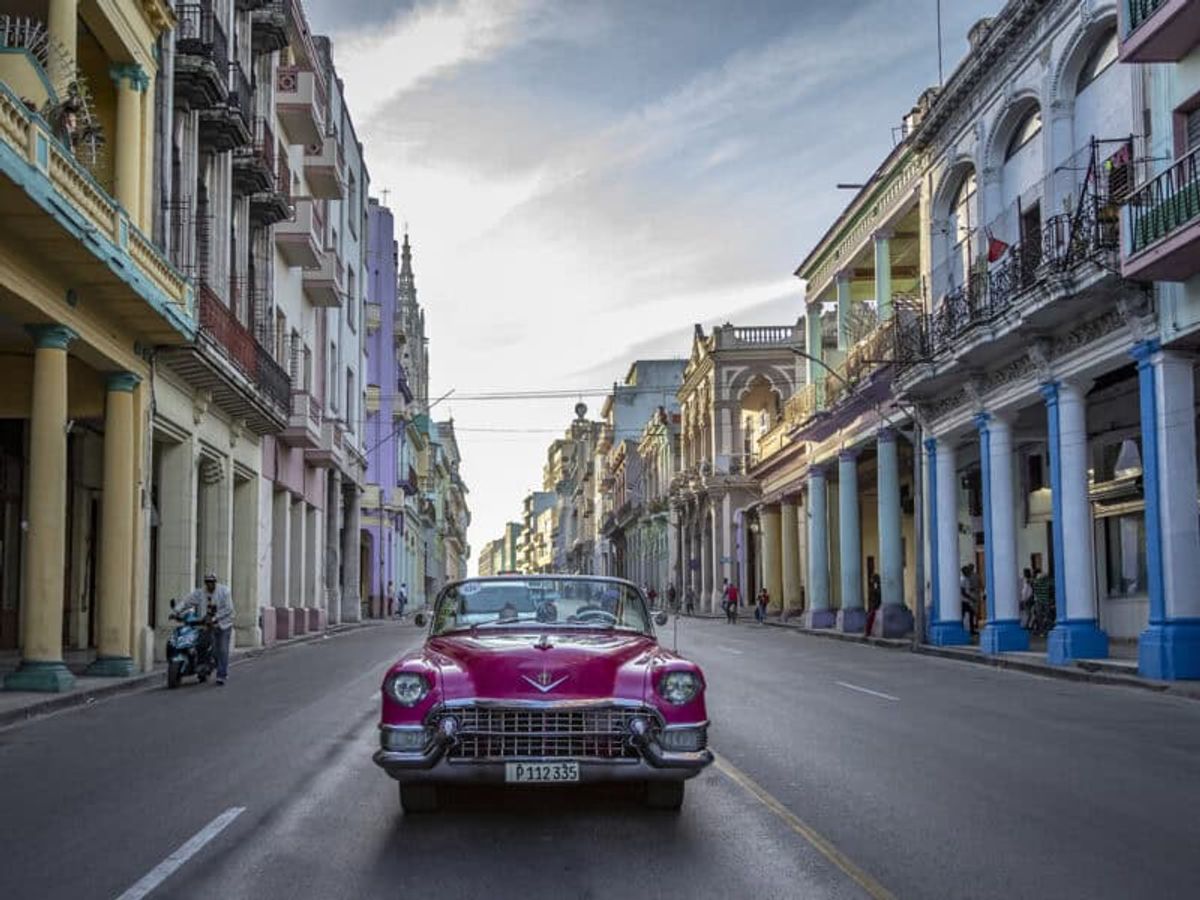
Cuba Luxury Expedition’s seven-day northern voyage takes you from Havana to Bahia de Cadiz, exploring uninhabited islands and historic cities while encountering diverse marine life. Five centuries of architecture and culture transport you back in time when you begin your journey in Havana, with classic American cars passing by vibrant colonial buildings. Endless festivals from September to May enhance an already lively city, with monuments and museums available for sightseers. This is an excellent place to stock up on famous Cuban cigars for the rest of your journey too.
The next stop on the northern itinerary is Varadero, a beach resort town known for white, powdery beaches and crystal-clear water. Scuba diving is one of the main attractions in the town, with more than 30 dive sites — some including underwater caves — for crew to choose from. Don’t overdo the diving in Varadero, as Cayo Blanco, this itinerary’s next stop, is surrounded by mangroves and coral reefs. Native birds, Cuban iguanas, and black coral are abundant here, creating a unique nature experience. The Cuba Luxury Expedition’s final stop on the Northern Itinerary, Bahia de Cadiz, is as far into the archipelago recommended for deep draft vessels. A 50-meter lighthouse built in 1862 stands on it, alongside more white sand beaches and ample space for all the yachts’ toys.
A Journey Along Cuba’s Southeastern Coast
Cuba Luxury Expedition’s southeastern itinerary takes vessels from Santiago de Cuba to Cayo Largo de Sur, exploring the birthplace of Cuban music, coffee plantations, and Cuba’s tallest mountain range, while diving into Cuba’s rich culture. Starting in the second largest city in Cuba, Santiago de Cuba is considered the birthplace of Cuban culture. Founded by the Spanish in 1515, the mix of Spanish and Cuban architecture alongside revolutionary history is evident in the forts and colonial gems throughout. The city is often regarded as the root of the Cuban revolution, with many museums depicting key events.
Jardines de la Reina is the next stop on the itinerary, with most of the archipelago designated as a marine reserve since 1996. Cuba Luxury Expedition recommends spending at least three days exploring the park through diving, snorkeling, and hiking its deserted beaches. The journey then takes you to Trinidad, a perfectly preserved town that feels like it’s been frozen in time since the 1800s and is a UNESCO World Heritage site in its entirety. Highlights of this stop include day trips to the mountains, hikes to waterfalls in the Sierra del Escambray, and biking to Playa Ancon.
Cienfuegos is the penultimate stop along this southeastern voyage. The city was the center of the sugar, mango, tobacco, and coffee trade after being taken over by the French from the Spaniards during the era of pirates and corsairs. The French neo-classical style is a change of pace compared to most of Cuba’s architecture, with extensive mid-20th century modern buildings throughout the town. Castillo de Jagua, an 18th-century fortress that has protected the bay and city for centuries, lies across the bay.
Finally, Cayo Largo del Sur is an international port of entry and exit. There is no permanent community on the island, although a few resorts are located on the opposite side of the marina and anchorage. Cayo Largo del Sur is a nature lover’s paradise, and Cuba Luxury Expedition recommends a visit to Centro de Rescate de Tortugas Marinas, a sea turtle conservation and reproduction center.