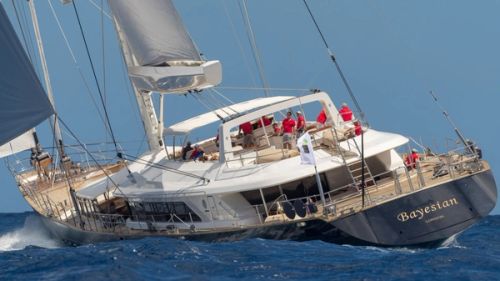
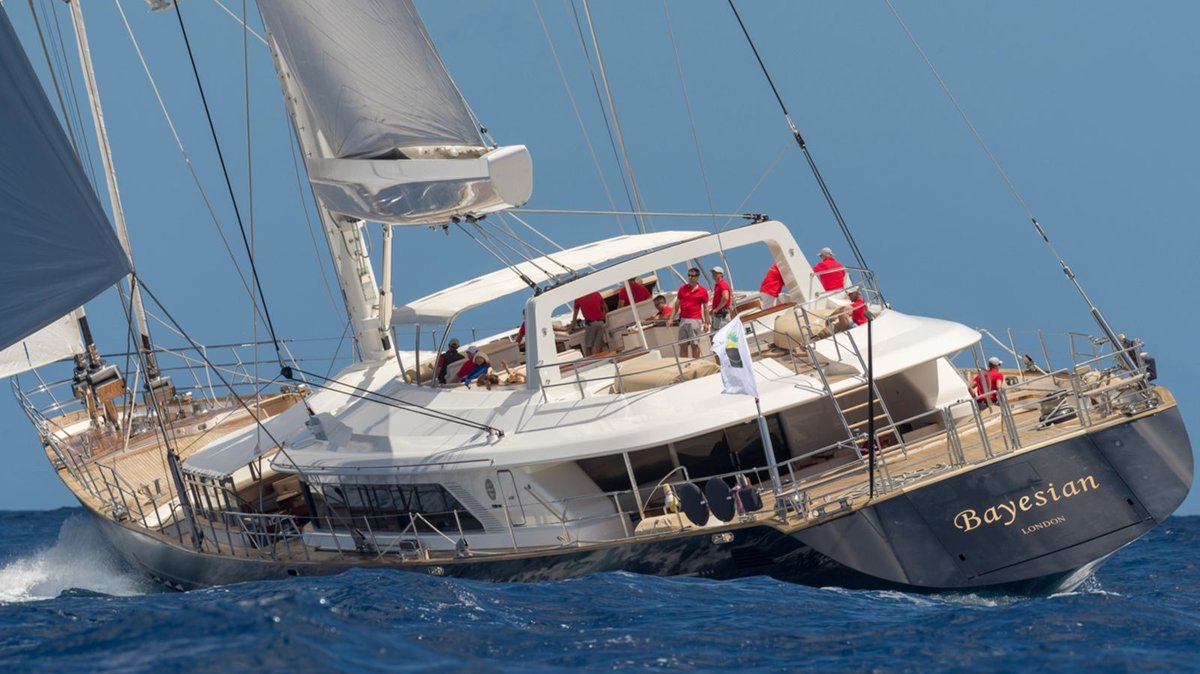
The U.K.’s Marine Accident Investigation Branch (MAIB) called for changes to yacht stability standards, life raft requirements, and crew training following the release of its final report into the sinking of S/Y Bayesian, which claimed seven lives off Sicily in August 2024.
The report, published on Thursday, confirmed several findings outlined in the MAIB’s May 2025 interim investigation, including the yacht’s vulnerability to extreme winds while operating with its sails down and centerboard raised. Triton covered those findings when the interim report was released, detailing how the yacht could be knocked beyond its point of recovery by winds exceeding 63.4 knots and how that was not identified in the stability information available to the captains and crew on board.
The final investigation uses additional examination of the recovered yacht to provide more information on Bayesian’s stability, emergency equipment, and regulatory requirements.
Following the yacht’s salvage in June 2025, The University of Southampton’s Wolfson Unit updated its stability and windage models using information from the recovered vessel. An angle of vanishing stability of about 73 degrees was established, compared to the 70.6 degrees in the interim report.
Investigations concluded that water entering the yacht was unlikely to have contributed to the initial knockdown, but that significant flooding occurred after Bayesian had heeled beyond the point from which it could recover. The report also found that Bayesian did not meet the Large Commercial Yacht Code requirement for minimum downflooding angle when its stability information booklet was approved.
The report found that none of the vessel’s four life rafts automatically released as Bayesian sank. Crewmembers manually released one life raft, which accommodated the 15 survivors. While the life raft arrangements did comply with requirements against which the yacht was originally surveyed, they did not address the possibility of a large sailing yacht sinking after being knocked onto its side.
The report found that existing drills did not anticipate a casualty situation developing at such speed. It also highlighted the role of crewmembers in assisting survivors, administering first aid, and organizing evacuation.
MAIB identified that the official weather forecasts available to the crew did not adequately communicate the possibility of extreme winds associated with a severe convective weather event. The report concluded that the winds responsible for the knockdown likely resulted from a downburst associated with a convective windstorm.
MAIB also found that the existing U.K. yachtmaster training syllabus did not provide sufficient guidance on recognizing and assessing hazards associated with severe thunderstorms, downbursts, and extreme wind gusts.
The final report included seven safety recommendations directed at the Red Ensign Group, Maritime and Coastguard Agency, Met Office, and UK Hydrographic Office:
The Red Ensign Group is recommended to:
- Complete a study of the vulnerability of monohull sailing vessels that are certified under the Red Ensign Group Yacht Code to the risk of knockdown with no sails set.
- Amend the Red Ensign Group Yacht Code as appropriate to the study’s findings and publish guidance on identified vulnerabilities.
- Amend guidance on the content of the stability information booklet carried on board vessels certified to the Red Ensign Group Yacht Code with respect to preparations to be taken in advance of forecast extreme weather, whether underway or at anchor.
- Amend the Red Ensign Group Yacht Code to ensure that life rafts installed on all sailing vessels vulnerable to knockdown are stowed to permit them to float free from their stowage, inflate, and break free from the vessel in the event of its sinking.
The Maritime and Coastguard Agency is recommended to:
- Review and, where appropriate, amend yacht officer seamanship and meteorology syllabi to ensure candidates can recognize severe convective weather hazards including thunderstorms, downbursts and extreme wind gusts to assist in the application of appropriate precautions when sailing, motoring or at anchor.
The Met Office is recommended to:
- Invite the World Meteorological Organization Worldwide Met-Ocean Information and Warning Service Sub-Committee to consider how low likelihood, high-impact weather hazards should be represented within future data services.
The UK Hydrographic Office is recommended to:
- Liaise with the Met Office and Maritime and Coastguard Agency to develop and update guidance on the risks of extreme weather events for inclusion in NP45: Admiralty Sailing Directions – Mediterranean Pilot Volume 1 and NP100: Admiralty – The Mariner’s Handbook as appropriate.