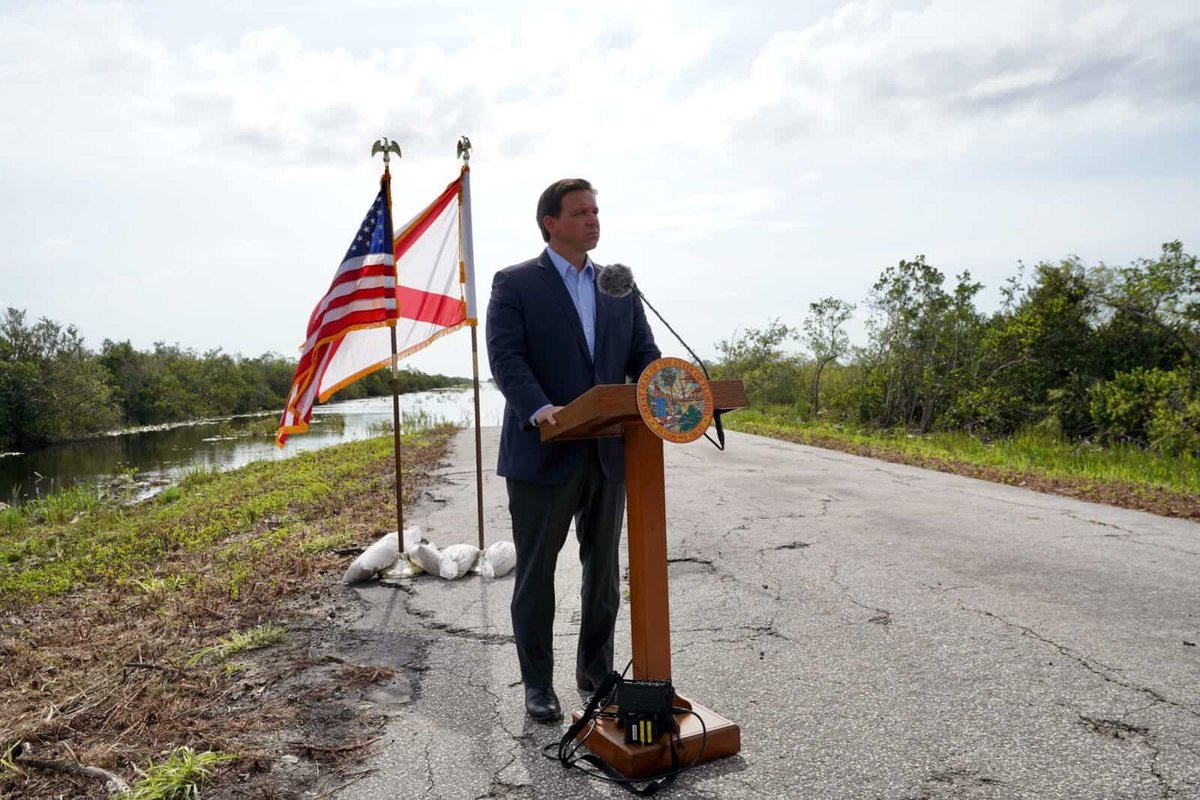

Governor Ron DeSantis signed Senate Bill 1388, also known as the Boater Freedom Act, into law on Monday. The bill prevents local bans on gas vessels, prevents random vessel safety inspections without probable cause, directs Florida Fish and Wildlife Conservation Commission (FWC) to create a five-year safety inspection decal program linked to vessel registration, and more. The act will take effect on July 1, 2025.
The bill amended section 327.56 of Florida Statutes to now read: “An officer may not board any vessel or perform a vessel stop in this state unless the officer has probable cause to believe that a violation of this chapter has occurred or is occurring.”
The bill states that officers may not perform vessel stops or board a vessel for the sole purpose of performing a safety or marine sanitation equipment inspection. A violation of safety or marine sanitation equipment requirements is a secondary offense, rather than a primary offense, according to the bill.
In coordination with the Department of Highway Safety and Motor Vehicles, the commission will create a “Florida Freedom Boater” safety inspection decal for issue at the time of registration or renewal. The decal will signify that the vessel is deemed to have met the safety equipment carriage and use requirements of this chapter. Upon demonstrated compliance, the operator of a vessel will be issued a “Florida Freedom Boater” safety inspection decal.
While the commission may designate the timeframe for expiration and specific design for the “Florida Freedom Boater” safety inspection decal, a decal may not be valid for less than one calendar year or more than five years at the time of issue and must meet the specified standards. The decal must be located within 6 inches of the inspected vessel’s properly displayed vessel registration decal. Non-motorized vehicles that are not required to be registered must put the decal above the waterline on the forward half of the port side of the vessel.
“This subsection does not restrict a law enforcement officer from stopping a vessel for any other lawful purpose when the officer has probable cause to believe that a violation of this chapter has occurred or is occurring,” the new act states.
Section 327.75, also known as the Watercraft Energy Source Freedom Act, has been created and added to Florida Statutes. For the purposes of this section, the term “energy source” means any source of energy used to power a watercraft, including, but not limited to, gasoline, diesel fuel, electricity, hydrogen, and solar power. “Watercraft” means any vessel or craft designed for navigation on water, including boats and personal watercraft.
“Notwithstanding any other law to the contrary, a state agency, municipality, governmental entity, or county may not restrict the use or sale of a watercraft based on the energy source used to power the watercraft, including an energy source used for propulsion or used for powering other functions of the watercraft,” the new act states.
Subsection three of section 379.226 of Florida Statutes has also been amended to read: “No license shall be issued by the Fish and Wildlife 140 Conservation Commission under s. 379.361, to any vessel owned in 141 whole or in part by any alien power.”
The bill states that FWC can establish by rule protection zones that restrict the speed and operation of vessels, or modify the allowable means of anchoring, mooring, beaching, or grounding vessels, to protect and prevent significant hard to first, second, and third magnitude springs and springs group. This also includes associated spring runs, as determined by FWC using the most recent Florida Geological Survey springs bulletin.
“Significant harm includes negative impacts to water quality, water quantity, hydrology, wetlands, and aquatic and wetland-dependent species where the operation, anchoring, mooring, beaching, or grounding of vessels is determined to be the predominant cause of negative impacts,” the new act states.
DeSantis also signed House Bill 735, providing additional funding for public boat ramps, parking, and marina programs through FWC to ensure public access to Florida’s waterways.
“Florida is the boating and fishing capital of the world — and the Boater Freedom Act will ensure that this remains the case,” DeSantis said.