Rebuilding reefs just got easier for Reef Design Labs, an artificial reef and coastal habitat infrastructure company.
Reef Design Labs is an artificial reef and coastal habitat infrastructure company that is based in Melbourne, Australia. The company designs, prototypes, and manufactures unique coastal solutions to restore reefs and protect shorelines, led by Alex Goad.
Goad and his team of designers, architects, engineers, and fabricators share a passion for the marine environment, fueling their dedication to creating habitat solutions that respond to current environmental issues.
“If we have to build in the marine environment, why not pay the same respect to the landscape and create structures that are beautiful and inclusive to every species,” Goad said.
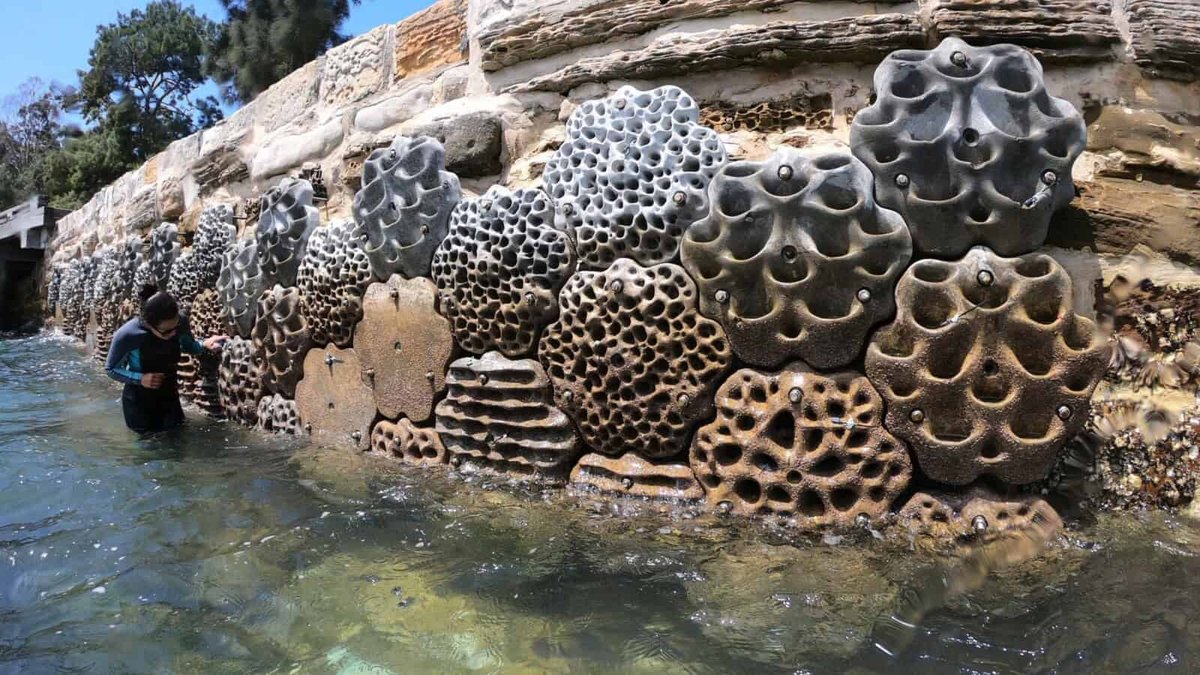
Reef Design Labs uses new technology and manufacturing methods like 3D printing to create structures that “meet engineering and environmental requirements, as well as looking like they belong in the marine environment.”
“We take inspiration from nature, with a mix of obvious biomimicry and the aesthetic of what we think is possible with different molds and techniques,” Goad said. “It’s important to appreciate that they are artificial, but they also pay homage to nature.”
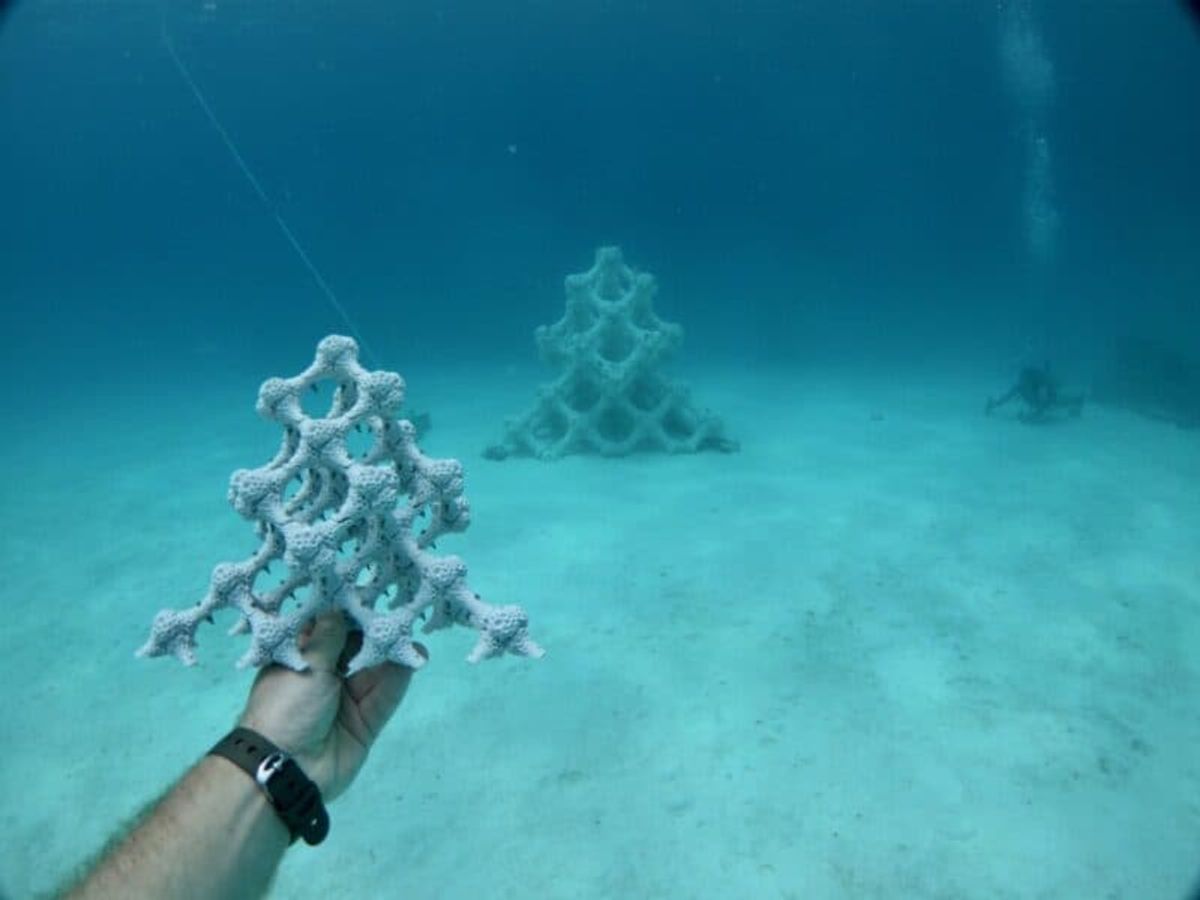
A recent project that exemplifies this is their work for the City of Greater Geelong, where the team created a series of specialized wave break modules known as Erosion Mitigation Modules (EMU) to reduce the force of waves and prevent further erosion along the beach at Clifton Springs, while providing an optimized habitat for colonizing species. Not only do these modules help the beach and marine life, but they allow people to snorkel through the system at high tide and act as rock pools at low tide — just like a natural rocky reef.
“Why not do it in a more exciting way, suited to multiple user groups, so that we cover coastal protection and pastimes such as snorkeling and diving?” Goad said.
Although most of their work is in Australia, the team has also worked in the Maldives, Sweden, and the North Sea. The team often focuses on reviving increasingly urbanized parts of the ocean by blending ecological concepts with engineering in creative design.
“We have also been trialing and experimenting with various techniques in Malaysia on reefs that have been dynamite fished. In those regions there is a need for rebuilding the 3D structure. There’s a global need for restorative efforts, that’s where some of the structures we’ve designed could be an option,” Goad said. “But there’s nothing that artificial structures can do for global warming and reef bleaching.”
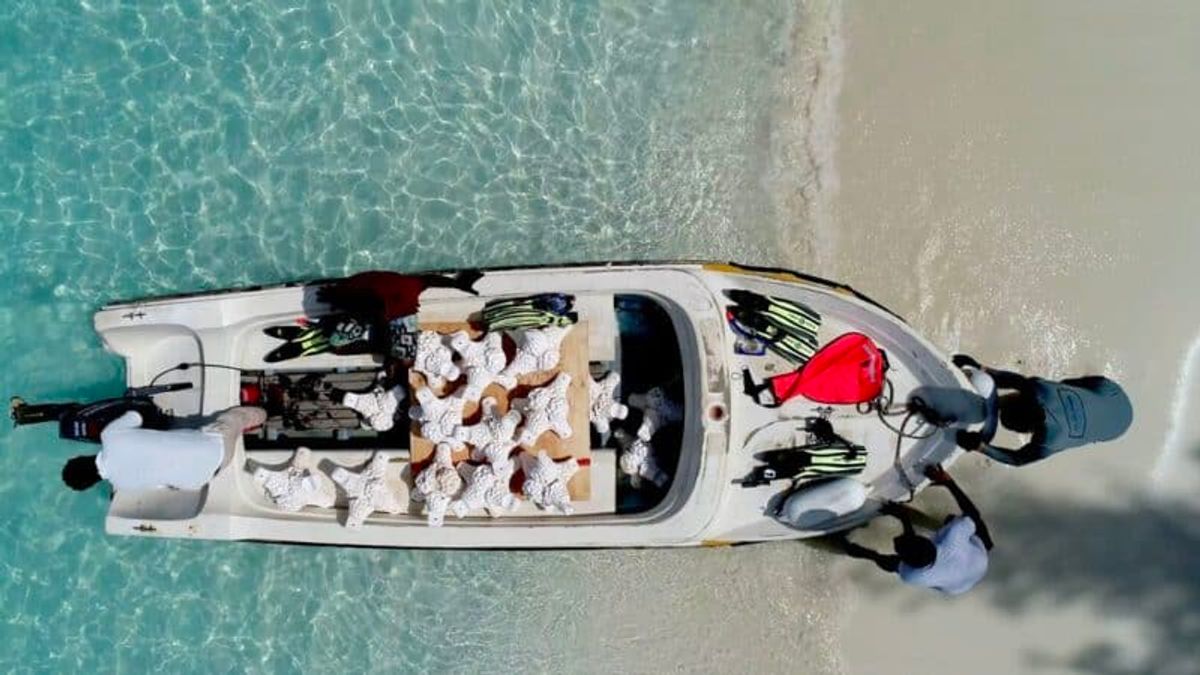
While searching for various types of resins for these reefs, Goad discovered ATL Composites, an epoxy formulator and a leading supplier of advanced composite materials and engineering for the maritime industry. Goad, with help from ATL’s Technical Sales Engineer Justin McDermott, found that a combination of products from ATL’s TECHNIREZ Tooling Epoxy range achieved the goals of low shrinkage and abrasion resistance, and importantly the low VOC emissions for the workshop environment, to produce high performance, durable and dimensionally stable tools that withstand multiple pulls of concrete castings.
“ATL products have helped us do our work in-house and in a creative way, which is a huge benefit,” Goad said.
ATL Composites’ products will only help Goad and the Reef Design Labs team continue their work with reefs — and be internationally recognized while doing so. Reef Design Labs’ work has received international accolades, including the 2023 Good Design Award Sustainability, Dezeen Awards Sustainable design (building product) of the year 2023, Powerhouse Design Award 2023, and was a finalist in the Earthshot Prize for Living Seawalls in 2021.