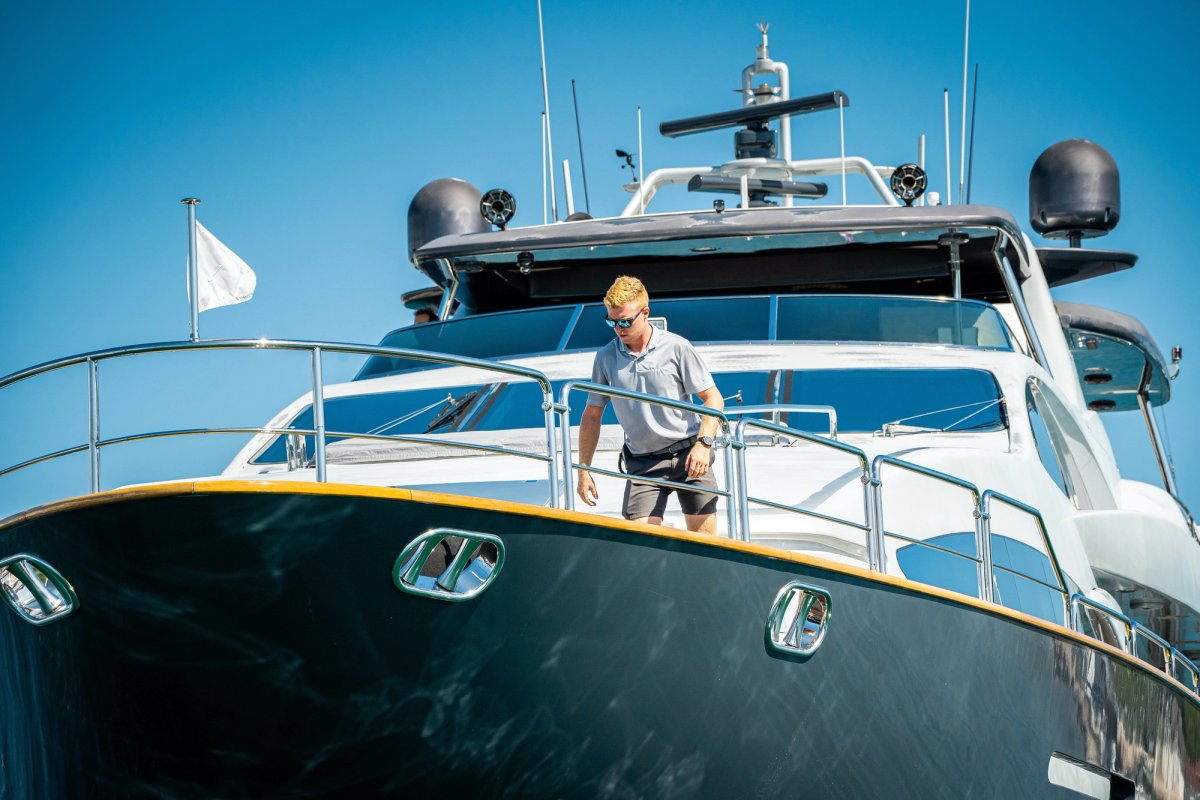
A Christmas request came in, not for Champagne, caviar, or a helicopter — for a baby seat. Kevis Hughes, operator of KTM Yacht Support in the British Virgin Islands (BVI), was helping a visiting yacht when the family aboard suddenly needed one. With multiple local connections, Hughes arranged to have a local store opened. Before the trip was over, his connections fulfilled even more requests, like diapers, wipes, rope, and more. It was another example of how the needs of one yacht can spill beyond the marina and into the surrounding community.
“Any yacht, but particularly charter yachts, tend to have more of an economic impact in most places,” Hughes said.
Superyachts are often viewed as private playgrounds for the wealthy, but they rarely operate without support from local communities. Wherever they go, they require fuel, provisions, dockage, transportation, repairs, crew services, and local expertise — injecting capital into the communities they visit. From yachting hotspots like South Florida and the Caribbean to remote ports in Patagonia, the demands send money through businesses far removed from the yachts themselves. South Florida is one of the easier locations to see that economic footprint, with a slew of marinas, shipyards, suppliers, and service companies built around the yachting industry.
“Literally a floating city just moved in there and is going to be in your marina for a couple weeks,” Phil Purcell said. “Pretend like they just moved a very high-end oceanfront home to your marina.”
Purcell, president and CEO of the Marine Industries Association of South Florida, points to a 112-foot Westport as an example. According to Purcell, a yacht like that might carry five crewmembers, with annual personnel costs between $450,000 to $600,000. For a two-week trip from Florida to the Northeast United States, Purcell estimates it could spend about $25,000 on fuel, another $10,000 to $15,000 on dockage, and between $25,000 and $50,000 on provisions. This is all before accounting for what owners, guests, and crew spend ashore.
“They’re going to go to restaurants, to markets, to the shops, they’re going to spend somewhere between 20 and 50 grand,” Purcell said. “The people on that boat are stimulating whatever economy they stop in.”
The spending doesn’t stop when the trip stops either. If the yacht returns to Florida, it may need new paint, upholstery, mechanical work, or other repairs. That cycle is what makes a yacht a “floating city” arriving at a destination with a never-ending list of needs, according to Purcell.
While South Florida has a massive yachting ecosystem, smaller economies that aren’t established yachting hubs also benefit from yachting. The impact of a visiting yacht can be more personal in the BVIs. The needs of a vessel often lead Hughes directly to local fishermen, flower shops, and food suppliers. “If they want fish, I would go to a local fisherman because they have, to me, all the best fish,” he said. These local businesses understand that yacht needs can arise at any time, and their longstanding relationships with Hughes allow them to be flexible with his needs. In turn, that demand directs yacht spending into the local economy.
Hughes is careful not to overstate yachting’s role in the BVI’s economy. Local businesses generally don’t depend on yachts alone, but instead view yachting as a complementary piece to a tourism economy that includes resorts, charter catamarans, and more. What has changed, Hughes said, is how the territory now views the sector.
“They all thought it was just rich people with money,” Hughes said of government and tourism officials. “After encouraging the tourism board from a private point of view to attend boat shows, they now see the [value] in these boats.”
As a yacht travels away from established yachting hubs, its local impact can become even more complex. Carlos Miquel, owner of CM Yacht Agents, helps yachts travel through South America, Patagonia, and Antarctica. In those regions, vessels often stay longer and rely on local support for provisioning, transportation, crew changes, repairs, and fuel, he said.
“People forget about the crew,” Miquel said. “They usually think about the yachts only and the owners and guests on board.” Crewmembers also eat ashore, explore local destinations, require transportation, and other services. Sometimes, remote locations create unique challenges.
Last season, one of those challenges was raw milk. Miquel said a yacht owner preparing for Antarctica wanted raw milk delivered to the southern tip of South America, but transporting it by truck from Santiago to Punta Arenas could take seven days, leaving only a few days of shelf life. His team ultimately developed a system to freeze the milk and move it south in advance.
“We need to invest in having cows down there now,” Miquel joked.
These same logistical demands can also introduce yachts to places that are not typically yachting hubs. In Piriápolis, Uruguay, Miquel directed a roughly 60-meter yacht to the town for a technical stop. The arrival drew residents and even the mayor to the dock. He later brought another yacht there and now recommends the town to vessels traveling that way, creating another economic opportunity for the town in a place that was not previously a common yachting stop.
Miquel encourages crew and owners to choose local wine, seafood, and produce rather than importing everything they are accustomed to having on board. “Support the local people, think sustainable,” he said.
While spending starts with fuel, dockage, and repairs, it quickly reaches deep into the local community. Sometimes it can be a shipyard or a guide; other times, it can be a flower order, raw milk, or a last-minute baby seat.