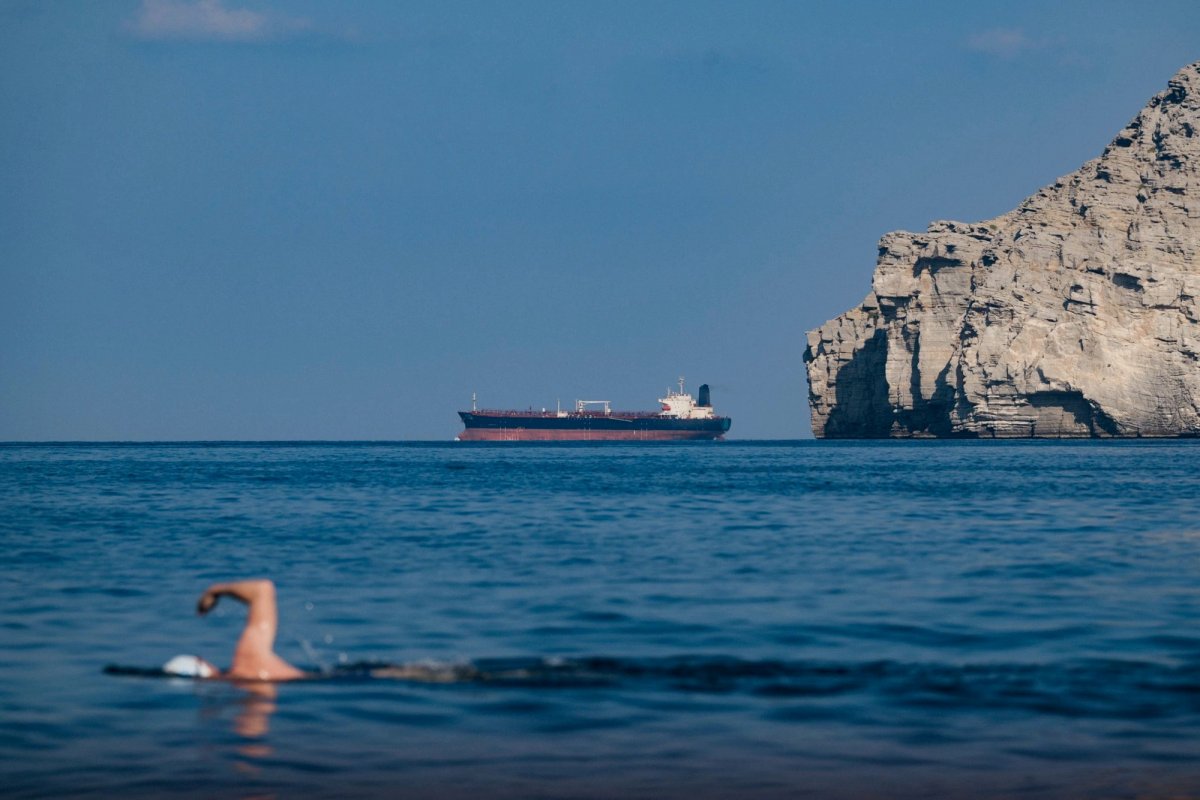

Lewis Pugh, 56, swam a 9.3-mile section of the Strait of Hormuz to draw attention to the environmental consequences of war. Pugh is a UN Patron of the Oceans, an official advocacy title appointed by the United Nations Environment Program, and serves as a global spokesperson for ocean conservation. The swim took three days and is believed to be the first long-distance swim since war began in the strait in March.
“War causes immense human suffering. Lives are lost, families are torn apart, and homes are destroyed. But there is another casualty that receives far too little attention: nature itself,” Pugh wrote online.
Just 30 minutes after he began swimming, an oil tanker was struck a few kilometers away from him. Pugh said the explosions rocked the sea around him. He continued to witness attacks on commercial shipping and saw vessels engulfed in flames.
“Oil tankers, gas carriers and other merchant ships are being attacked, day after day. The environmental consequences of this war will last for generations,” Pugh wrote.
Pugh began swimming from Musandam Island and around Oman’s Musandam Peninsula on the southern tip of the strait, reaching the Cape of Hormuz at the peninsula’s northern tip. He was accompanied by a support boat and a kayak, while fighter jets flew above him.
“The Strait of Hormuz is far more than a vital shipping route. It is one of the most beautiful places I have ever visited,” Pugh wrote. “There are towering mountains and spectacular fjords, coral reefs and mangrove forests. Dolphins, sea turtles and dugongs live in these waters. It is one of the great natural wonders of the world.”
Satellite monitoring by Greenpeace has identified more than 500 potential oil slicks across the Persian Gulf, Strait of Hormuz, and Arabian Sea since the war began, alongside 148 to 161 attacked vessels in the region.
“My message is simple: Stop the fighting. Open the Strait. Clean up the pollution,” Pugh wrote.
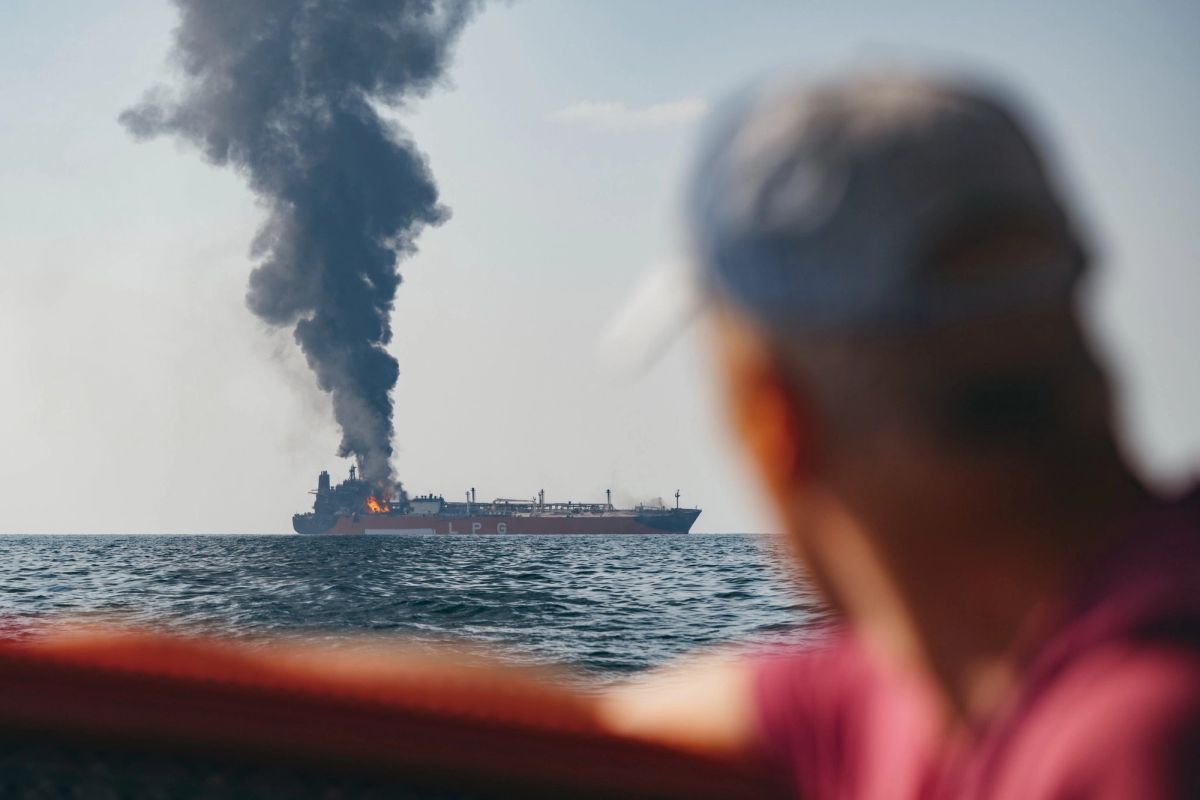
Images by Lewis Pugh.