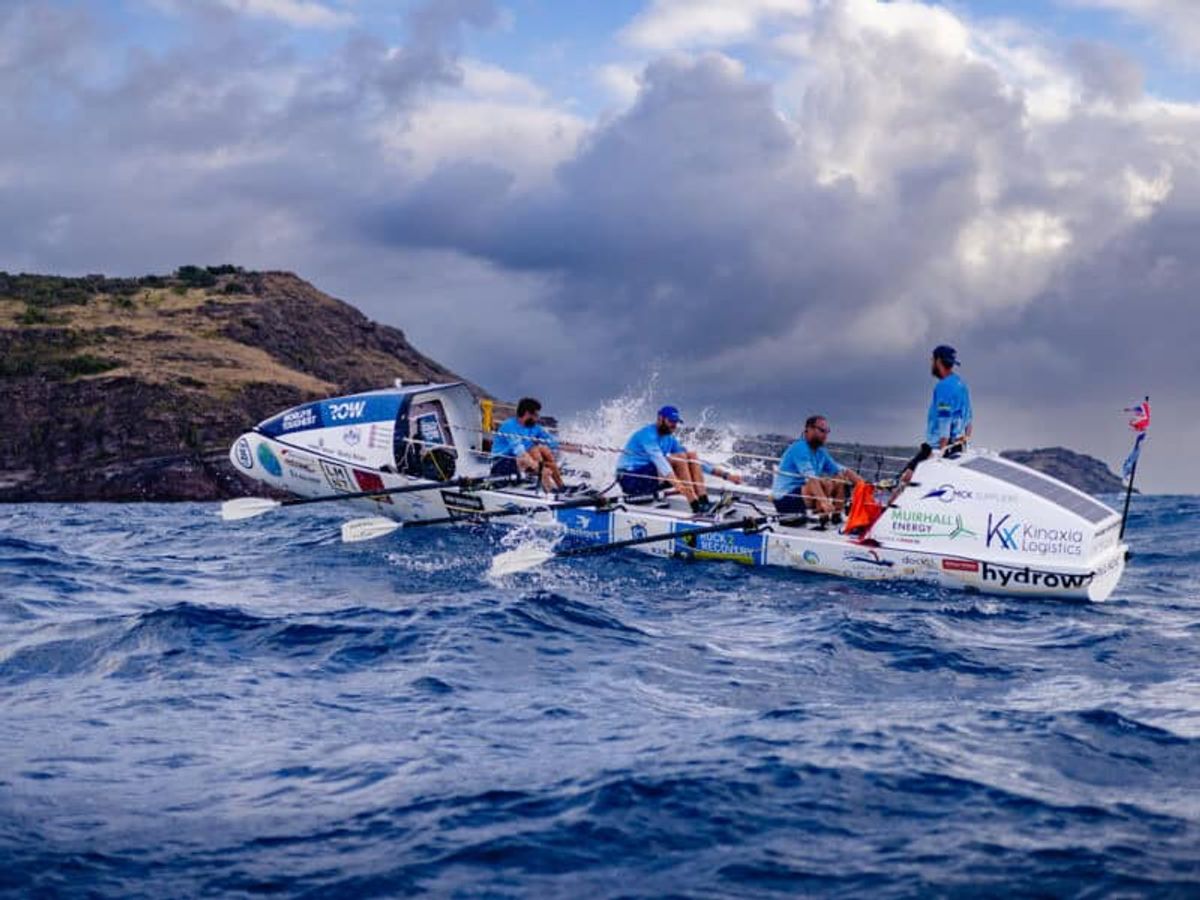
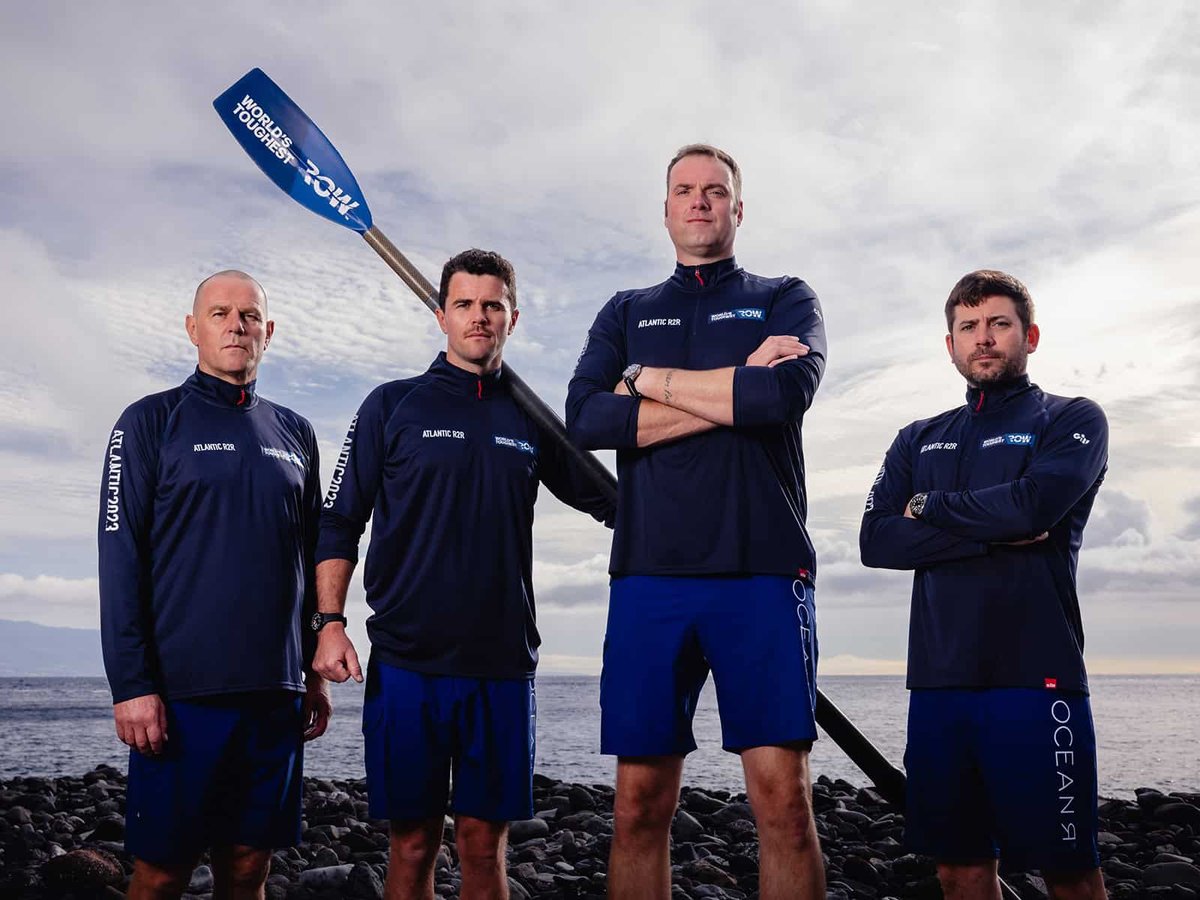
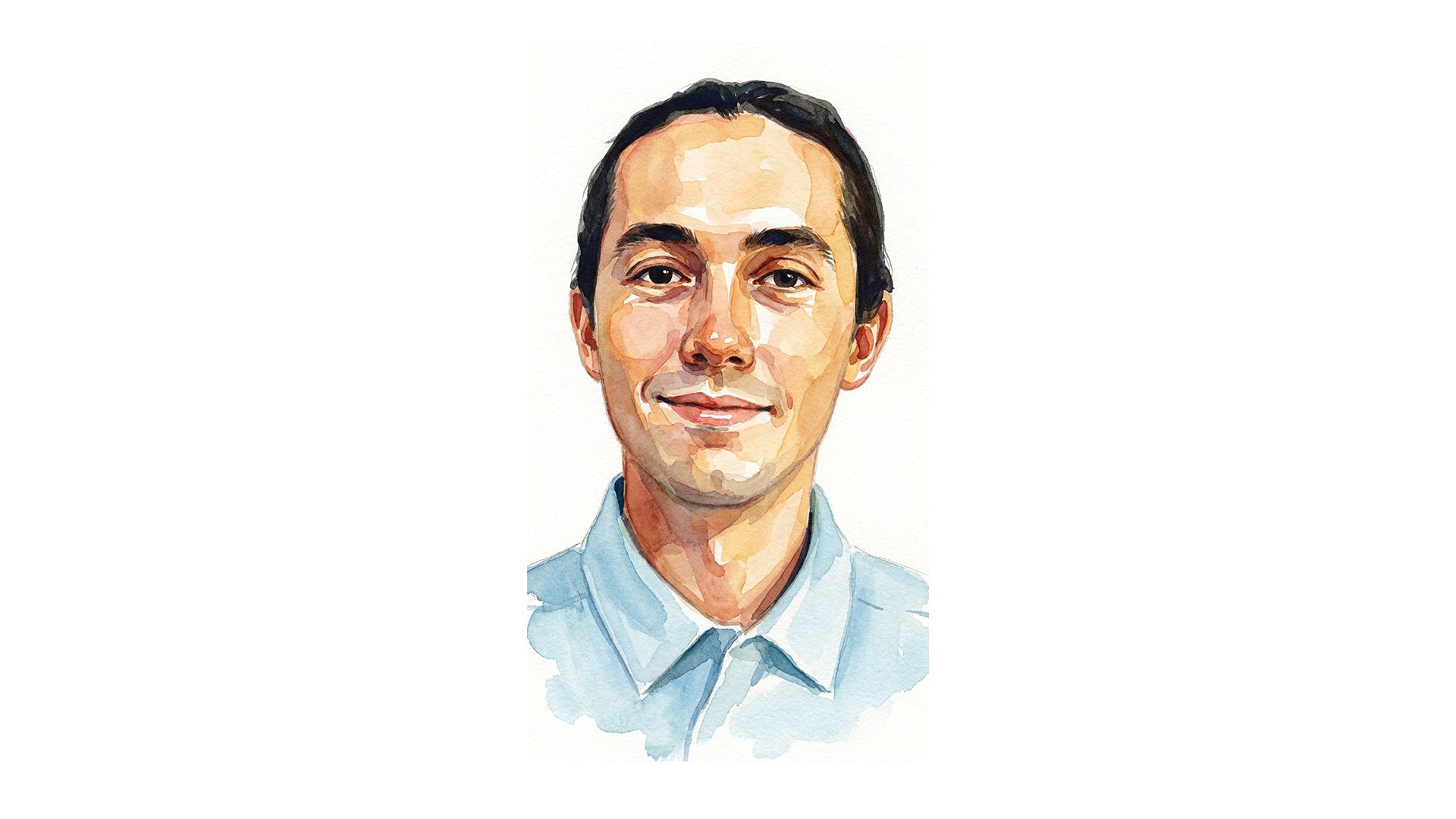
Jordan Parkinson, a former deckhand and bosun, joined The World’s Toughest Row to cross the Atlantic Ocean — by rowboat.
More than 3,000 miles of ocean separates the Canary Islands from Antigua and Barbuda. Crossing the Atlantic Ocean is considered quite a journey for yacht crewmembers, but that’s usually on a megayacht. Jordan Parkinson, a former deckhand and bosun, decided to take on crossing the Atlantic — by rowboat.
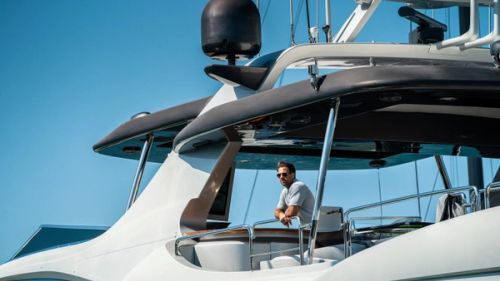
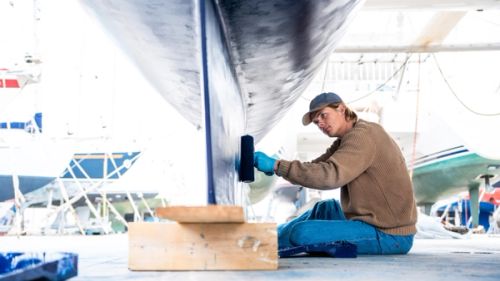
Parkinson’s yachting journey started in 2012. After traveling from the United Kingdom to the south of France, he gave himself one month to find a yachting job. If he failed, he’d go back and join his family’s business. After a bit of networking, he received a random call from a captain, asking if he’d join a 40-meter Sunseeker. Parkinson agreed, and using his adolescent water sporting experience, he began moving up to bigger yachts and better positions. Eventually, he joined a vessel based in Antigua.
One day in 2019 while docked in English Harbour, Parkinson watched rowboat after rowboat enter the harbor, with cheers from ecstatic crowds of family, friends, and onlookers. After some research, he found that these rowers had just come from the Canary Islands and were participating in The World’s Toughest Row. The World’s Toughest Row is an extreme endurance race where individuals from around the world compete to row thousands of miles across the Atlantic or Pacific Ocean.
“I just picked up my phone and called my dad. I was like, ‘Do you fancy doing it one year?’” Parkinson said. “He replied, ‘Yeah, sure thing.’”
Although they needed to complete some research to see what the journey entailed, Jordan’s father, Richard, was in, forming the beginning of a team ready to cross an ocean. Word soon spread of the Parkinsons’ plan to cross the Atlantic, with Tom Atkinson, a friend and local plumber in Jordan’s hometown Isle of Skye, calling Jordan soon after. Atkinson was interested in joining the team with one of his good friends, Paul Roadnight. Atkinson previously served in the British Army, while Roadnight continues to serve and is an infantry warrant officer. The two joined the father and son duo, completing the team of four and naming themselves Atlantic R2R.
Although the team was committed to the cause, it would be a long wait before they could start their row. The foursome signed up for the earliest race they could in March 2020, but the first available race was in December 2023 due to an increase in the contest’s popularity. Although years away, it gave them time to raise the €140,000 needed to participate in the race. Opting for a new boat with a longer cabin was one of the biggest financial hurdles the team had to overcome. Roadnight is 6’ 8”, so although the €85,000 price tag of a new, 9.8-meter rowboat was hefty, it was necessary. Fundraising, sponsorships, personal savings, and friends’ and family donations gave the team enough to secure the boat, equipment, and race fee. Their new boat, Prestige Worldwide, was delivered in March 2023, finally allowing them to practice and reach the required 120 hours of team training designated by the race’s organizers.
Although the challenge of rowing across the Atlantic was inspirational enough for the team, the biggest push to complete the row were the two charities the foursome was supporting. Sailors’ Society was one of the two charities the team was supporting, with Parkinson a big reason why. To outsiders, the glitz and glamor of yachting is evident, but Jordan saw first-hand the darkness that fellow crewmembers can fall into while working in the industry.
“I had two colleagues on two different boats that were really struggling, and you’d never have known — one was a really successful captain and the other was a really good bosun,” Parkinson said. “Unfortunately, they’re not here today.”
The Atlantic R2R team also supported Rock2Recovery, which was inspired by Atkinson and Roadnight’s experiences in the armed forces. Between numerous tours of Iraq, Afghanistan, and other places in the world, the two have lost many friends.
“Not just on the front lines, but once they come home, trying to sort of funnel back into normal life,” Parkinson said. “They were having all these flashbacks and PTSD moments, and unfortunately, they took their own lives. Between Tom and Paul, they have around five or six guys they knew well that sadly aren’t here now.”
Although the two charities help different groups, they both share a mission to improve the mental health of their respective groups. With these two charitable organizations close to the team’s hearts, they continued raising funds and training until it was time to travel to La Gomera in the Canary Islands in early December.
“Once we pushed off from the start line, we felt like we’d already achieved something — it had been nearly four years of our lives preparing for this,” Parkinson said.
With countless teams having to drop out due to insufficient funds, Atlantic R2R felt incredible just being at the starting line. With weather varying in the Canary Islands, Atlantic R2R was told their race might not begin until Dec. 15 or 16, even though the race start was scheduled for Dec. 12. Fortunately, a good weather window opened, and the team embarked on their journey on Dec. 13.
“Before we got to Gomera, we thought it was going to be a nice first week; we’ll get into our routine, get over the sea sickness, make sure our nutrition is up and get lots of calories in, see some dolphins and some whales — it’s going to be beautiful,” Parkinson said. “It was nothing like that at all.”
Immediately, the team encountered steering problems with their rudder. Within 12 hours, they had to deploy their parachute anchor and sit for the first evening — watching as the other teams passed them by. It was too dangerous for someone to get into the water due to wind and rain during the night, so they had to wait.
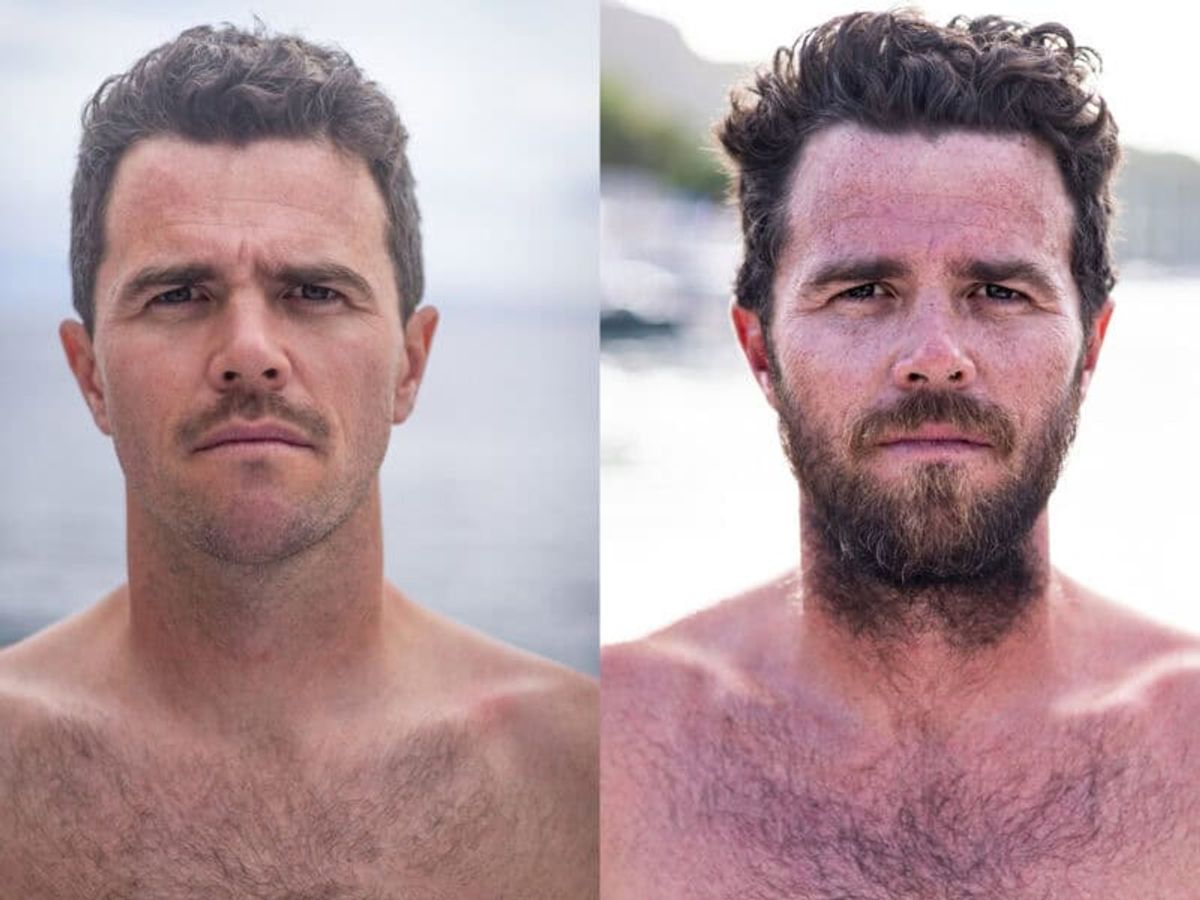
Jordan Parkinson before and after.
“It was honestly miserable,” Parkinson said. “I called Steph [his girlfriend] on the first night, and I was crying.”
The next morning, Parkinson jumped into the water, switched out the rudder, and tested the steering. Although they had dropped position from fourth to 28th, they started to head southwest with 30 knots of wind coming on the beam from the east. Within the first 36 hours of their journey, the team had broken their three spare oars and their two forward rowing gates due to inclement weather, limiting them to two rowing positions for nearly the entire crossing.
With the team’s mood already down, Parkinson phoned the race’s safety officer via satellite phone. Participating teams have constant contact with safety officers, who can advise teams on weather reports, news, and the location of other teams. After Parkinson briefed the officer on the team’s state, the officer told them, “Don’t fight the ocean; just go with it.”
The team did just that, turning 20 to 30 degrees and putting everything behind them. Suddenly, they had 30- to 40-foot waves following them and about 25 to 30 knots of wind on their stern. For the next 10 days, the weather stayed the same, and they were able to reach a maximum speed of 14.5 knots while surfing down waves.
“You can imagine taking saltwater over the bow; nothing dries. Just trying to keep warm, trying to keep dry as best you can, but nothing dries,” Parkinson said. “Even in the cabins, there’s condensation, there’s salt air in there — it’s just a miserable place to be.”
After 10 days, the weather calmed down and the wind headed northeast. Parkinson, the vessel’s skipper due to his maritime experience, had aimed to go south to around 19 degrees north to avoid storms.
“We kind of knew that historically, the storms don’t really form below 19 north, so I kind of knew that if we got down there, we’d be safer,” Jordan said. “From 19 north we could bank it farther round to the west and sort of face Antigua.”
The team had a schedule of two rowers on and two rowers off, with the shift switch happening every two hours. Those not rowing tried to rest, dry themselves, contact loved ones, or get salt off their skin in their small cabins. The boat’s cabins were filled with the team’s navigation systems, satellite communication gear, battery management panel for their solar panels, and an autohelm system, with just enough room to crawl in and lie down. Apart from the technical gear, the team’s medical supplies, personal clothing, medication, and food were stored in their cabins too.
Tom Atkinson before and after.
The race’s organizers inspect the food on the World’s Toughest Row before the race starts. Each team member must meet a standard of calories eaten per day, which is 60 calories per kilogram of body weight. When the team started their journey, they had more than 1.2 million calories on the boat. Dehydrated ration packs were their primary food source, but snack packs with home comfort foods like chocolate, chips, nuts, and dried fruit were on board as well. Fresh water was made on the go with a small water maker that filtered the ocean’s water. The water maker could produce around 35 liters of water an hour, so the team only needed to run it twice a day for an hour each time to have a sufficient supply.
“We ran out of water once. Luckily it was at night, so it wasn’t too hot, so then we sort of really learned a lesson there,” Parkinson said.
As the team continued west towards Antigua, entertainment options on Atlantic R2R’s rowboat were limited. One day into the row, Parkinson’s phone popped up with an error and broke, taking with it most of the music and audiobooks the team had downloaded. Roadnight’s phone was the only source of entertainment, so there was lots of repeating music during the trip. Chats filled the air when the rowers weren’t opting for music or the sound of waves, and the earth’s beauty also helped them along the way.
“A bit of wildlife came around, lots of birds, things like that kept us company,” Parkinson said. “Then, at night, there were lots of shooting stars, you had the Milky Way coming over you, but you do get bored, there is a lot of silence, but you just get on with it, you know?”
One phenomenon that Parkinson had heard about but didn’t really believe in was hallucinations. During a night row, the combination of darkness, fatigue, and blinking repeaters of the vessel’s equipment got to Parkinson, making him realize the stories of hallucinations were real after all.
“Our flagpole on the back of the bow on the starboard side behind the cabin, that thing turned into a person,” Parkinson said. “It came down and grabbed a deck repeater from the cabin door and shone it right to my face. I shook my head and was like, what the hell just happened — I was seeing things.”
As the team continued through their row, they never experienced truly smooth rowing, so the team never saw much wildlife in the water like they were expecting. There was a short visit from a marlin and tuna around the team’s boat, but it didn’t last longer than an hour.
“You see all the promotional videos from the row, and you see all the dolphins and the beautiful sunsets, and we did have beautiful sunsets, don’t get me wrong, but not one day did we have a mirror-flat calm day with dolphins and whales,” Parkinson said.
One visit, however, brought team spirits back up. M/Y Bystander and its crew, including Andy Burns, who had rowed the Atlantic in the past, stopped by to encourage the team to continue.
“We got this ping on the AIS, and I could see on the horizon we had this ship heading straight for us and as it got closer, I was like, ‘It looks a bit like a yacht,’” Parkinson said. “They did quite a close drive by on us, and it was a really good boost for the crew’s morale.”
As the team got closer to Antigua, they began to see the lights and land from the island about 25 to 30 miles away. They were followed by a big storm, and the ocean conditions were rough. While they were initially scheduled to arrive around 3 a.m., the race’s organizer contacted the team to wait until the morning, as their place in the race was cemented and it would make for a better celebration.
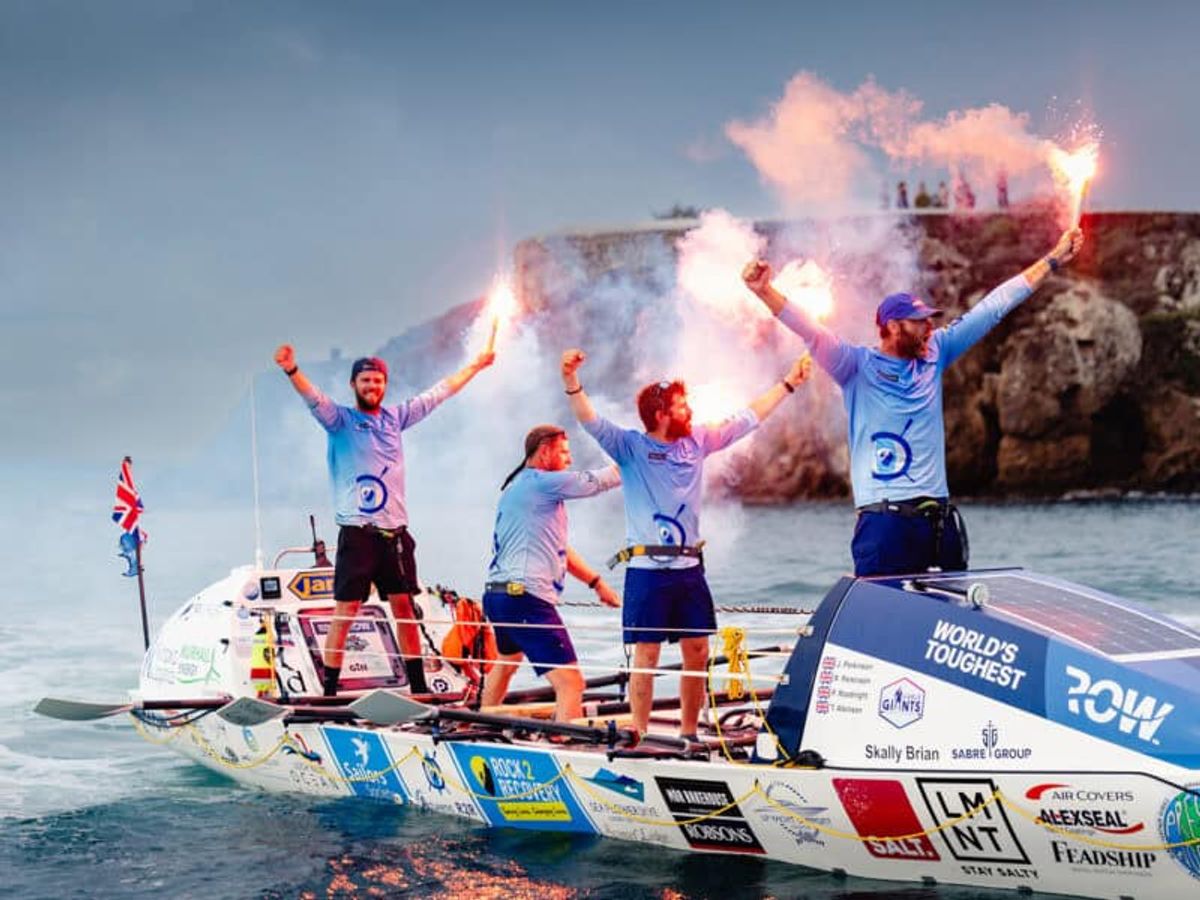
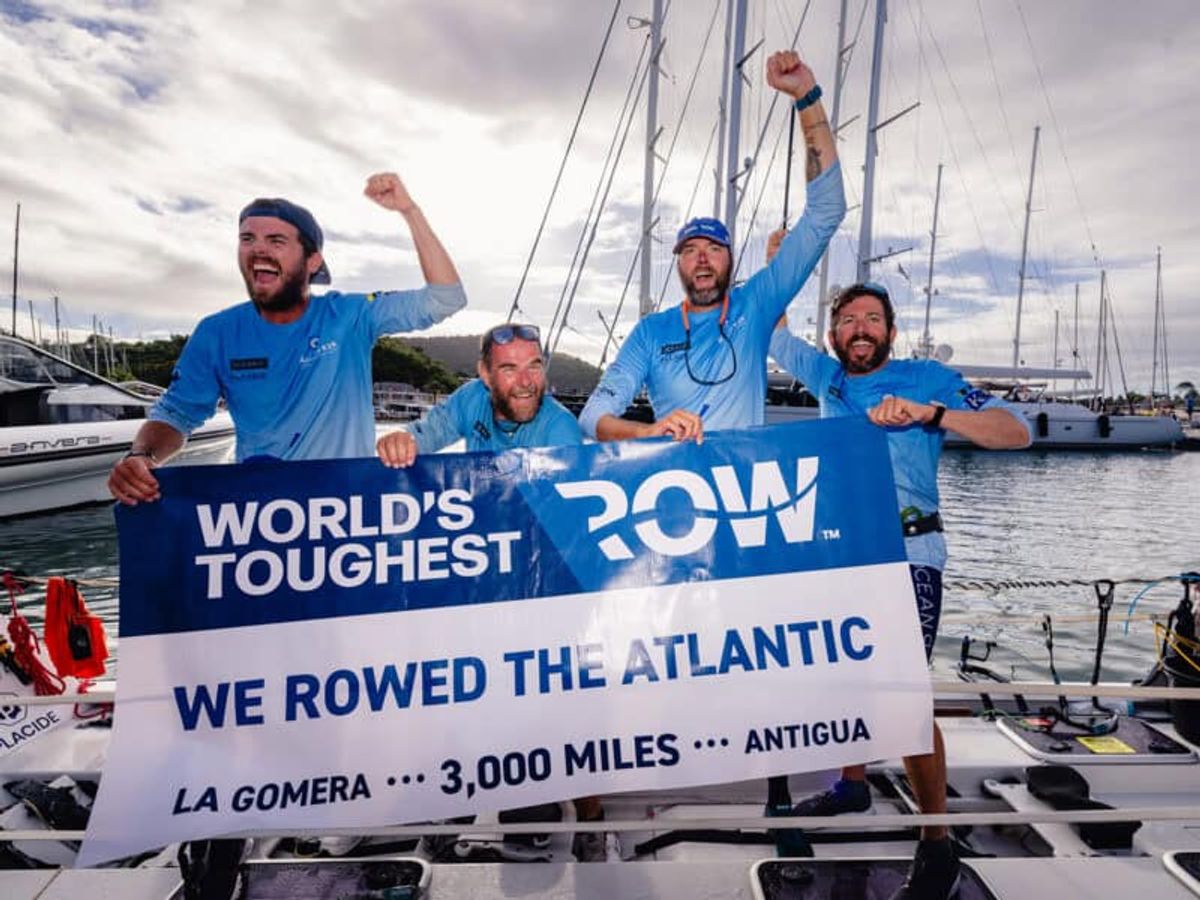
At 7:54 a.m. on Monday, Jan. 22, Atlantic R2R crossed the finish line in English Harbour, Antigua, after 40 days, three hours, 31 minutes, and 2,688 nautical miles (around 3,093 miles) of rowing. Although the storm was still drenching the team with rain on the way into English Harbour, the sun came out as soon as they crossed the finish line.
“It was just this most incredible moment,” Parkinson said. “Crossing the line, the emotions came out. That was it; we’ve done it.”
The team’s immediate families, including Parkinson’s girlfriend, Stephanie, and his newborn son, Zac, were waiting for them at the finish line. Many crew friends, including Parkinson’s sister, who is crew too, had been given the morning off to celebrate the team’s accomplishment.
“It was a hell of a reception,” Jordan said. “I didn’t expect there to be that many people there, but we arrived, and it was packed.”
Atlantic R2R finished ninth in The World’s Toughest Row, but more important to Parkinson and his team was the bond they created. Jordan and his father, Richard, spent hours rowing together, speaking about things he would have never imagined. The journey only strengthened an already strong bond, and the father-son duo became friends for life with Atkinson and Roadnight.
The team also raised more than £12,000 for the Sailors’ Society and Rock2Recovery. Parkinson hopes his journey across the Atlantic can help yacht crew and others struggling with their mental health to seek help and beat the stigma that surrounds the topic.
“Whether it’s to a fellow crewmember, to a captain, to a counselor, or even someone you don’t even know, it’s really important for you to talk and to be able to recognize people who are struggling,” Parkinson said about the current state of mental health in yachting. “It’s definitely a more approachable subject now, but it’s taken quite a long time and quite a few lives for it to be.”
All photos by World’s Toughest Row (Atlantic Campaigns)