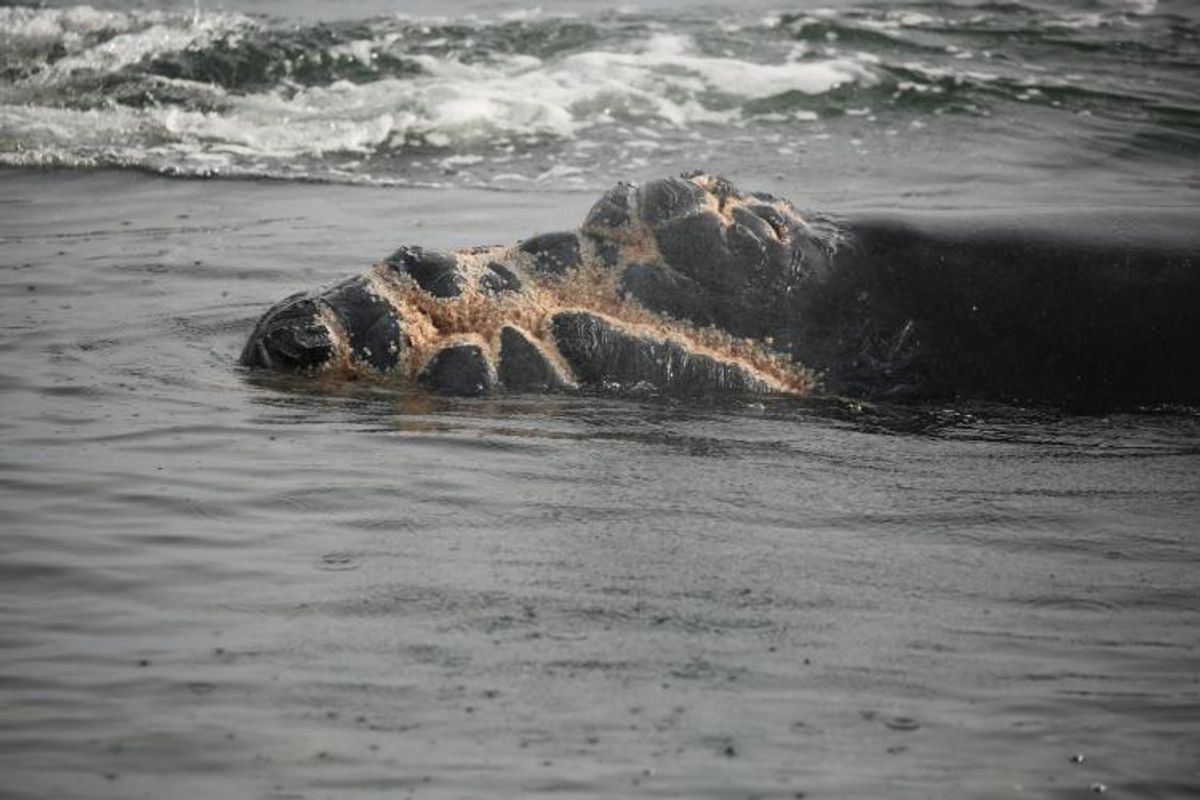
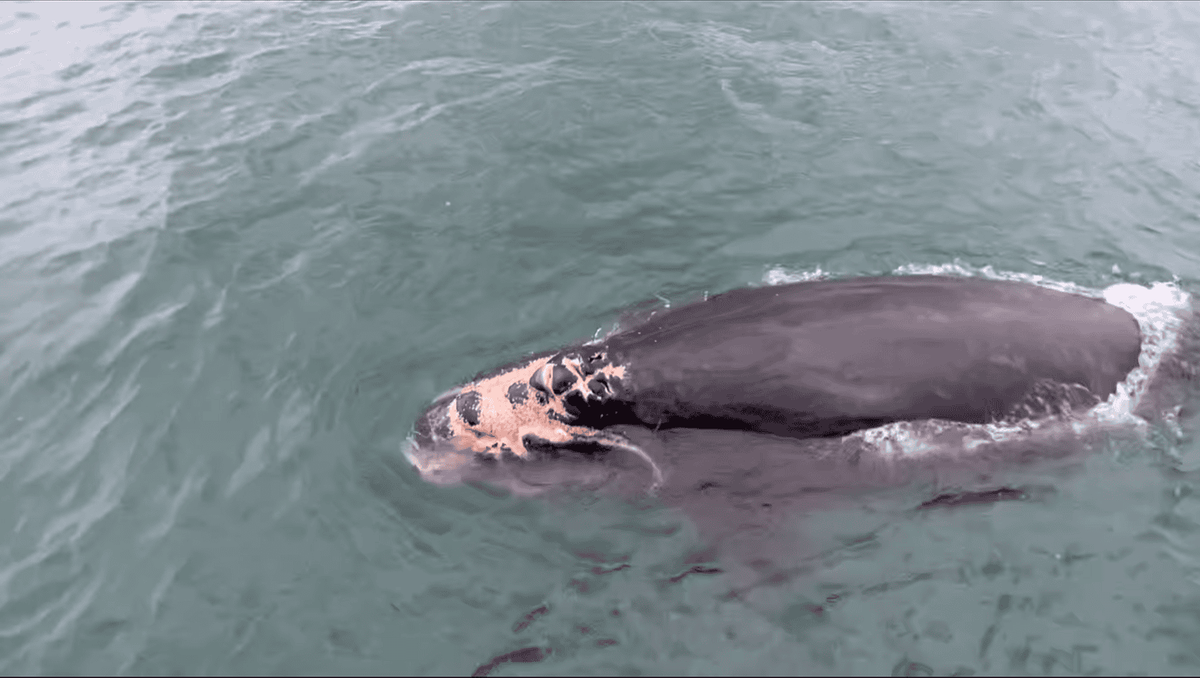

A North Atlantic right whale calf is expected to die after sustaining injuries that are consistent with a vessel strike, according to NOAA.
The National Oceanic and Atmospheric Administration (NOAA) expects a North Atlantic right whale calf to die after sustaining injuries that are consistent with a vessel strike. After reviewing the case, NOAA made a preliminary determination that it meets the criteria of a “serious injury” and will likely die.
The injured calf was seen on Jan. 3 with wounds on the head, mouth, and left lip. These injuries may impact the calf’s ability to successfully nurse, according to NOAA. The calf was seen off Edisto, South Carolina.
The calf and its mother, Juno (#1612), were seen again on Jan. 11 near Amelia Island, Florida. The calf survived the initial injury and shows some signs of healing, but its wounds are covered with a large amount of whale lice which is indicative of health decline, according to NOAA.
Juno was the first documented right whale of the season and was initially seen with the calf on Nov. 28. The last time the pair was spotted before the injury was on Dec. 9 off Amelia Island, but it is unknown when or where the calf was injured. Mother-calf pairs have a higher risk of being struck by a vessel, due to them spending nearly all their time at or near the water surface and being difficult to see.
This is the 35th “serious injury” case in NOAA’s ongoing “Unusual Mortality Event impacting North Atlantic right whales (UME).” NOAA’s UME started in 2017 and has documented 122 individuals so far, with 36 dying, 35 seriously injured, and 51 otherwise sick or injured.
NOAA has implemented slow zones along the east coast of the United States in an attempt to protect the critically endangered whale species. Oceana, the largest international advocacy organization dedicated solely to ocean conservation, published a report in October analyzing boat speeds in these slow zones from November 2020 to July 2022. It found that 84% of boats sped through mandatory slow zones and 82% sped through voluntary zones.
Triton has previously covered proposed regulations of new speed zones along the east coast to protect the right whale. Click here to read the full story.
Triton also reported on the newly discovered Rice’s whale and the denial of speed restrictions aimed to protect the species in the Gulf of Mexico. Read it here.
Imagery by NOAA.