
The refit industry in the United States has an issue. A personnel problem, according to Alyssa Freeman, executive director of the Marine Industries Association of Palm Beach County (MIAPBC).
“We’re losing a lot of our skilled laborers just because they’re retiring,” Freeman said. “That’s going to be a big problem for us as a country if we don’t fill the gap on that talent pipeline and get more people to work in these trades.”
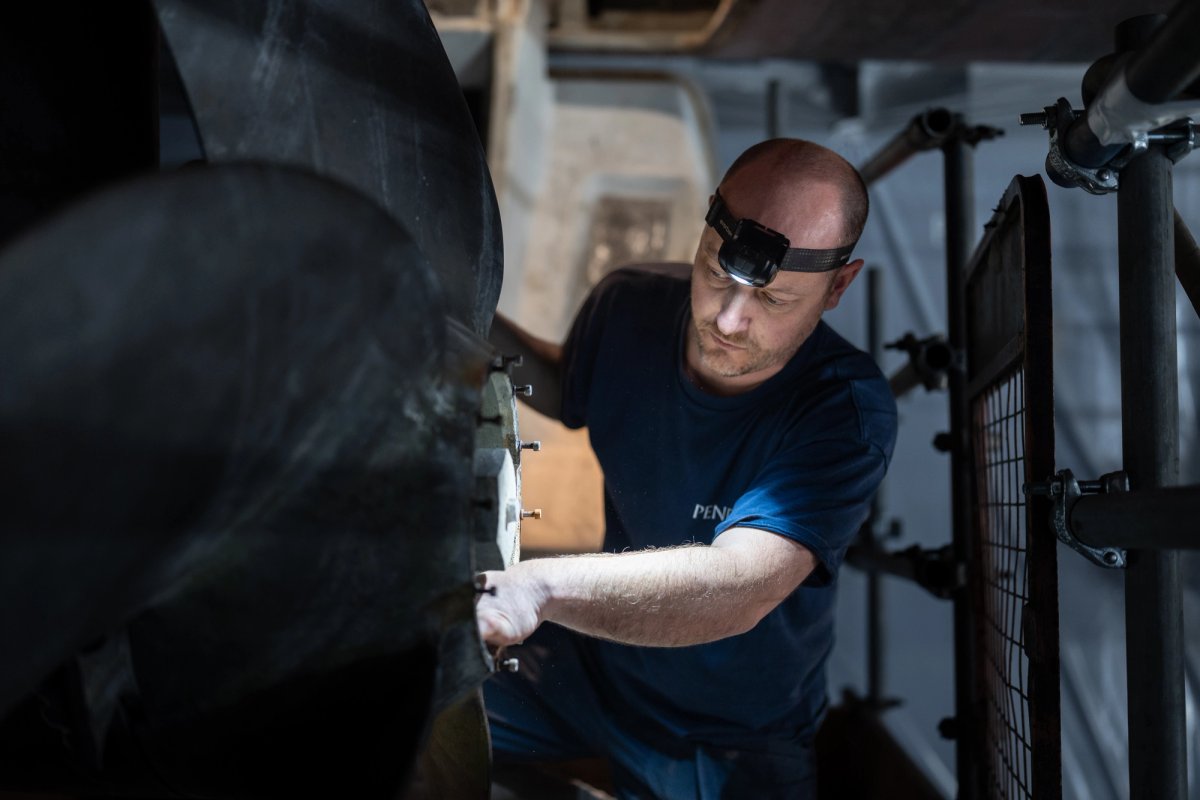
A significant portion of Freeman’s duties include filling that talent pipeline. She coordinates field trips with schools around Palm Beach County to visit refit facilities and see jobs in action. If kids can’t leave school, she’ll go to them — setting up tables with information on campus, often meeting students who believe a four-year degree is the only way forward.
“There’s still this mindset that you need a four-year degree, and students are opting to go into careers that are not skilled trades jobs — there’s not a lot of education around it,” Freeman said. “It’s not because they don’t necessarily want to, I just don’t think they know about it.”
Freeman isn’t the only person who believes the lack of training is an issue for the U.S. refit industry.
“The U.S. has kind of let its guard down a little bit. Europe and other parts of the world have caught up, if not overtaken America,” said Colin Lord, senior project manager at Maritime Project Solutions. “I believe a lot of it is to do with training, apprenticeship programs, the labor rates, and general working conditions.”
However, it’s not all doom and gloom, according to Lord. Instead, it’s an opportunity for the industry to examine the problem and change opinions, training, education, and generally catch up. The U.S. isn’t shy to compete in a race for success, according to Phil Purcell, president and CEO of the Marine Industries Association of South Florida (MIASF).
“Americans, historically, are a pretty competitive bunch. Let’s make sure we’re competing,” Purcell said. “We’ve got bonus depreciation, sales tax cap on refit and repair, no currency exchange — we’ve got so many advantages here. All we have to do as a group is sit down, work together, and put a deck together that lists these things and remind people it’s a great place to do business.”
On April 9, 2025, President Donald Trump signed an executive order called “Restoring America’s Maritime Dominance.” The order aimed to rebuild America’s maritime manufacturing capabilities, make U.S.-flagged and -built vessels commercially competitive, and improve recruitment, training, and retention of the relevant workforce. While the original executive order focused on commercial vessels and includes many components that have yet to be passed by Congress, Purcell believes it has real potential for Florida’s refit capabilities if it gets approved.
America’s Maritime Action Plan, the full plan behind Trump’s executive order, was released in February 2026. One of its main goals is to revive U.S. shipbuilding and repair facilities while growing the marine workforce of tomorrow. Purcell believes that companies along the Dania Cut Canal, Miami River, in Fort Pierce, and throughout Florida should take a hard look at the plan — as it could help unlock the potential of these refit areas.
“Why can’t we work on the bigger boats when they’re here? Why not make sure we have the infrastructure in place that can service these things?” Purcell said.
Purcell also believes that the U.S. maritime workforce needs more support, but not due to lack of skill. Instead, he compares the appreciation of craftsmanship in Europe — whether it be historic buildings or superyachts — to the lack of appreciation he sees in the U.S. However, he says society is beginning to take note.
“You can’t AI the guys working in an engine room. Every one of those jobs requires people to get into spaces that a robot is probably not going to be able to get into in a functional way,” Purcell said. “We have the skill set here; we’re just not built like Europe in terms of the community embracing it as much.”
However, the effort to increase the industry’s embrace of skilled trades workers is currently underway. From Freeman’s work in Palm Beach, to MIASF’s Salty Jobs, and Sea the World’s maritime industry storefront at Junior Achievement of South Florida, the industry is reacting.
“The next thing is how to keep that person within your organization,” Lord said. “Unfortunately, I’ve seen it so many times where an employee isn’t really encouraged, and that person would leave for a couple dollars more.”
Another recent development is the launch of the American Refit Platform and Leadership Council, an initiative announced by Maria Pierce Schoenheit, founder of Maritime Project Solutions.
“The American Refit Platform focuses on elevating execution standards across the U.S. refit market through structured planning, defined scope of works with realistic expectations, vetted cost analysis, disciplined reporting, and transparent coordination between stakeholders,” Schoenheit wrote in her announcement.
Lord has also joined Schoenheit in the initiative, with the two aiming to continue ongoing discussions on how to improve the U.S. refit ecosystem with shipyards, project managers, owners, captains, and others.
“We are all working towards the same goal — ALIGNMENT,” Schoenheit wrote. “If you want to go fast, go alone. If you want to go far, go together.”