
Futuristic yacht toys are no longer just about faster jet skis or sleeker inflatables — they’re evolving into a connected, intelligent ecosystem.
Rather than standalone gadgets, the future is a unified system of water-based experiences powered by shared energy platforms, smart controls, and modular environments that extend the yacht beyond its swim platform.
Jesse Cors from Liquid Surf and Sail, who tracks electrification closely, doesn’t see a single-toy future, but “an entire ecosystem of electric toys that works together.”
He points to rapid growth in e-foils, surfboards, and jet skis, but says connectivity is the real shift. “We’re already seeing a huge shift toward e-foils, electric surfboards, underwater scooters, electric jet skis, electric tenders… I think every larger yacht is gonna have an electric toy garage where everything in the garage will want to work together,” he explained.
That convergence is driven by battery advances and sustainability demands. Electric propulsion, somewhat of a novelty today, will be standard.
Cors adds that usage patterns reinforce adoption. “Most of the yachts using tenders are picking up guests and the time that they’re actually physically using the boat is typically under five miles,” he said, illustrating how toys and tenders can run on a single charge with no issues.
Electrification only tells some of the future story. Intelligence and automation are next. “There’s a lot more control in the safety environment… they can also set [the toys] for power and speed for younger guests,” Cors said.
Yachts are also moving toward centralized dashboards. Cors envisions “opening up one app and seeing every toy on board, how much battery it has, where it’s located GPS-wise.”
Some of this is already emerging through the influence of tech from companies like DJI, whose systems are shaping next-gen water toys. Products like the Wadu eFoil point toward AI-assisted stability that lowers the learning curve.
Ashton Lauritzen from Aqua Flight sees accessibility as the real breakthrough — a “blur between ability and the technology, where anybody can either fly above the water or dive underwater.”
He points to a shift toward “plug-and-play” design, where ease of use rivals performance.
That same accessibility is reshaping yacht design. John Courtney, managing director of yachting at FunAir, says the industry is moving beyond toys toward full environments where “the yacht itself has become part of the destination.”
He adds that the best charter days are defined by shared experience, not by miles traveled, “where everyone spends the day together around the yacht, swimming, playing, relaxing, and making memories.”
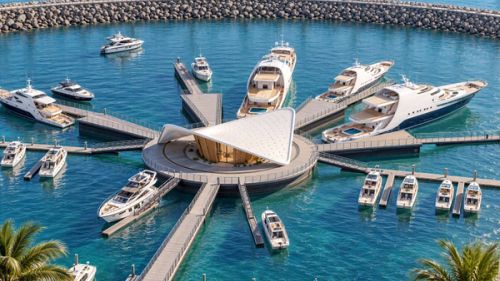
This is driving a shift from equipment to designed ocean spaces. Courtney highlights modular setups: “Different spaces around the yacht…grandparents can relax in the sea pool, teenagers can be climbing or wakeboarding, while everyone still feels connected.”
Rather than more toys, he sees smarter systems. “We're moving away from thinking about individual toys and toward thinking about the whole environment,” Courtney said.
FunAir’s FunFlex range reflects this shift, allowing sea pools, docks, and platforms to be reconfigured as needed. “The future isn’t necessarily more products. It’s smarter products that work together.”
Across the industry, yachts are becoming experience platforms rather than simply transportation, with technology fading into the background. “Luxury is increasingly about disconnecting rather than being constantly connected,” Courtney said.
Innovation, he says, is shifting toward durability, repairability, and smarter infrastructure. “I think by 2035, it will be completely normal for yachts to have fully designed on-water environments rather than collections of separate toys.”
In that vision, “the experience won’t start when guests step onto the swim platform,” Courtney said. “It will begin the moment they look out across the water and see an entire floating environment waiting for them.”
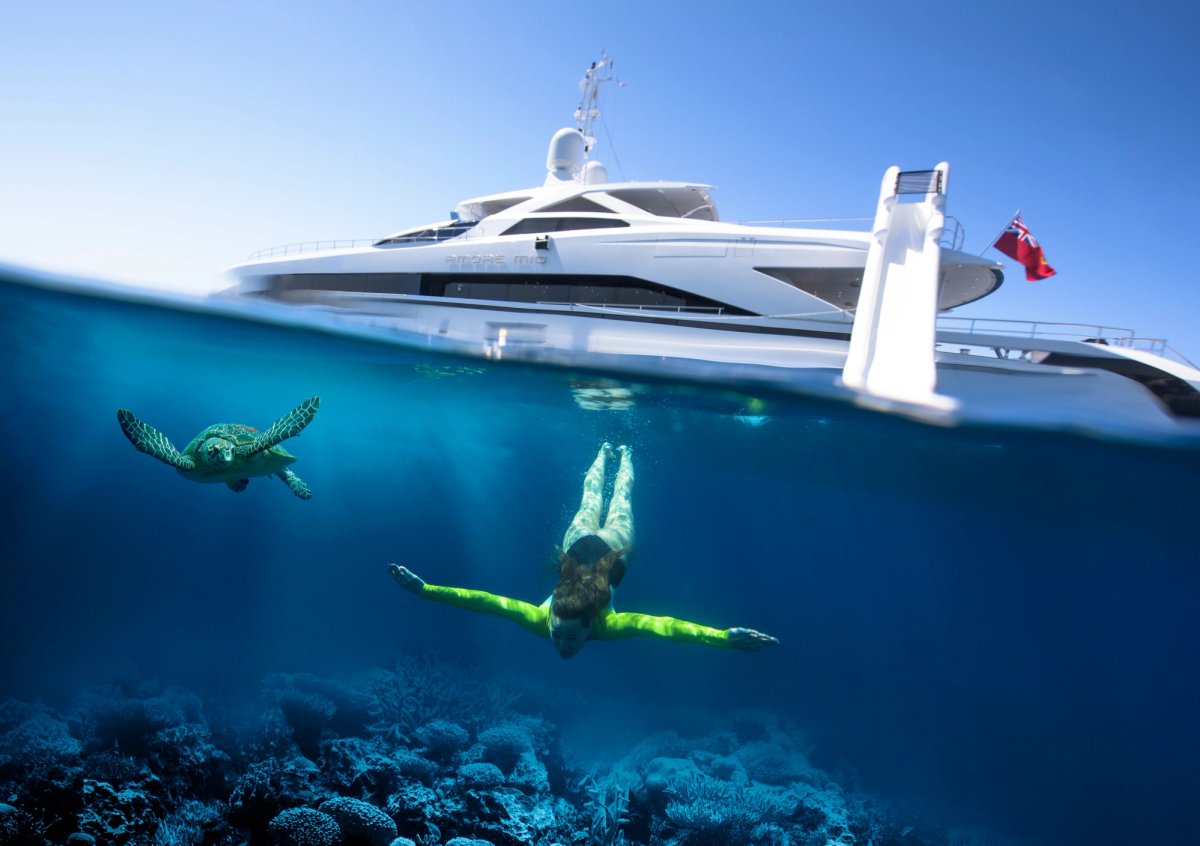
Image by FunAir.